The Christ Child with Saints Boris and Gleb by http://www.wikidata.org/.well-known/genid/3b67fdb49ecaec81ff95458cc940b4cf
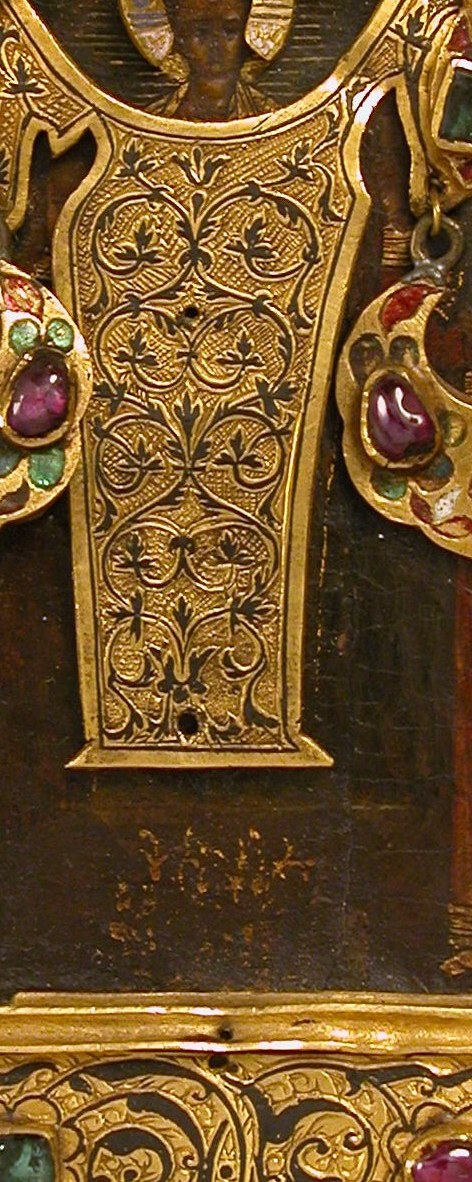
This is 'The Christ Child with Saints Boris and Gleb,' a Russian icon from around 1600. Once recorded in the inventories of the Kremlin Armory, it was made for a court that invested staggering wealth into objects of veneration, the panel is armored in an oklad of gilded silver, studded with raw rubies, emeralds, and dark uncut stones mounted as they came from the earth.
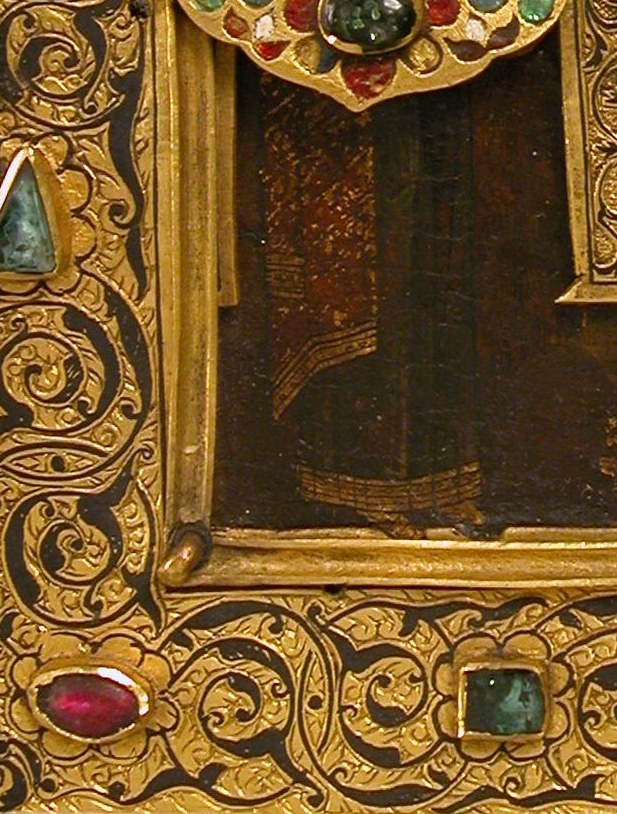
Look first at the halo at the center. The entire composition radiates from the tiny painted face of Christ, remarkably small and intimate amid the heavy metalwork. Then look to the margins. The border scrollwork is virtuoso repoussé, a continuous vine likely derived from Byzantine models. At mid-frame on the left side, a single unusually large dark stone sits in its native form, uncut. That rough stone is a giveaway: pre-modern lapidaries valued the stone itself, not the faceted glitter we expect today.
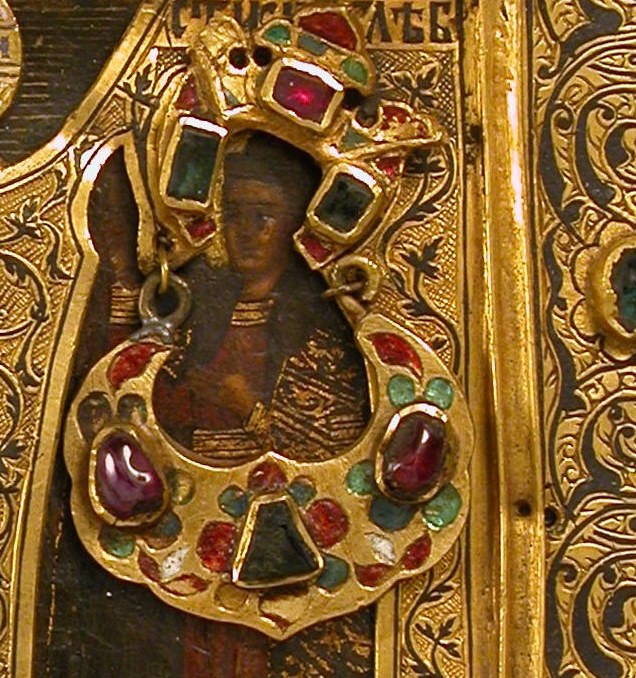
When the Bolsheviks seized church property in 1922, squads moved through treasuries prying precious stones out of icons to sell for hard currency. This panel shows the scars of that campaign. The largest gems are missing, leaving empty settings that tell a story of state-sponsored looting. Yet some were overlooked, the crescent-shaped pectorals on Saints Boris and Gleb still hold their rubies and emeralds, a startling survival. Beneath all that metal, the original painted robes of the two martyred Kievan princes are barely visible, a reminder that a complete tempera painting lies hidden underneath.
An object made for the gaze of princes and patriarchs, partially stripped by revolutionaries, and now holding its remaining jewels in a museum. The smallest face, the Christ Child, was the one they never touched.
Details

Transcript
This icon is slashed with jewels. The Kremlin Armory recorded it in the 1600s as a royal commission. In 1922, Bolsheviks seized church treasures to fund the state. Squads stripped icons like this one, prying out the largest stones. They missed some. The saints beneath are nearly invisible now. But the Christ Child, the smallest face, was left untouched.