Ascagnes and Lucelle (The Music Lesson) by Steen, Jan
Jan Steen's 'Ascagnes and Lucelle (The Music Lesson)' from 1667 hangs in a private collection, but it might as well be a scene from one of the taverns the artist himself once ran. Steen, the great storyteller of the Dutch Golden Age, didn't just paint moral lessons; he painted the moment people stopped following them.
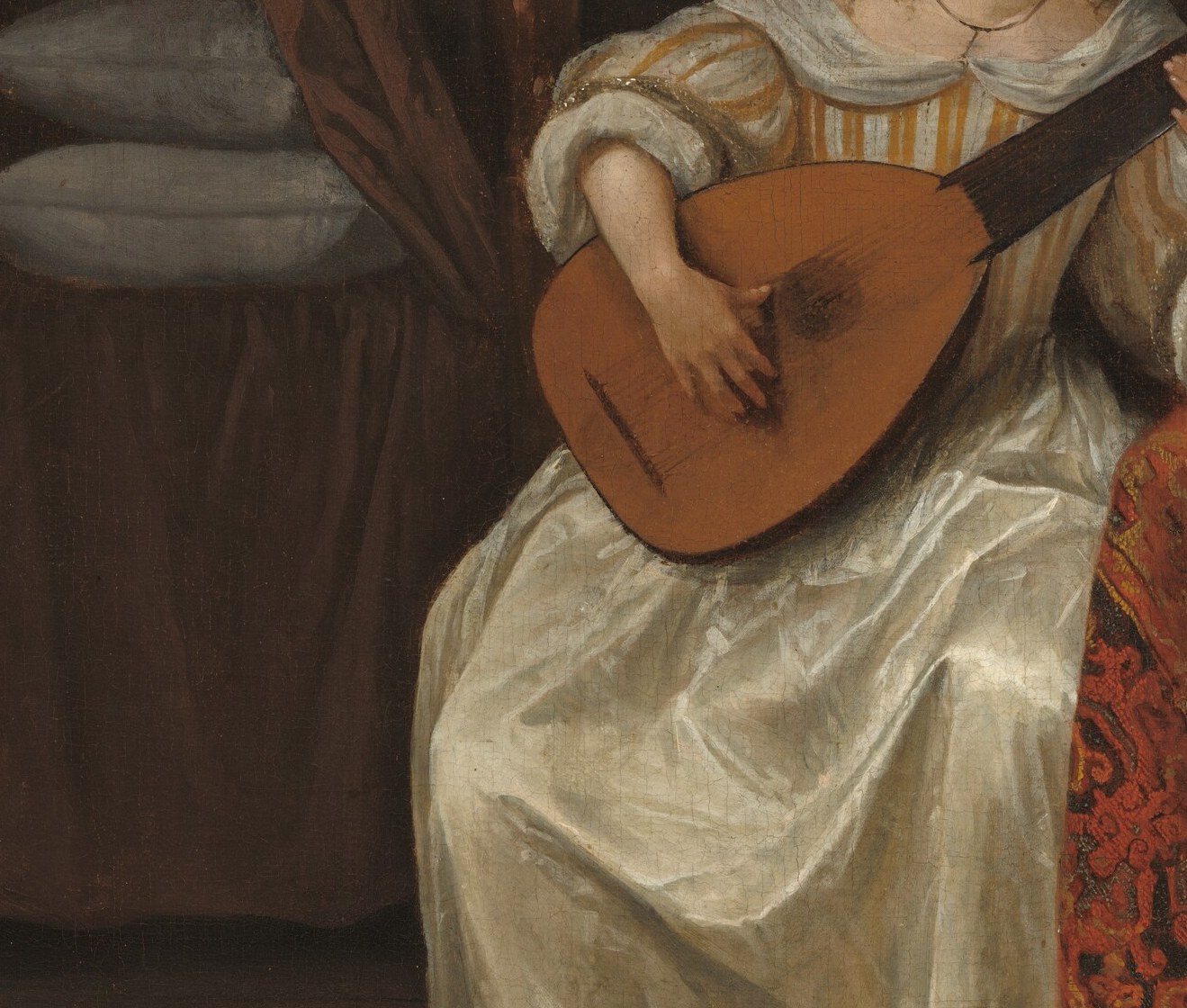
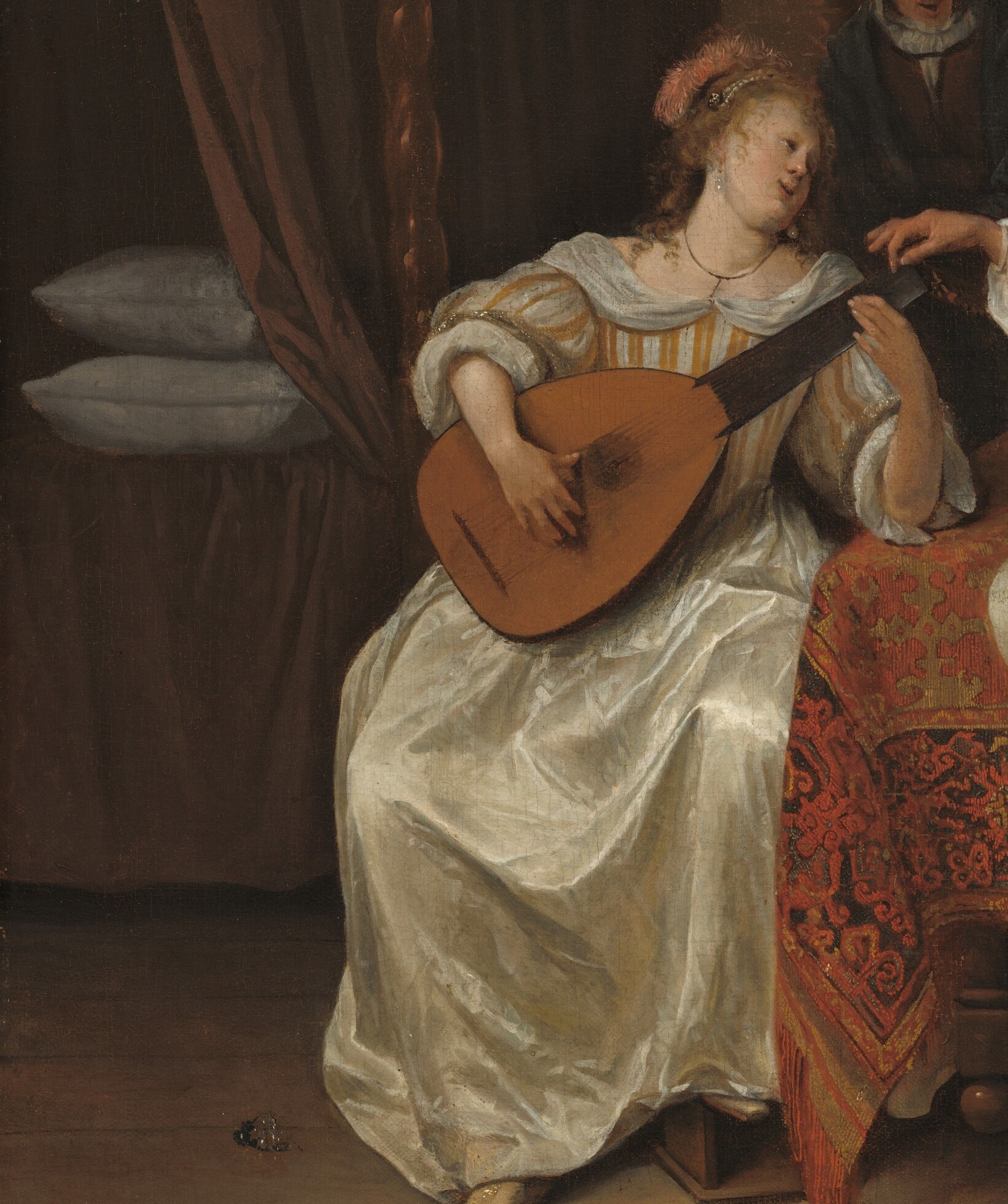
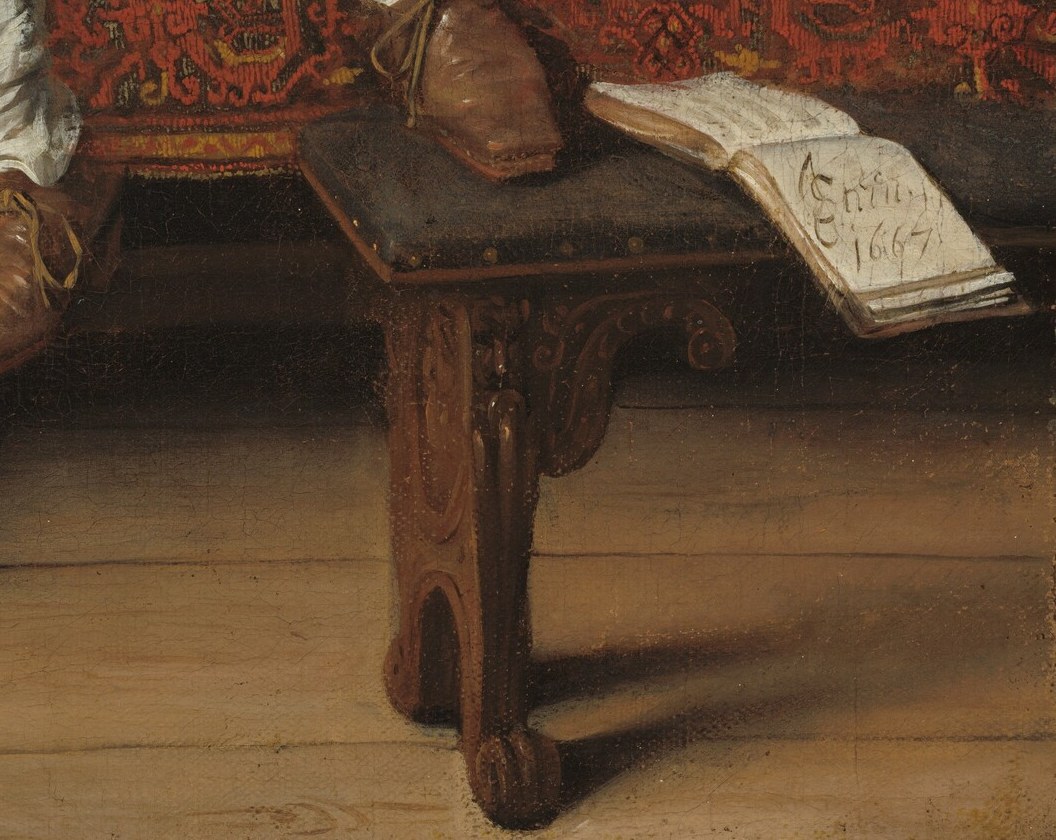
The giveaway is the lute. In 17th-century Dutch painting, a lute was never just a prop. It was a dense, loaded symbol for eroticism, courtship, and physical harmony. Notice how prominently Steen places it here, practically bridging the space between the two bodies. Then look at the floor, where the sheet music has been discarded. The lesson has moved on.
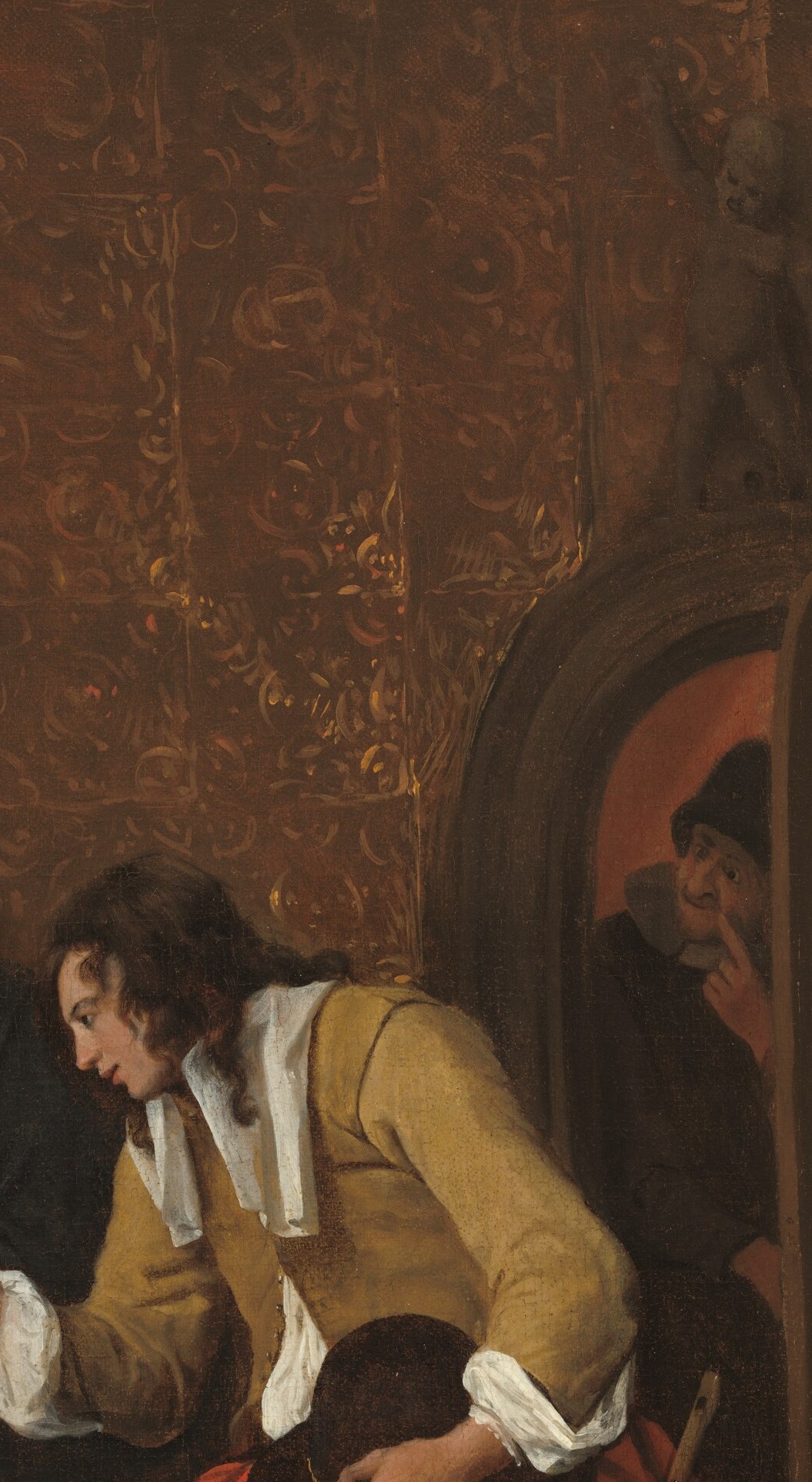
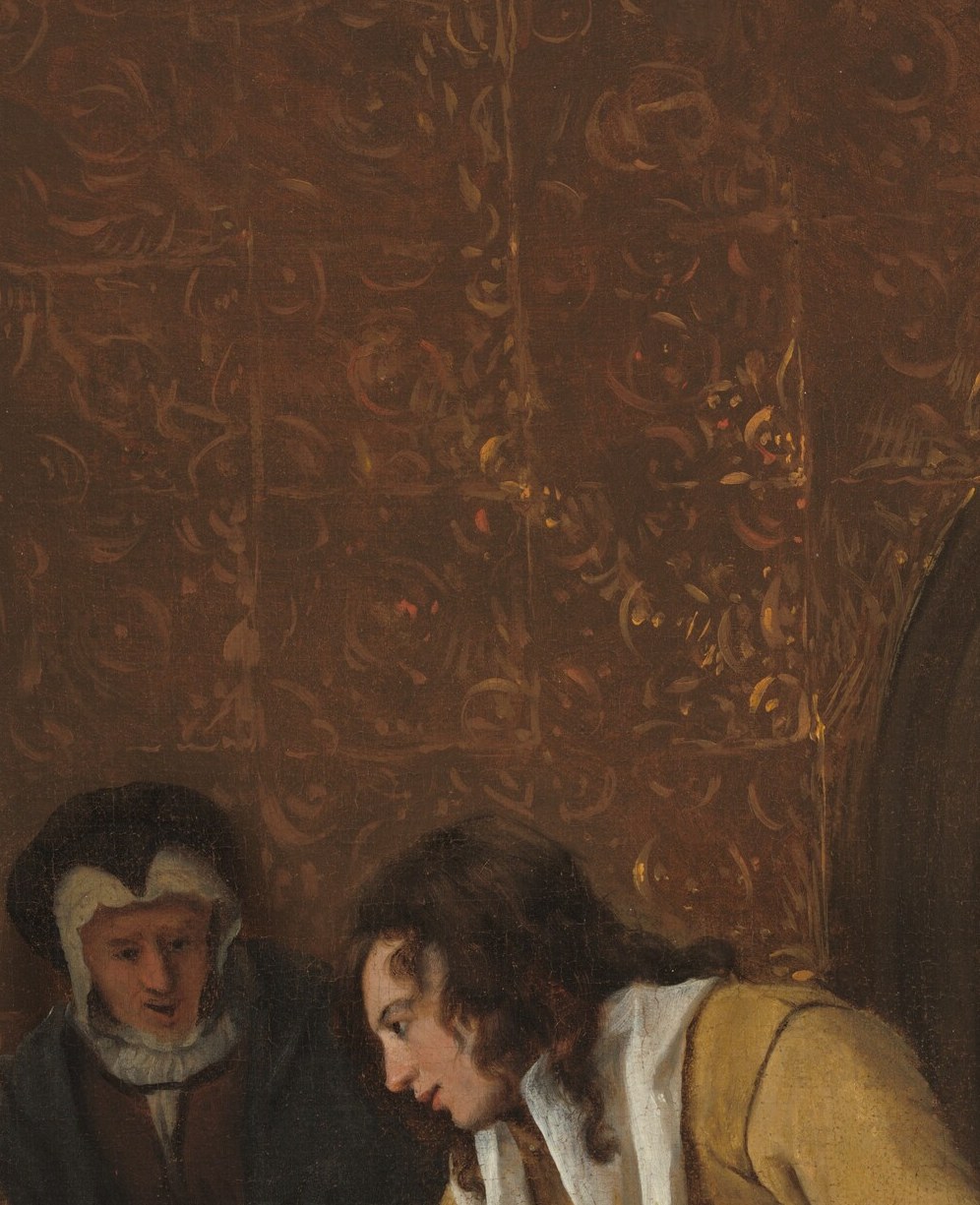
Steen often embedded himself in his own rowdy worlds; he ran a brewery and a tavern in Haarlem and painted the chaos he saw nightly. But this painting is quieter, more conspiratorial. The final act belongs to the dark-cloaked figure haunting the upper-left background. Steen provides no explanation for this silent chaperone or spy, leaving only the unsettled feeling that the private moment we just witnessed was never private at all.
Look at the man's face one more time: attentive, ardent, learning a lesson he didn't come for. Now look at hers.
Details
Transcript
A music lesson, in a richly furnished room. Her fingers shape the chord. His hand inches closer. A lute, in 17th-century Holland, was not just an instrument. It was a well-known symbol of courtship and physical love. The sheet music has slipped to the floor, forgotten. Now look into the shadows beyond them. A third figure, cloaked, has been watching the whole time. Jan Steen knew this scene firsthand. He ran a tavern.