The Holy Family with Saint Elizabeth and Saint John the Baptist by Wilkie, David, Sir
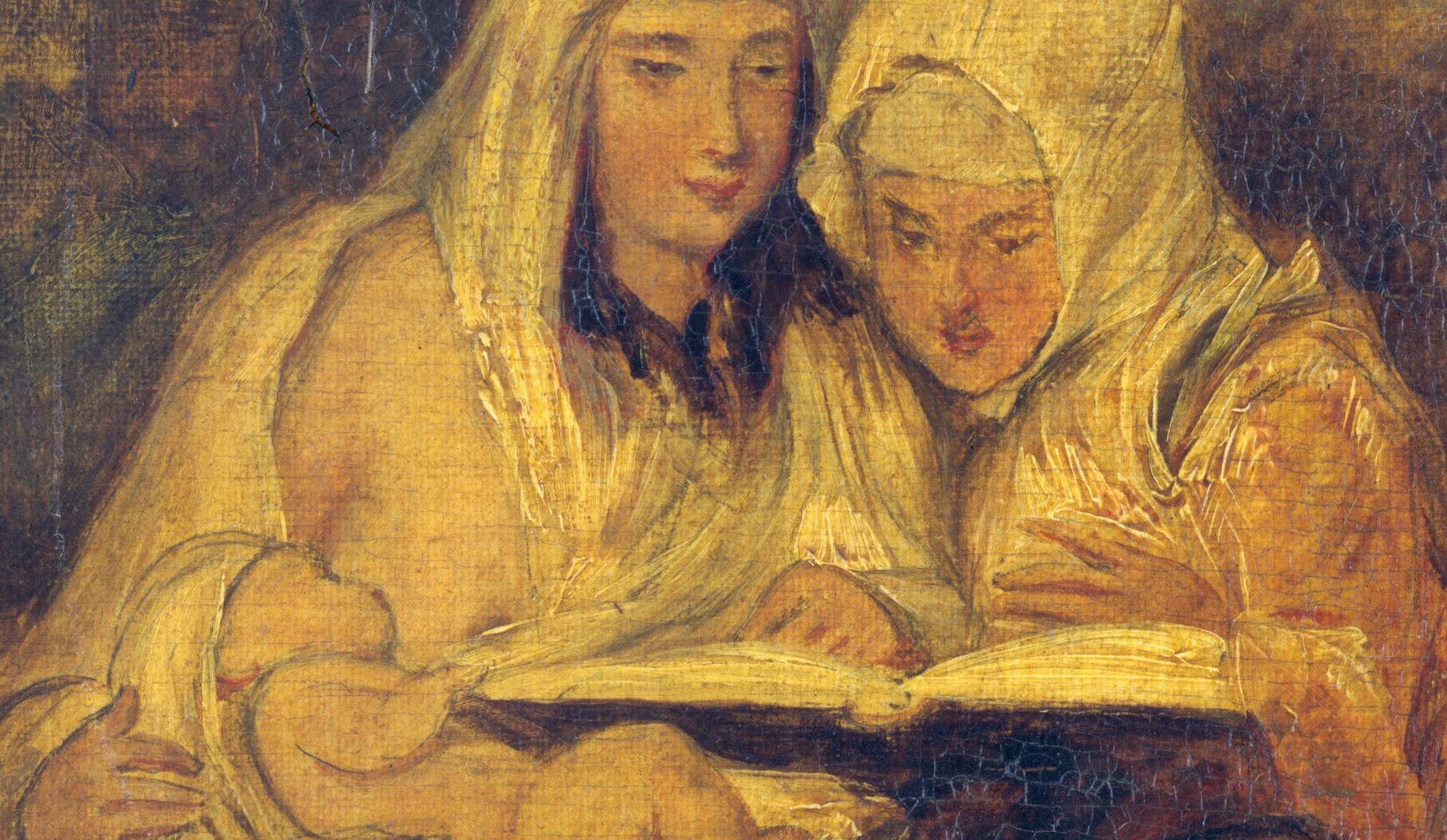
Sir David Wilkie's "The Holy Family with Saint Elizabeth and Saint John the Baptist" (1841) is a profound example of reinterpreting religious subjects. This oil on canvas, mounted on wood and housed in a private collection, brings together central figures from Christian narratives, weaving intimacy and spiritual depth.
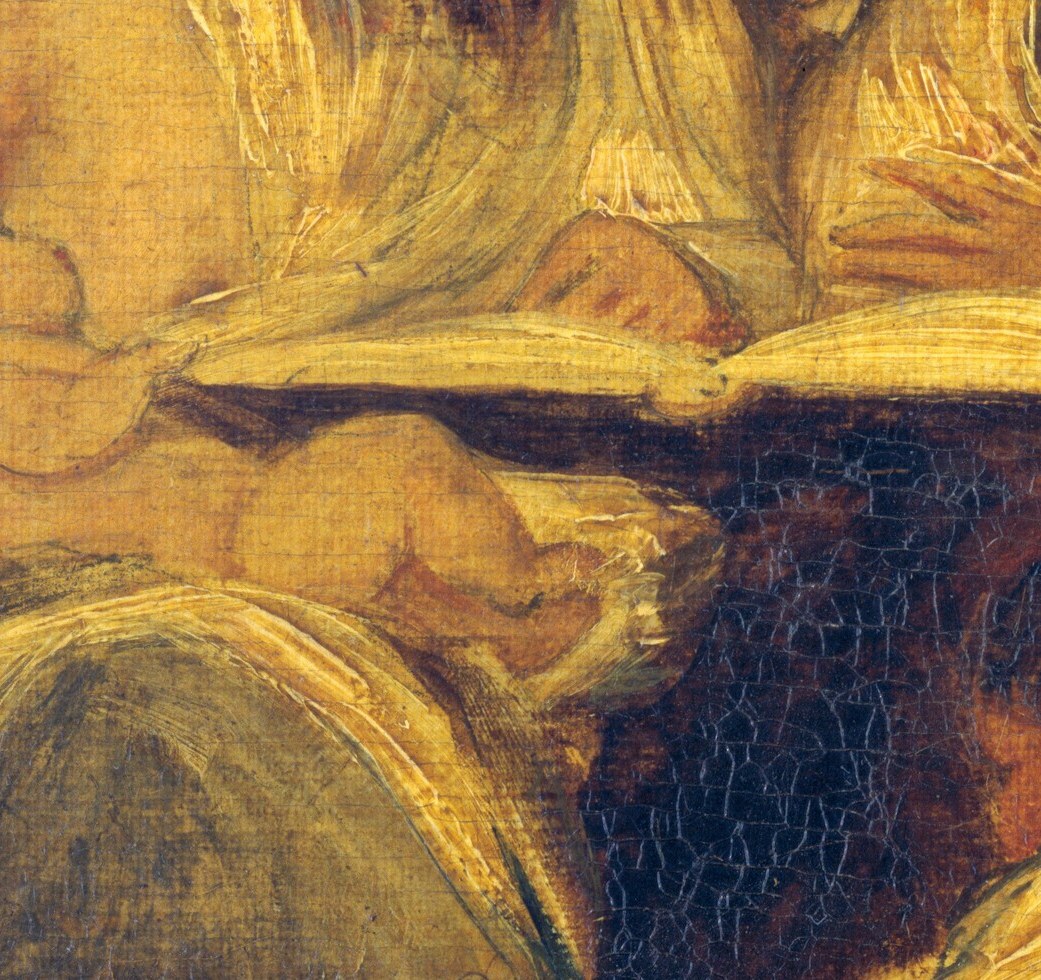
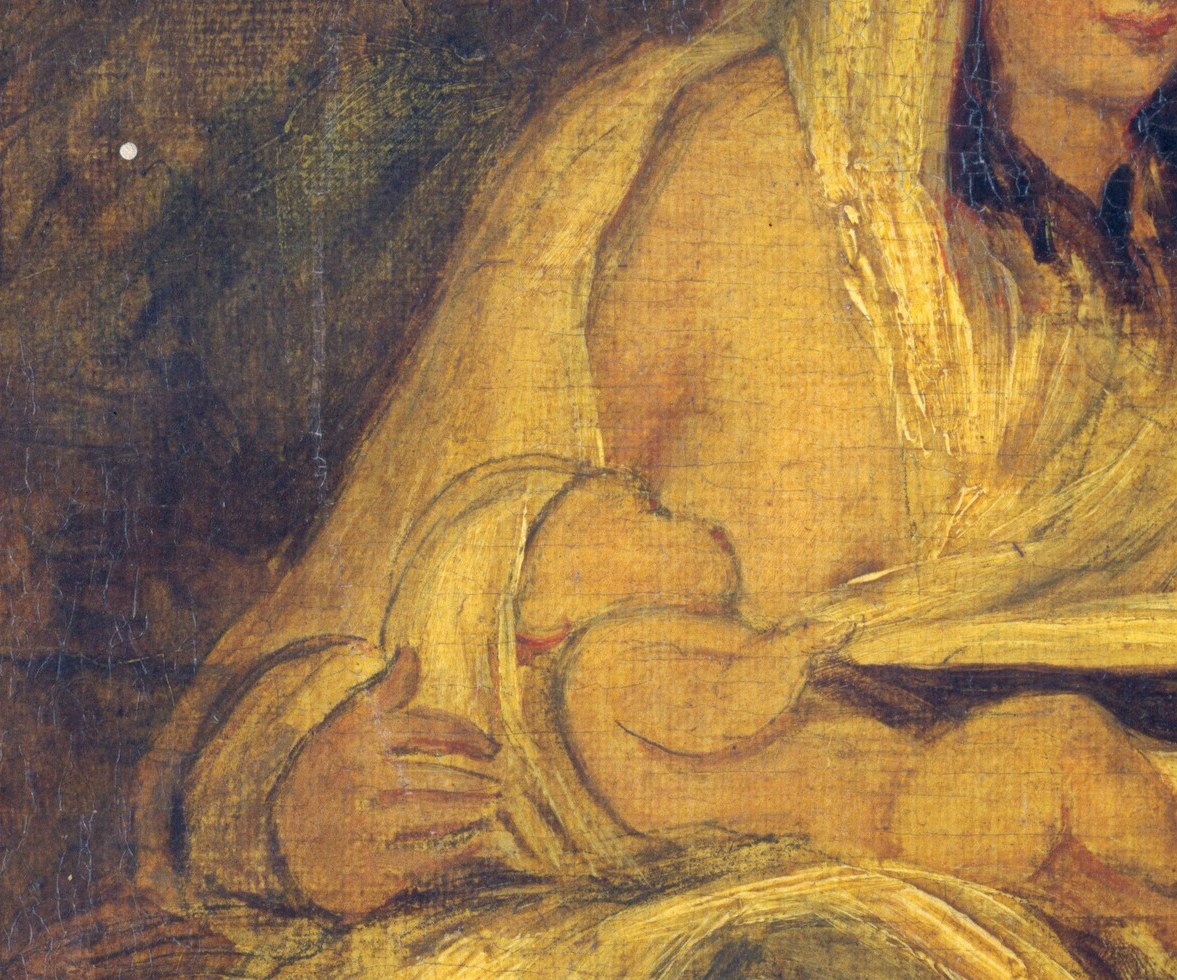
Observe the shared open scripture, a compositional and theological anchor. The luminous white veils worn by Mary and Elizabeth are not merely garments; they are visual cues, signifying purity and connecting these two women of holy lineage. Mary's hands, gently cradling the book, hint at her role as the vessel for the Word made flesh. And, at the painting's base, a partially obscured child awaits his destiny.
Created in 1841, Wilkie’s work emerged during a period when artists sought fresh perspectives on traditional themes. Rather than simply replicating past forms, painters explored innovative methods to infuse these scenes with renewed emotional and visual impact. Wilkie's strategic use of light, shadow, and figure arrangement sets this piece apart, creating a narrative flow that draws the viewer into a moment of familial and spiritual significance.
What details in the painting speak most strongly to its spiritual message?
Details


Transcript
This painting gathers key figures from Christian history. The women share an open scripture, their bond through faith. The left woman, Mary, wears a luminous white veil. The older woman, Elizabeth, also wears a matching white veil. These veils signify their purity and holy lineage. Mary gently cradles the open book, the Word made flesh. And below, a hidden child, awaiting his prophetic ministry.