Madame Monet wearing a kimono by Claude Monet
Claude Monet, a master of Impressionism known for his landscapes, also painted captivating portraits. "Madame Monet wearing a kimono" (1876), housed at the Museum of Fine Arts, Boston, offers a fascinating glimpse into the cultural trends of the late 19th century.
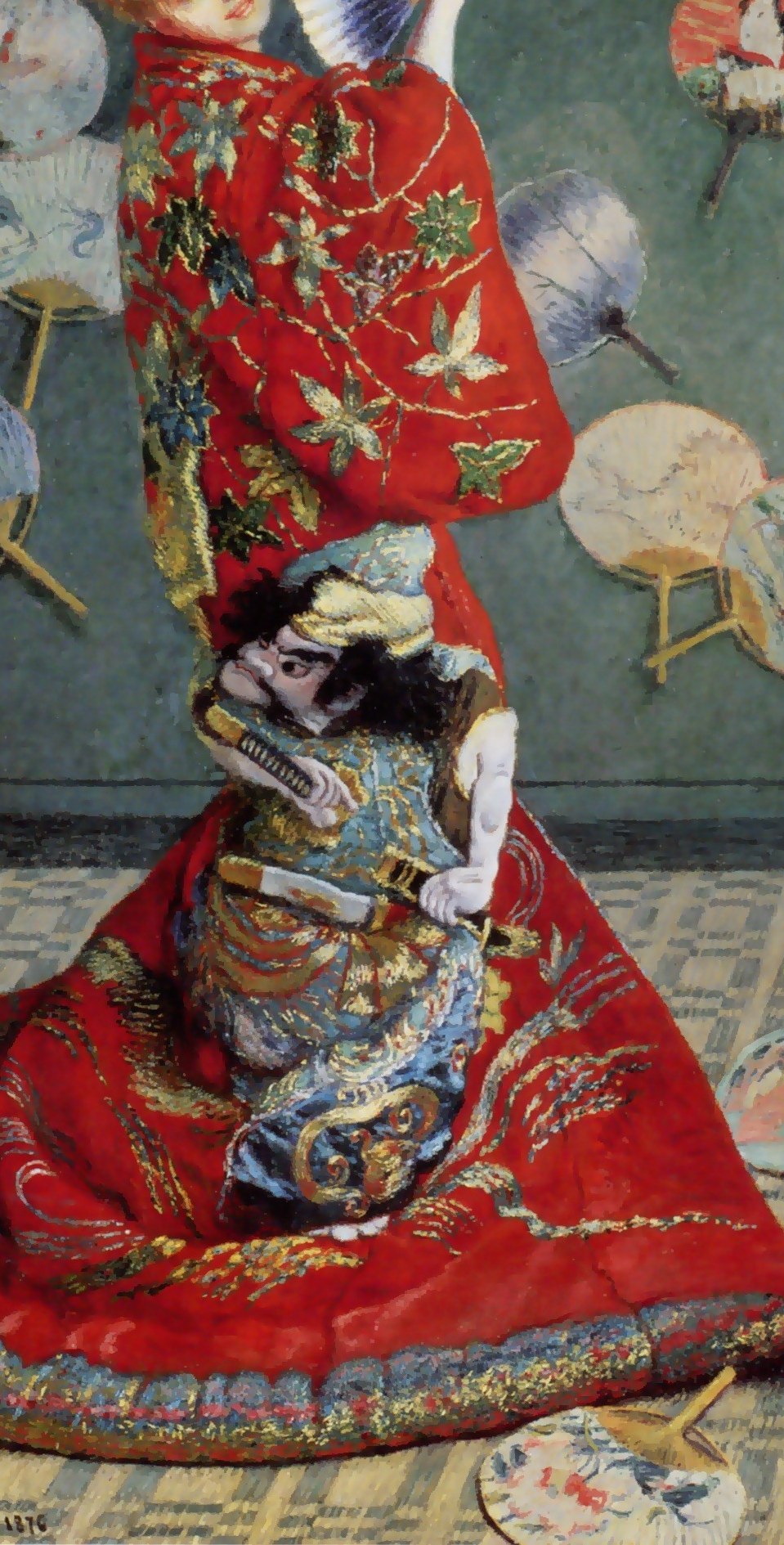
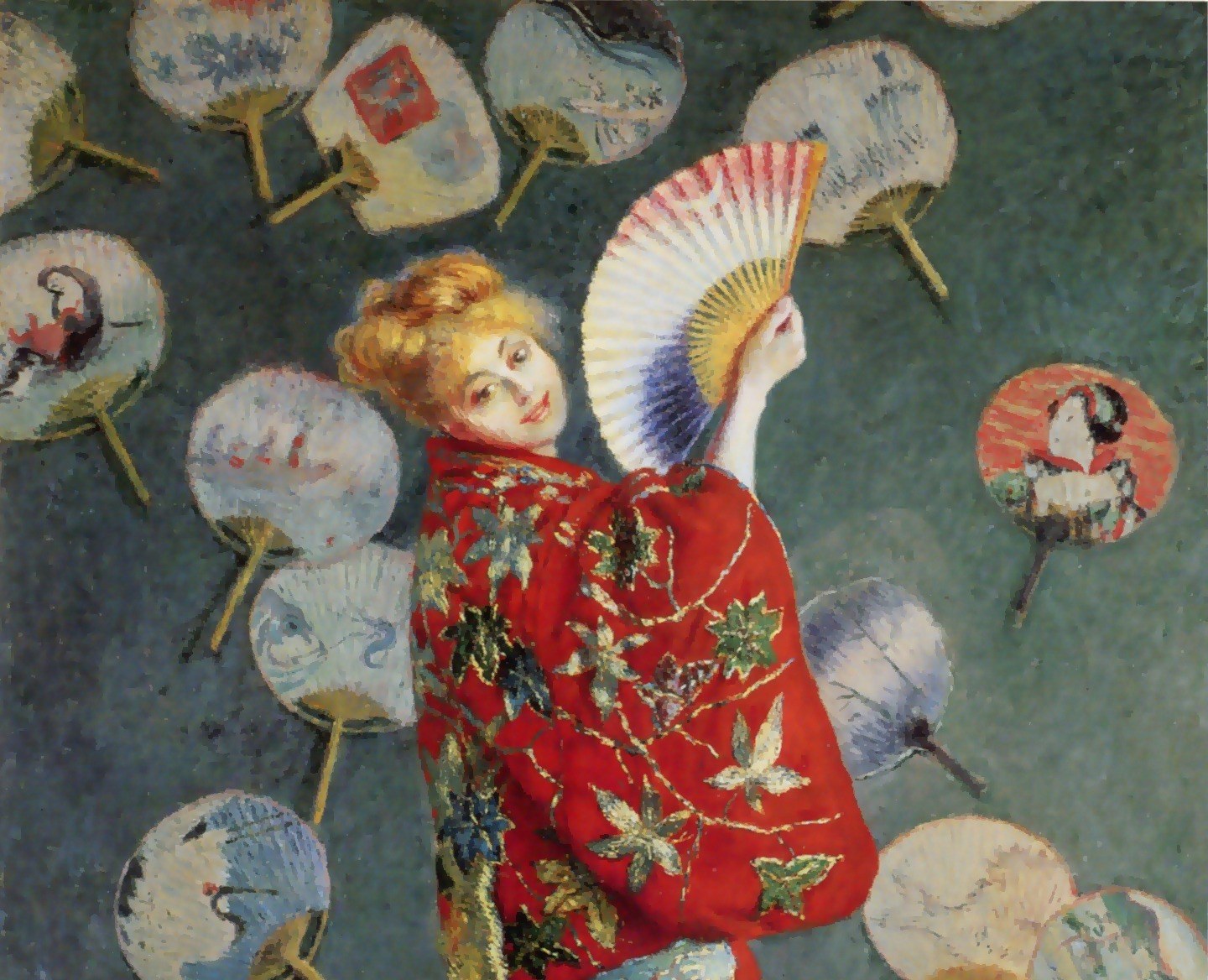
In this large-scale portrait, Monet's first wife, Camille Doncieux, is depicted in a striking red uchikake kimono, complete with a wig and a fan. The background is adorned with numerous Japanese fans, highlighting the widespread artistic and cultural phenomenon known as Japonisme. This fusion of European portraiture with Eastern motifs creates a unique and theatrical presentation.
First exhibited at the second Impressionist exhibition in 1876, this painting demonstrates Monet's versatility beyond his renowned landscapes. It captures a moment when Western art was deeply influenced by Japanese aesthetics, showcasing a blend of tradition and innovation.
What do you find most surprising about this work by Monet?
Details
Transcript
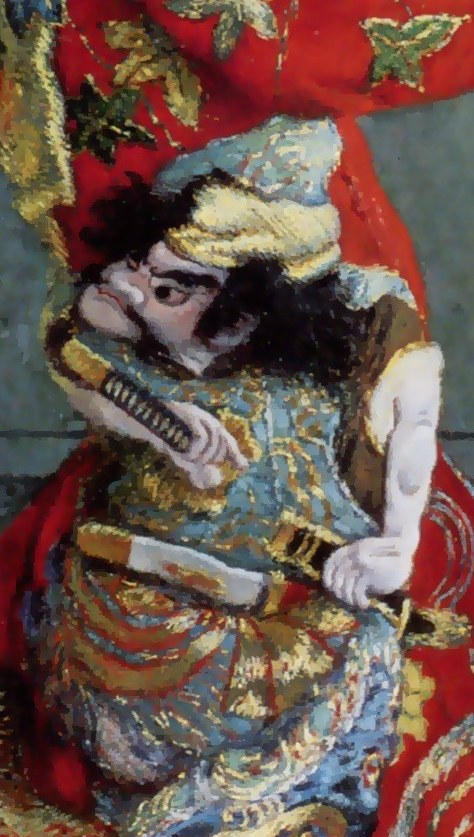
This is Claude Monet's wife, Camille, in an unexpected pose. She wears a vibrant red Japanese uchikake kimono. The painting reflects the era's fascination with Japanese art, Japonisme. But look closely, she is holding a fan, and wearing a wig. And there, a samurai figure on the kimono, with a sword. Monet painted her in this playful, almost theatrical way. It was exhibited to great fanfare at the 1876 Impressionist show.