Pietà by http://www.wikidata.org/.well-known/genid/5a00ffdecbfee7c718a4db9252fc12be
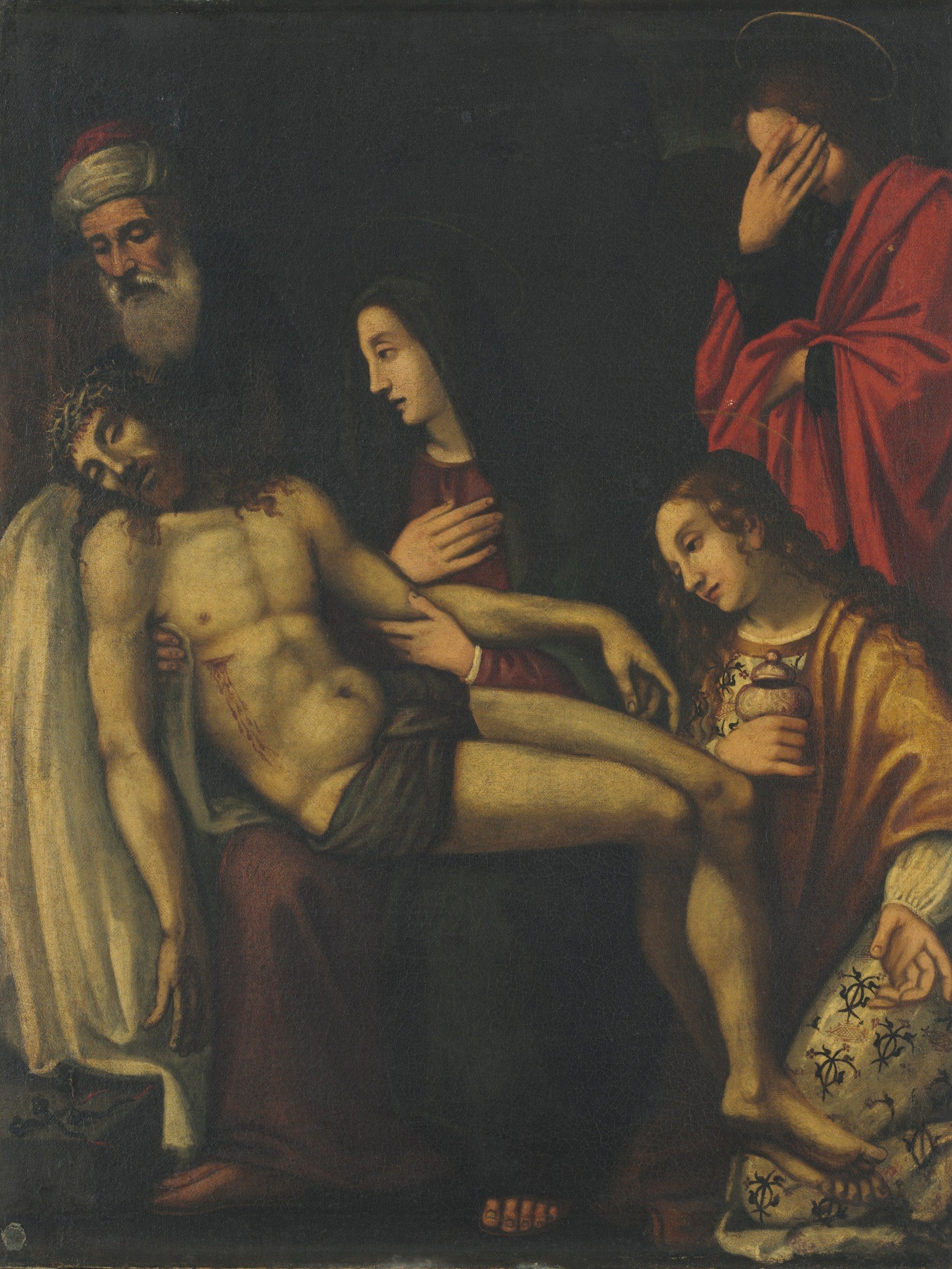
Annibale Carracci's "Pietà," painted around 1587, depicts the somber moment after Christ's crucifixion, a work renowned for its profound emotional depth. Now housed in the Capodimonte Museum, it draws viewers into a scene of intense sorrow.
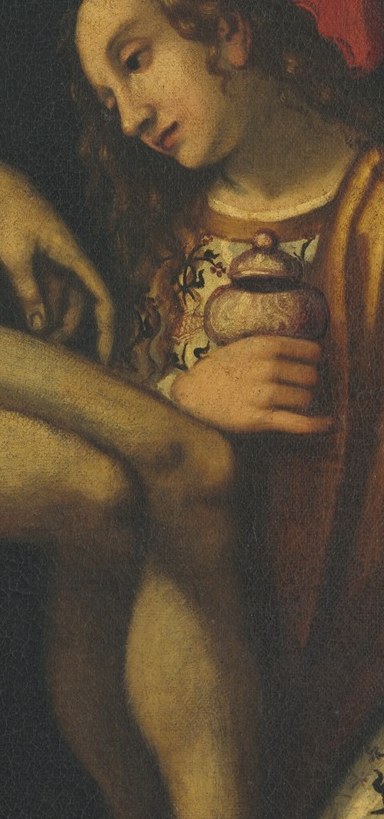
Observe the tender gesture of Mary, Christ's mother, as she cradles his arm. Her grief is palpable. Then, shift your attention to the young man kneeling near Christ's feet, holding a small object adorned with crosses. This often-overlooked detail is highly symbolic.
This small item represents the instruments of the Passion, a subtle yet powerful reinforcement of the religious narrative and Christ's suffering. Carracci masterfully uses light and shadow, chiaroscuro, to highlight these figures and their expressions, making the emotional impact of the scene even more profound.
What other small details in this painting draw your eye and deepen your understanding?
Details
Transcript
This painting shows the moment after Christ's crucifixion. His mother, Mary, cradles his arm, overcome with grief. Look closely at the young man kneeling near Christ's feet. He holds a small object, adorned with crosses. It symbolizes the instruments of the Passion, central to the story. These small details deepen the painting's powerful meaning.