The Holy Family with Saint Mary Magdalen by Andrea Mantegna
View the artwork: The Holy Family with Saint Mary Magdalen →
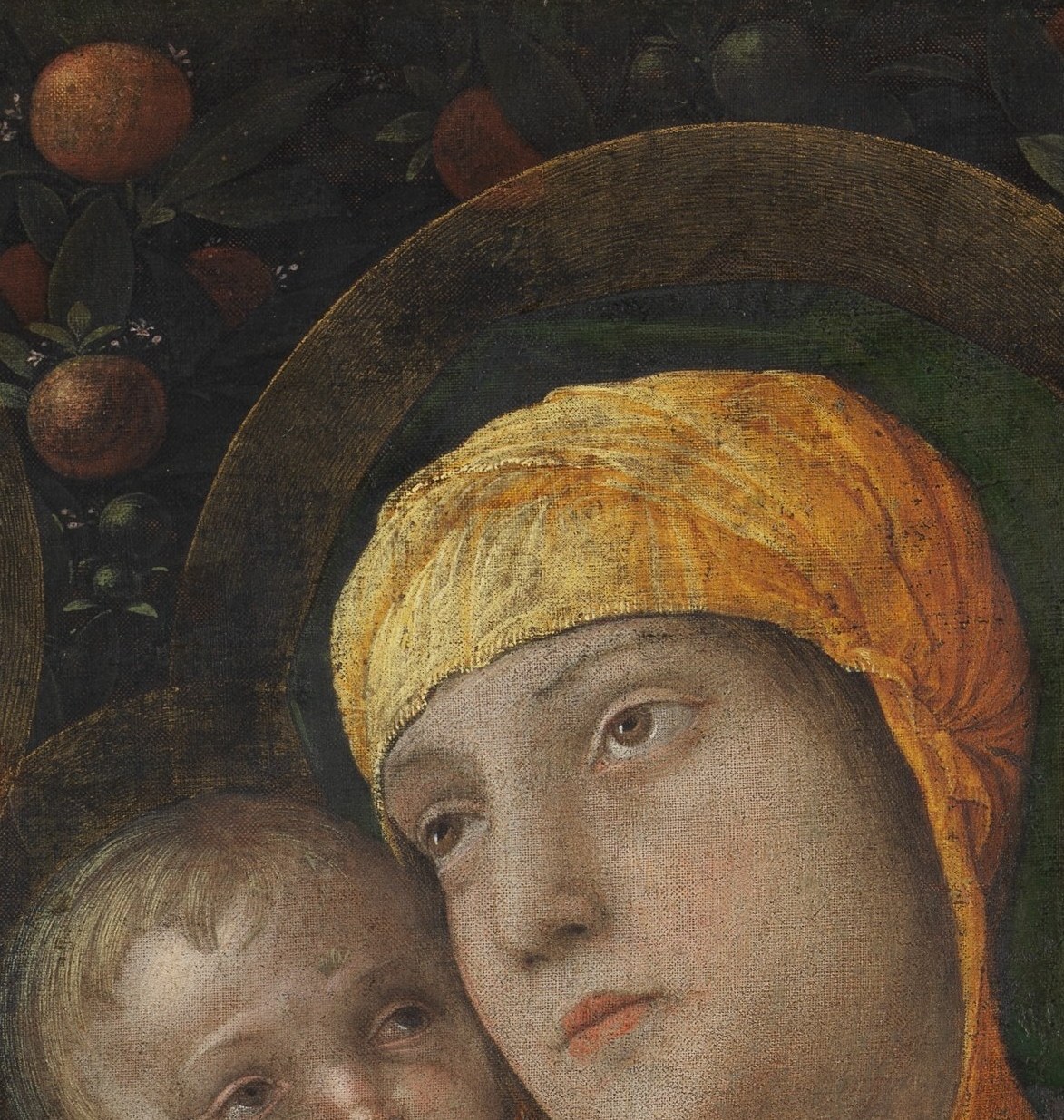
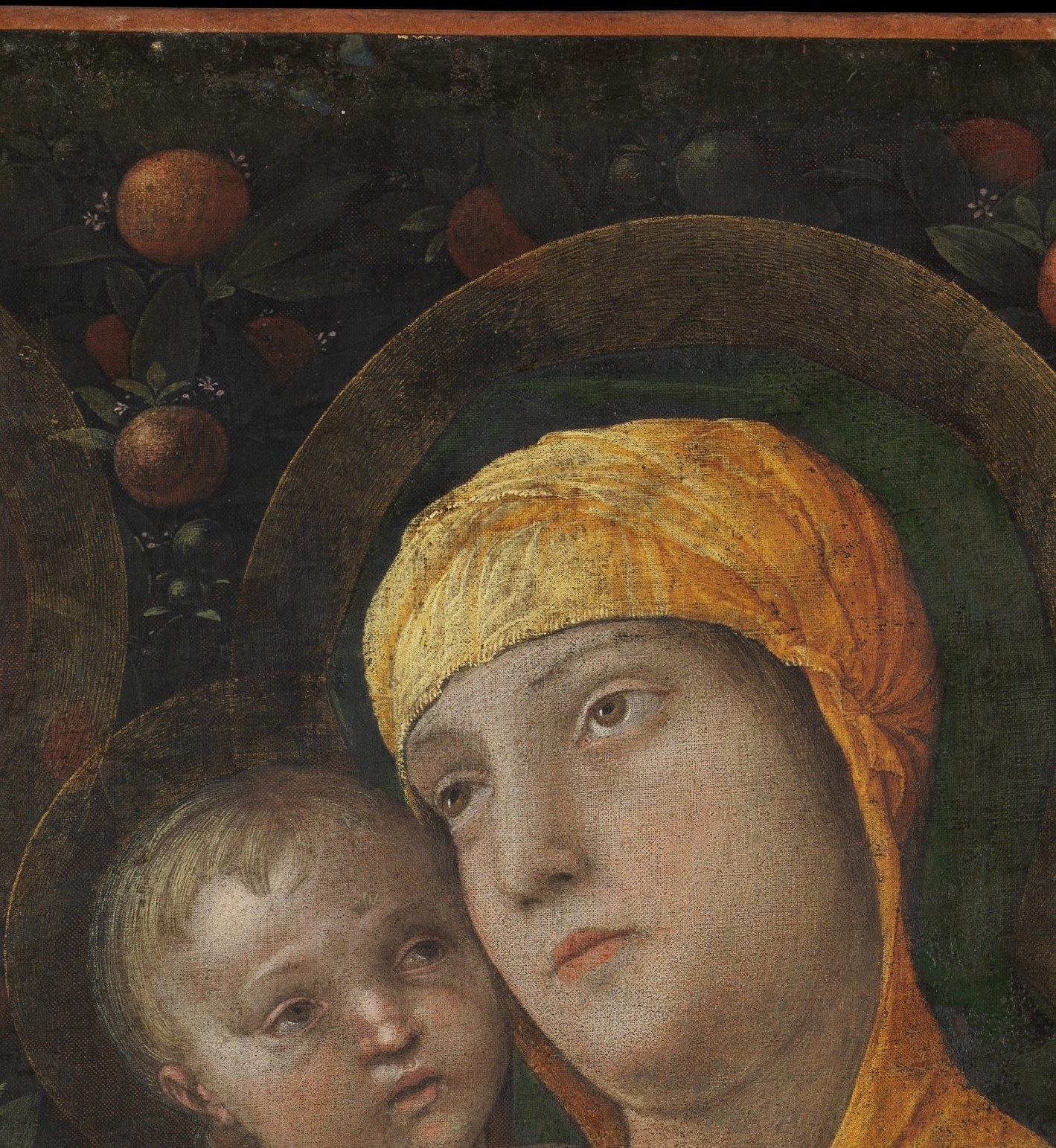
Andrea Mantegna's 'The Holy Family with Saint Mary Magdalen' (c. 1495-1505) is a small devotional painting with a huge emotional weight. It lives at the Metropolitan Museum of Art, and it was painted when the artist was in his late sixties, working in Mantua. Tempera on canvas, roughly 57 by 46 centimeters, it's a painting meant for holding, for private looking, not for a church wall.
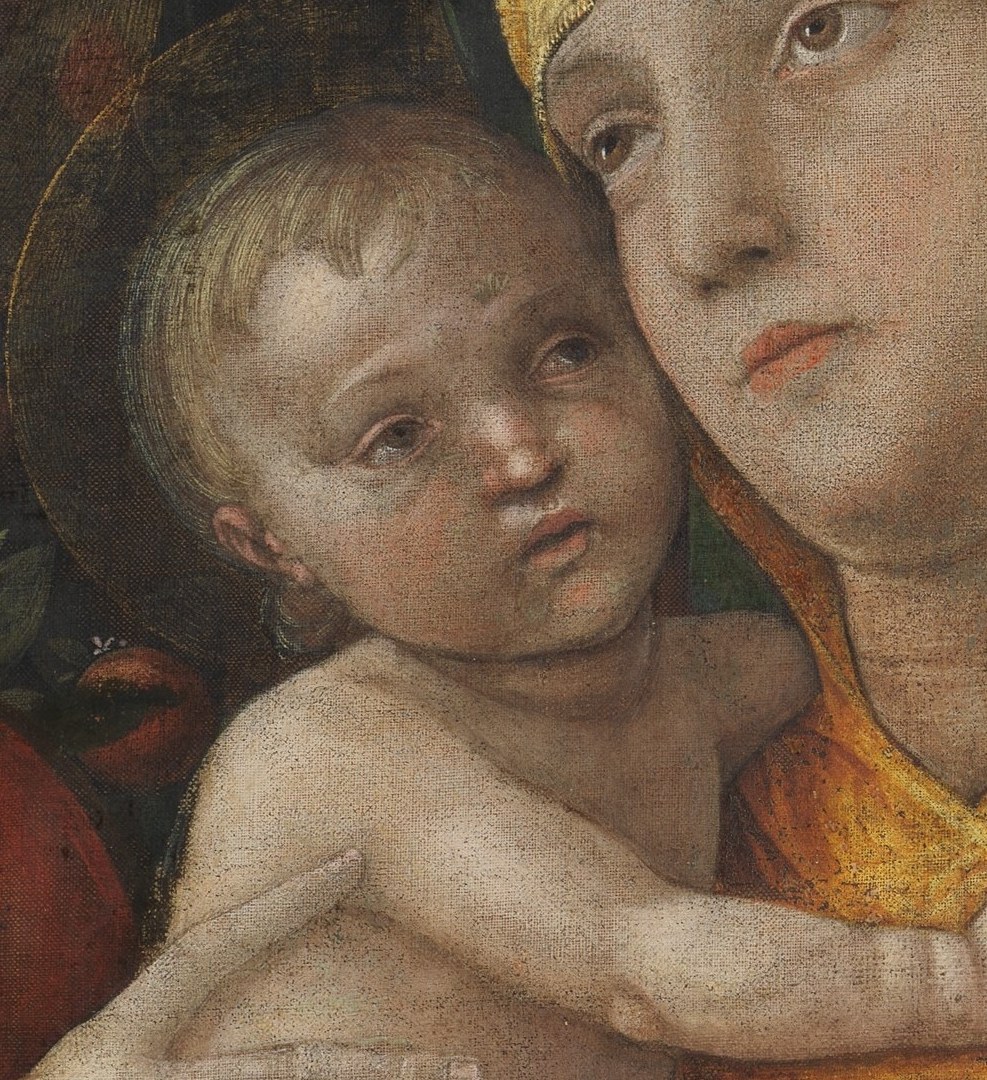
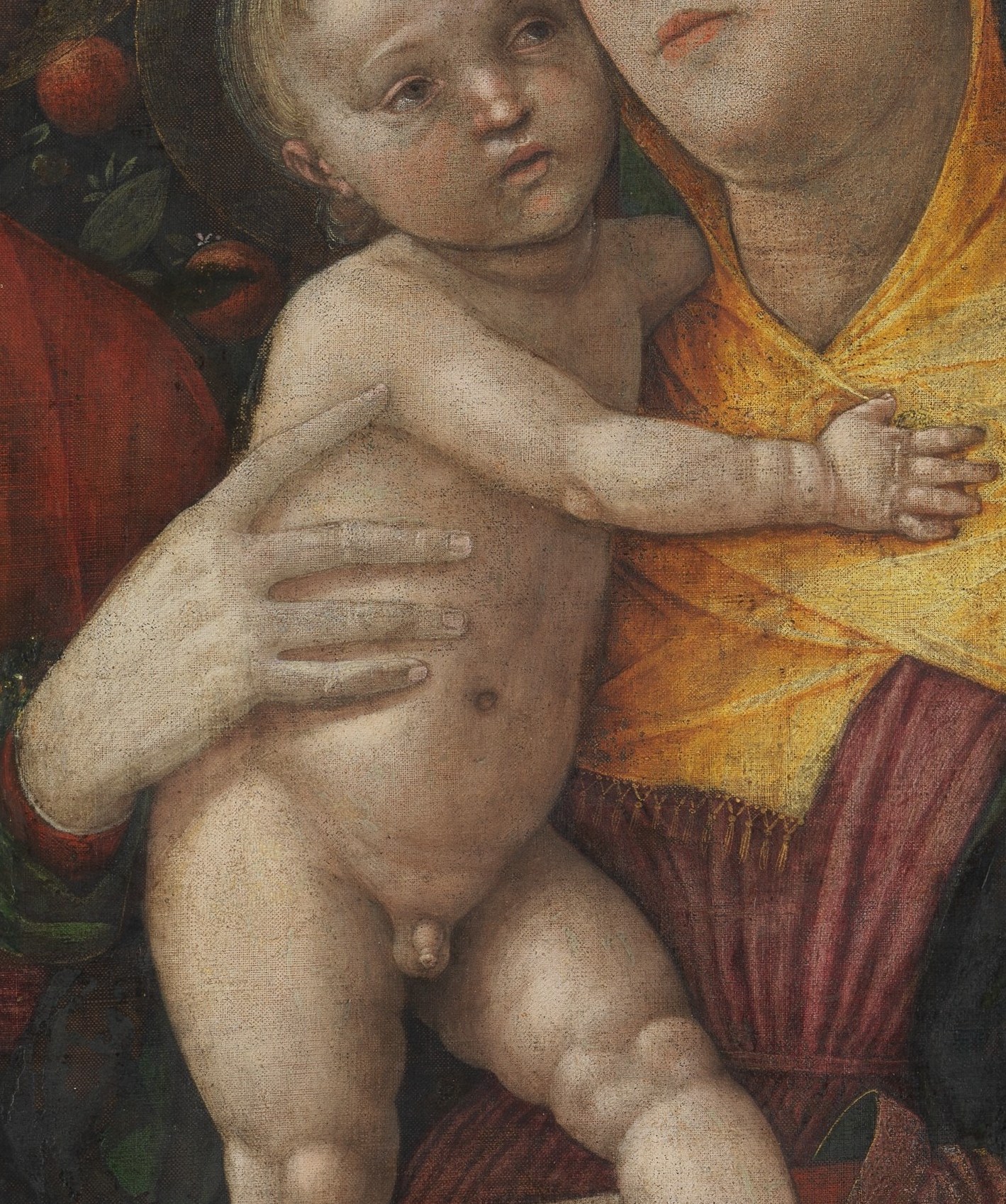
Let your eye go first to the Virgin's face. She looks down, absorbed, tender. Her hands cradle the child with absolute care. Now look at the Christ Child. He is the only figure who looks out, directly at the viewer, and his face is not a baby's blank expression, it's a solemn, knowing gaze. Mantegna broke the devotional circle, just there, and pulled you into the picture.
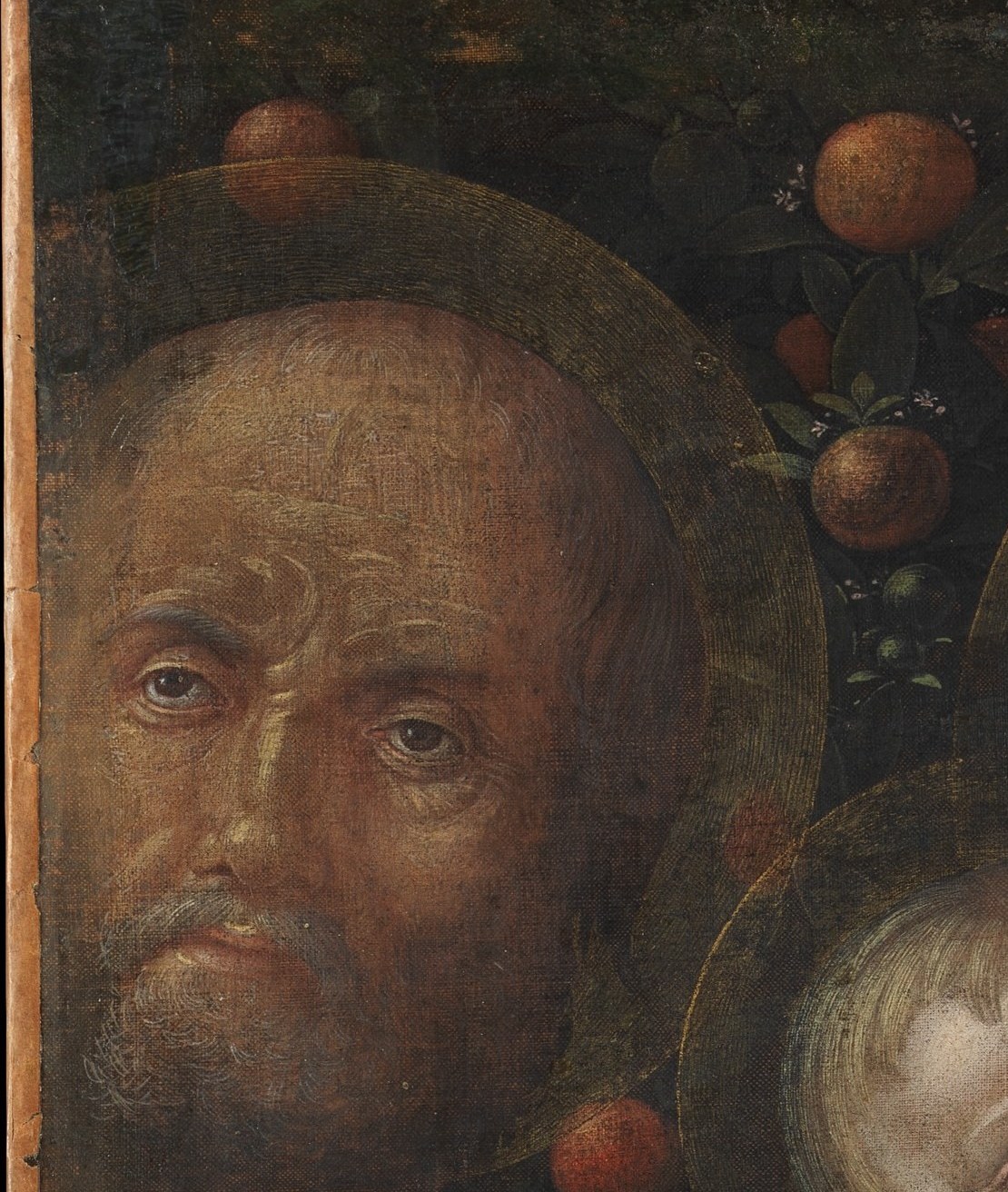
The white linen beneath the child carries a heavy double meaning. In Renaissance painting, a crisp white cloth under the infant Christ often prefigures the burial shroud. Mantegna places it prominently, bright against the dark drapery, so the eye can't miss it. The Mother holds her child in life; the cloth already speaks of death. The orange fruits in the hedge behind her whisper Paradise and Eucharist, but that white cloth is the line that cuts.
Mantegna's own life was long, he died around 1506, not long after this was finished, and his late style has a carved, sculptural gravity. The wrinkled face of Joseph, the chiseled folds of the drapery, the gold of Mary's veil: every passage is built to last. An old man painted this, and gave the Christ Child the eyes of someone who already knows the story. What do you see when you meet that gaze?
#arthistory #andreamentegna #renaissance
Details
Transcript
She holds him close. She will not look up. Her eyes are turned entirely inward. But look at the child. He sees you. Mantegna painted this in his late sixties, in a quiet city court. He gave Joseph the face of a tired old man. The white cloth beneath the child was a burial shroud in waiting.