Artwork
The Holy Family with Saint Mary Magdalen
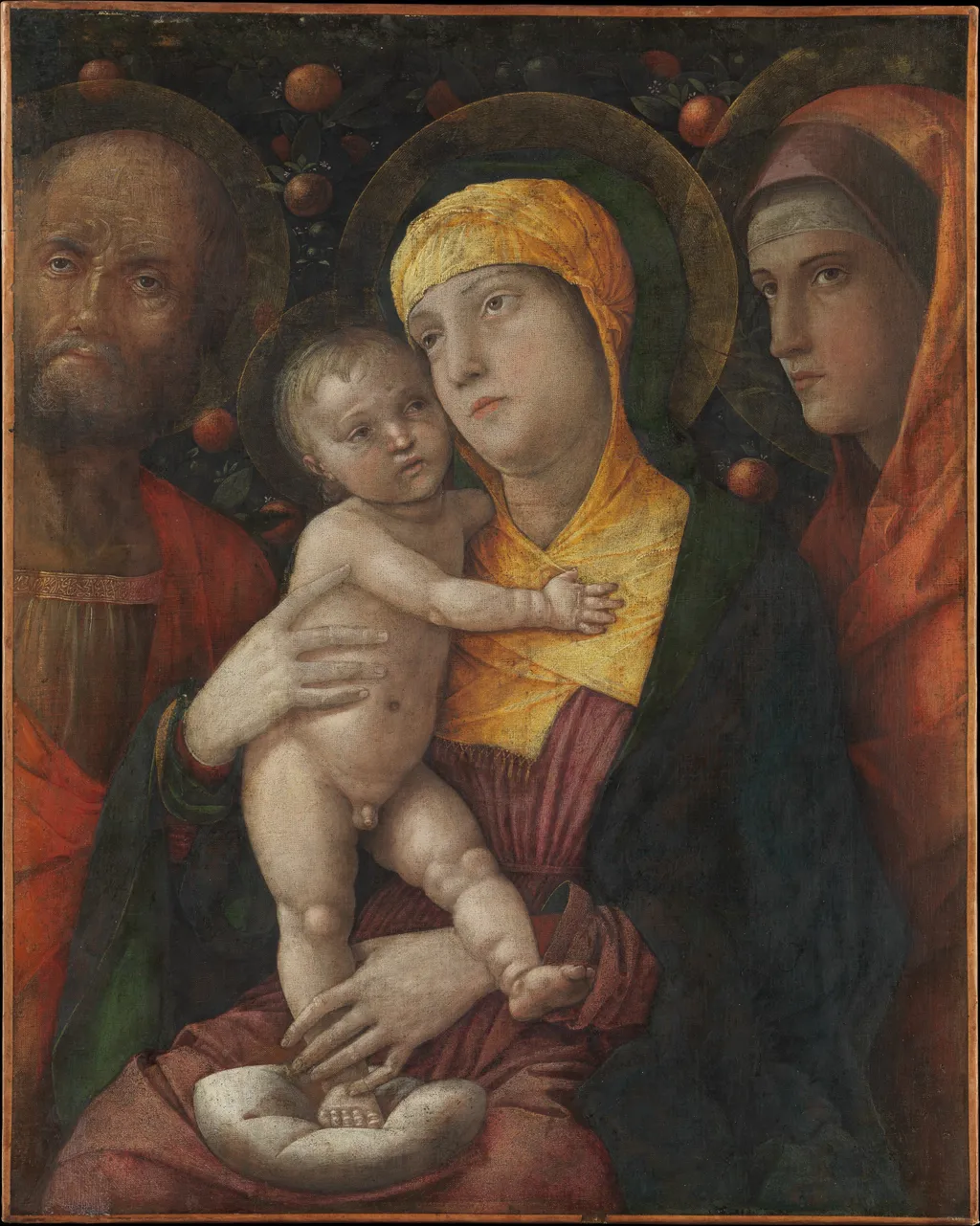
The Holy Family with Saint Mary Magdalen is a tempera painting by Andrea Mantegna. It dates from 1498 and is held in the collection of the Metropolitan Museum of Art.
About this work
At the Gonzaga court in Mantua around 1495, Andrea Mantegna built the Holy Family from a composition borrowed from Roman funerary reliefs, carving space with distemper on canvas. The Virgin, Christ Child, Joseph, and Mary Magdalen press together with the gravity of a tomb memorial. Benjamin Altman bequeathed the picture to the Metropolitan Museum of Art in 1913.
Subject & Meaning
The painting depicts the Holy Family, the Virgin Mary, the Christ Child, and Saint Joseph, alongside Saint Mary Magdalen.
The painting depicts the Holy Family, the Virgin Mary, the Christ Child, and Saint Joseph, alongside Saint Mary Magdalen. Mary, wearing a yellow veil, holds the infant Jesus on a cushion; the two embrace tenderly but do not look at each other. Joseph stands at left, while Mary Magdalen, identifiable by her long hair, appears at right.
The women's features are delicate, their expressions pensive and melancholy, a mood that forebodes Christ's tragic fate. The background shows a high hedge laden with fruit, a motif also found in other late Mantegna works such as the Trivulzio Madonna and the Madonna della Vittoria. Halos (aureola) sanctify the figures, while the overall composition emphasizes a contemplative, somber spirituality.
Technique & Style
The work is executed in glue-tempera and gold on canvas, measuring 57.2 × 45.7 cm. This use of canvas, along with its stylistic affinities to works such as the Trivulzio Madonna and Madonna della Vittoria, particularly the fruit-hedge background, dates the painting to Mantegna's late period. The composition features the Virgin, Christ Child, Saint Joseph, and Mary Magdalene; the melancholic, absorbed expressions of the female figures anticipate Christ's Passion. The paint surface is now opaque and allows the canvas texture to show through, a condition attributed to poor preservation rather than artistic intent.
History & Provenance
The painting, also known as the Altman Madonna, dates to Mantegna’s late period, c. 1495–1505, based on its canvas support and stylistic affinities with the Trivulzio Madonna and the Madonna della Vittoria. It may have been the work recorded by Marco Boschini in the Ospedale degli Incurabili in Venice. By 1902 the painting belonged to Neapolitan count Agosto d’Aiuti, who sold it that year to an English antiquarian in London.
After passing through several owners, it was acquired in 1912 by American collector Benjamin Altman, who bequeathed it to the Metropolitan Museum of Art in 1913.
The painting is held at the Metropolitan Museum of Art in New York, where it forms part of the Altman Collection. It was acquired in 1912 by American collector Benjamin Altman, who bequeathed it to the museum in 1913. The work does not have a publicly listed inventory or accession number in the provided sources, and no exhibition history is documented.
Context
Scholars date the painting to Mantegna’s late period (c. 1495–1505) based on its use of canvas and stylistic affinities with the Trivulzio Madonna and the Madonna della Vittoria, notably the fruit-hedge background. The work’s opaque paint surface, which reveals the canvas beneath, has been attributed to its conservation state rather than the artist’s original intent. The painting entered the Metropolitan Museum of Art via Benjamin Altman’s bequest in 1913, following a provenance through European collections including the Neapolitan count Agosto d’Aiuti.
Its place in art history is thus as a representative late devotional work by Mantegna, showing continued engagement with iconographic and compositional motifs from his earlier altarpieces.
Overview
Andrea Mantegna painted The Holy Family with Saint Mary Magdalen between 1495 and 1505. This tempera on canvas work depicts the Virgin Mary, Christ Child, Saint Joseph, and Mary Magdalen in a close arrangement. Measuring 57.2 by 45.7 cm, the painting is now housed in the Metropolitan Museum of Art, New York. It is also known as the Altman Madonna, named after a significant former owner.
Own this work as a print
Artist & collection
Artist
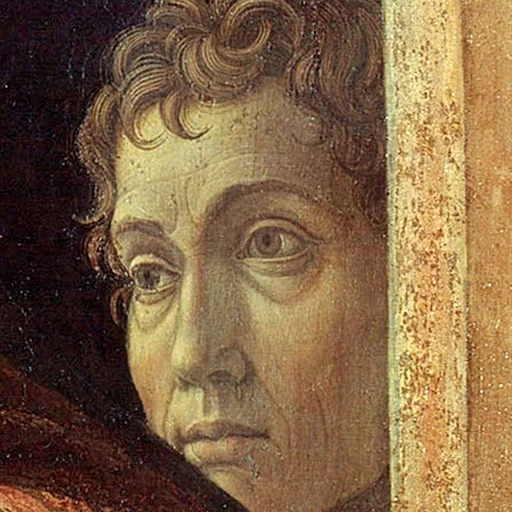
Andrea Mantegna (UK: US:; Italian:; c. 1431 – September 13, 1506) was an Italian Renaissance painter, a student of Roman archaeology, and the son-in-law of Jacopo Bellini. Like other artists of the time, Mantegna…

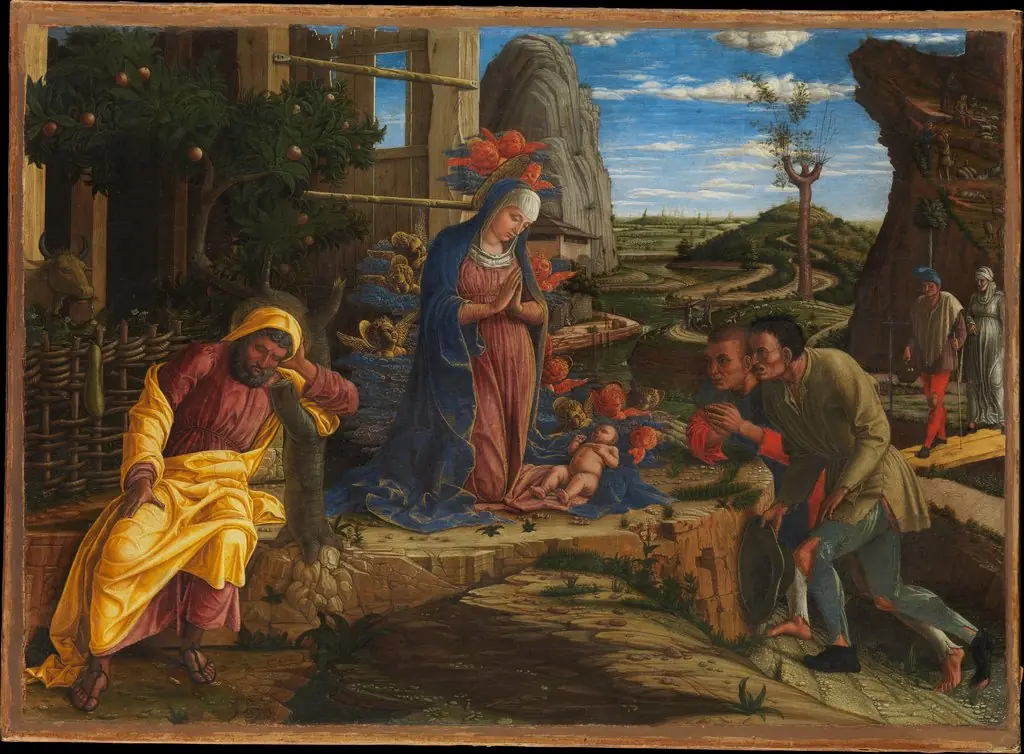
- Madonna and Child with Two Hermit Saints
 Madonna and Child
 Mary with the Child, Saint Jerome, Catherine of Siena and two angels
 Madonna and Child with Saint Jerome, Saint Catherine of Alexandria, and Angels
 Madonna and Child with Saints
 The Virgin and Child with Sts. Catherine of Alexandria, Clara and John the Baptist
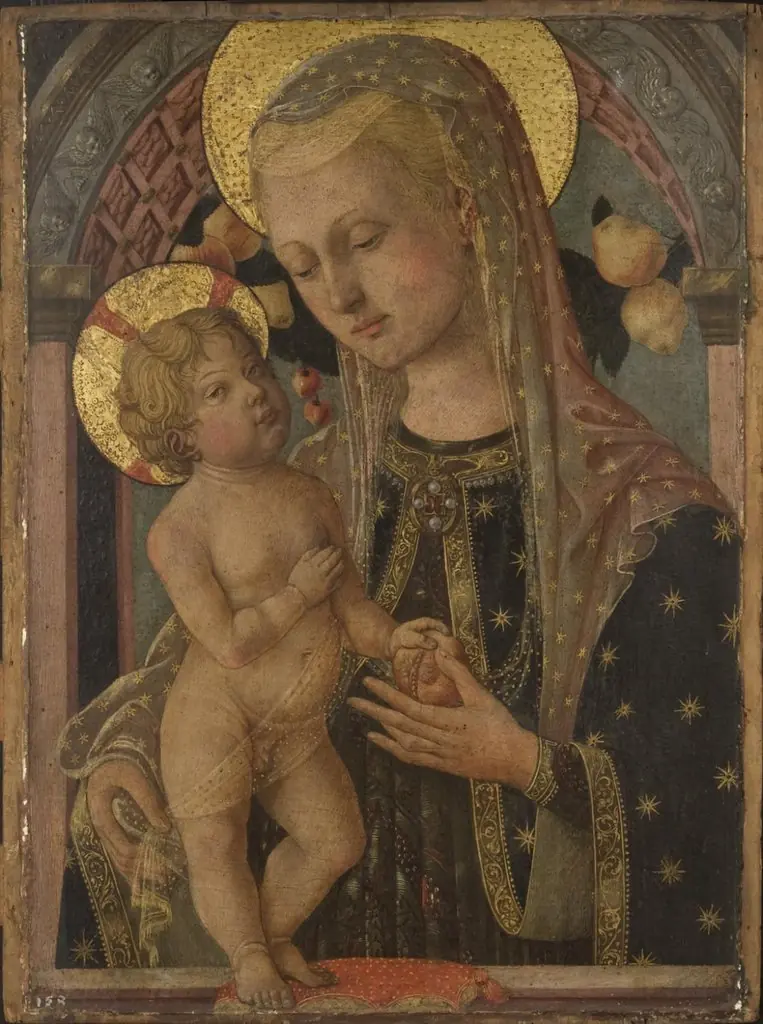 Virgin and Child with a Pomegranate
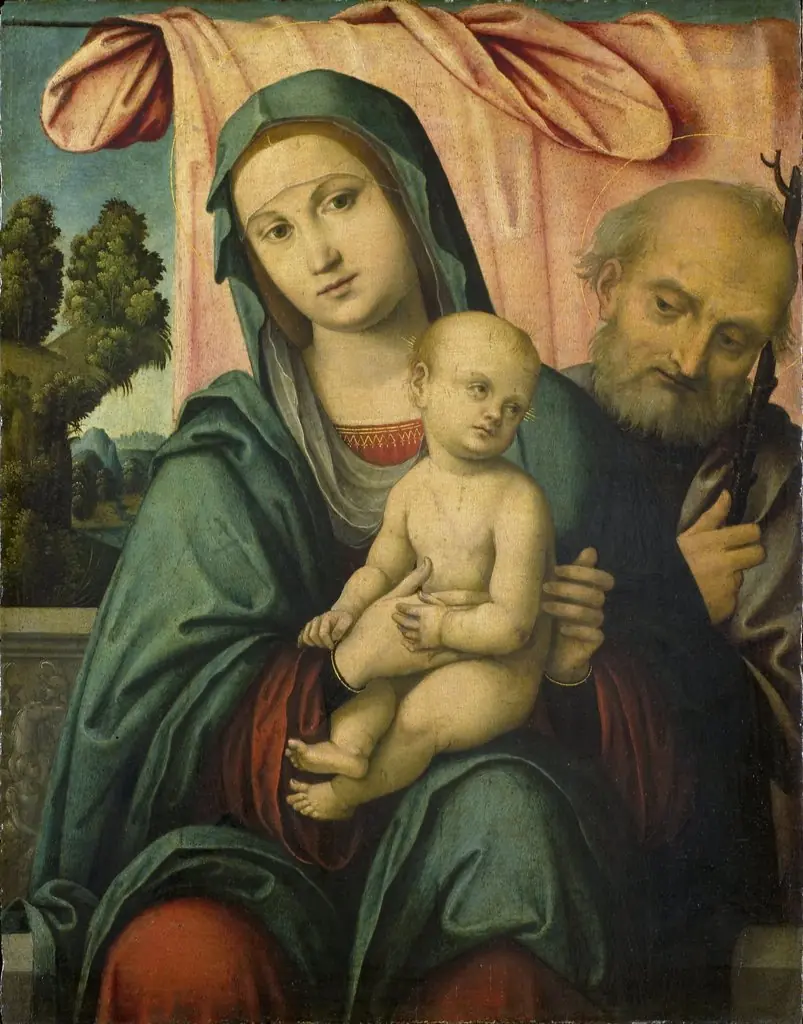 Holy Family
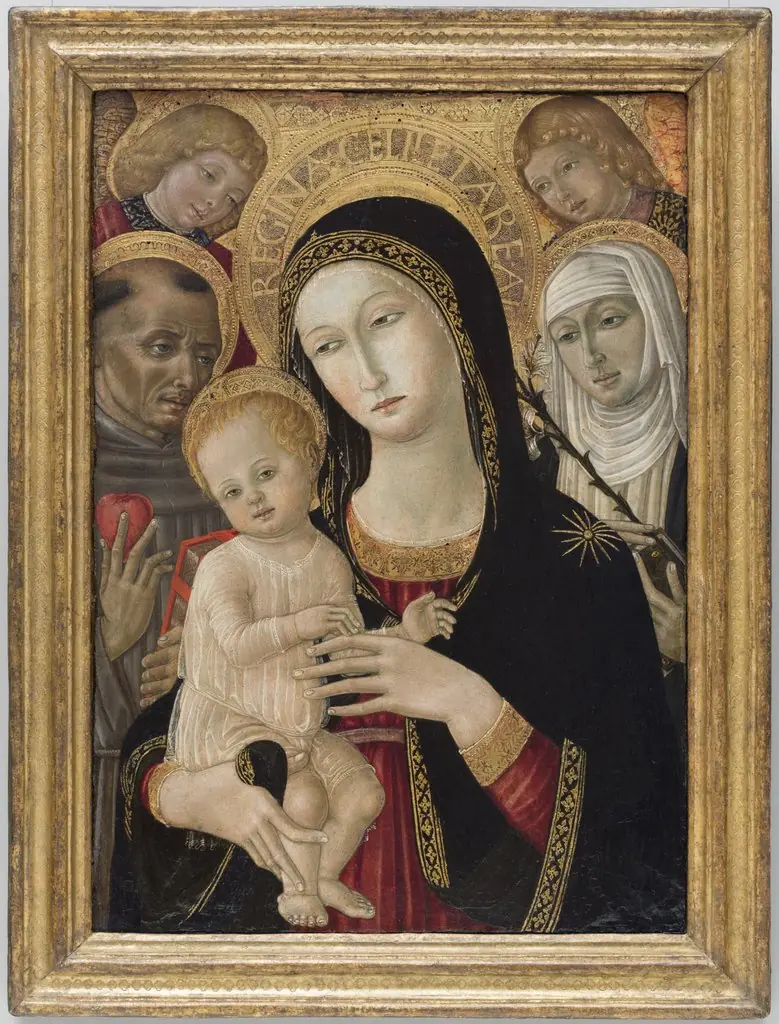 Madonna and Child with St. Catherine of Siena, Saint Anthony of Padua and Angels
 Madonna and Child Enthroned with Saint Peter and Saint Paul
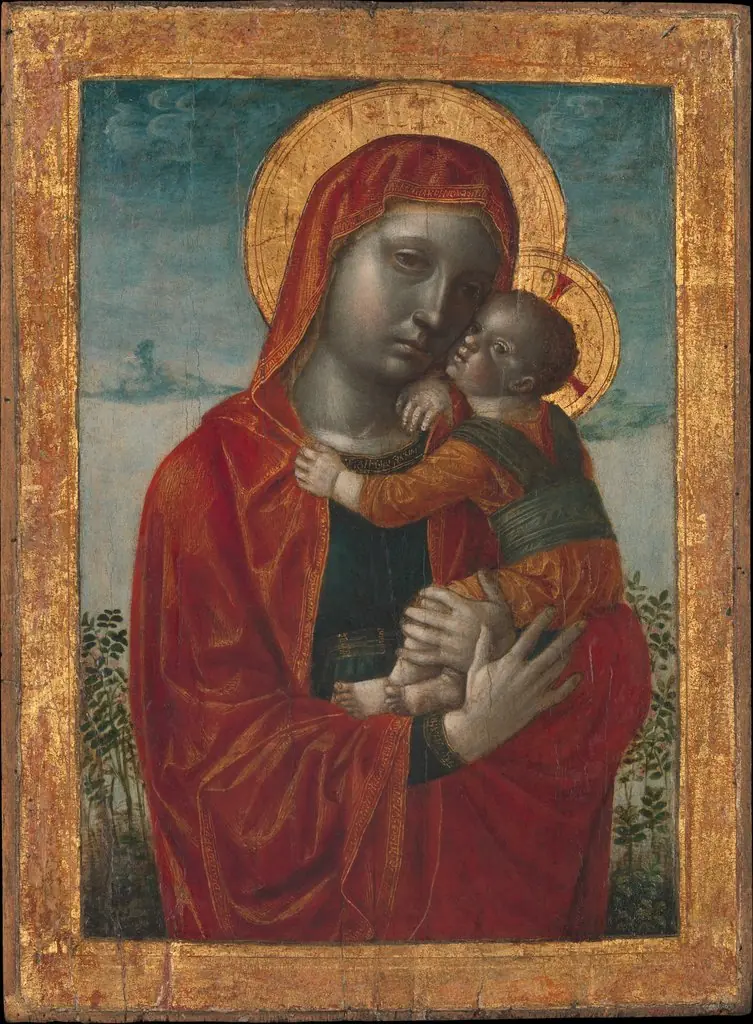 Madonna and Child
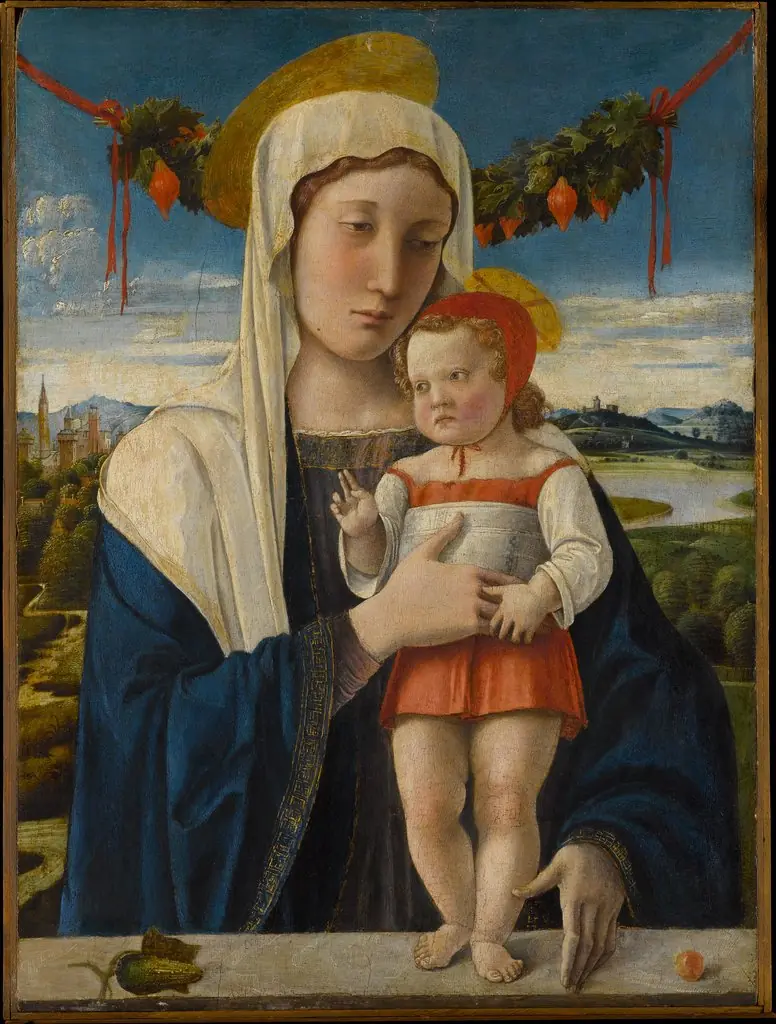 Lehman Madonna