Scene in a Courtyard by Ludolf de Jongh
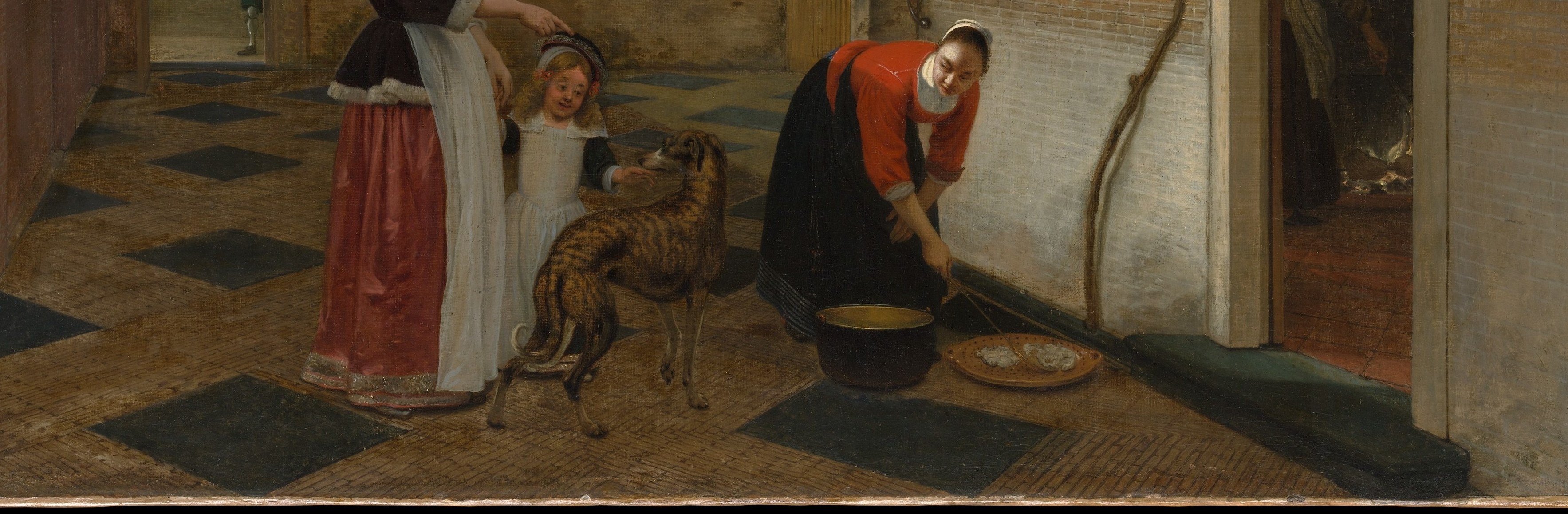
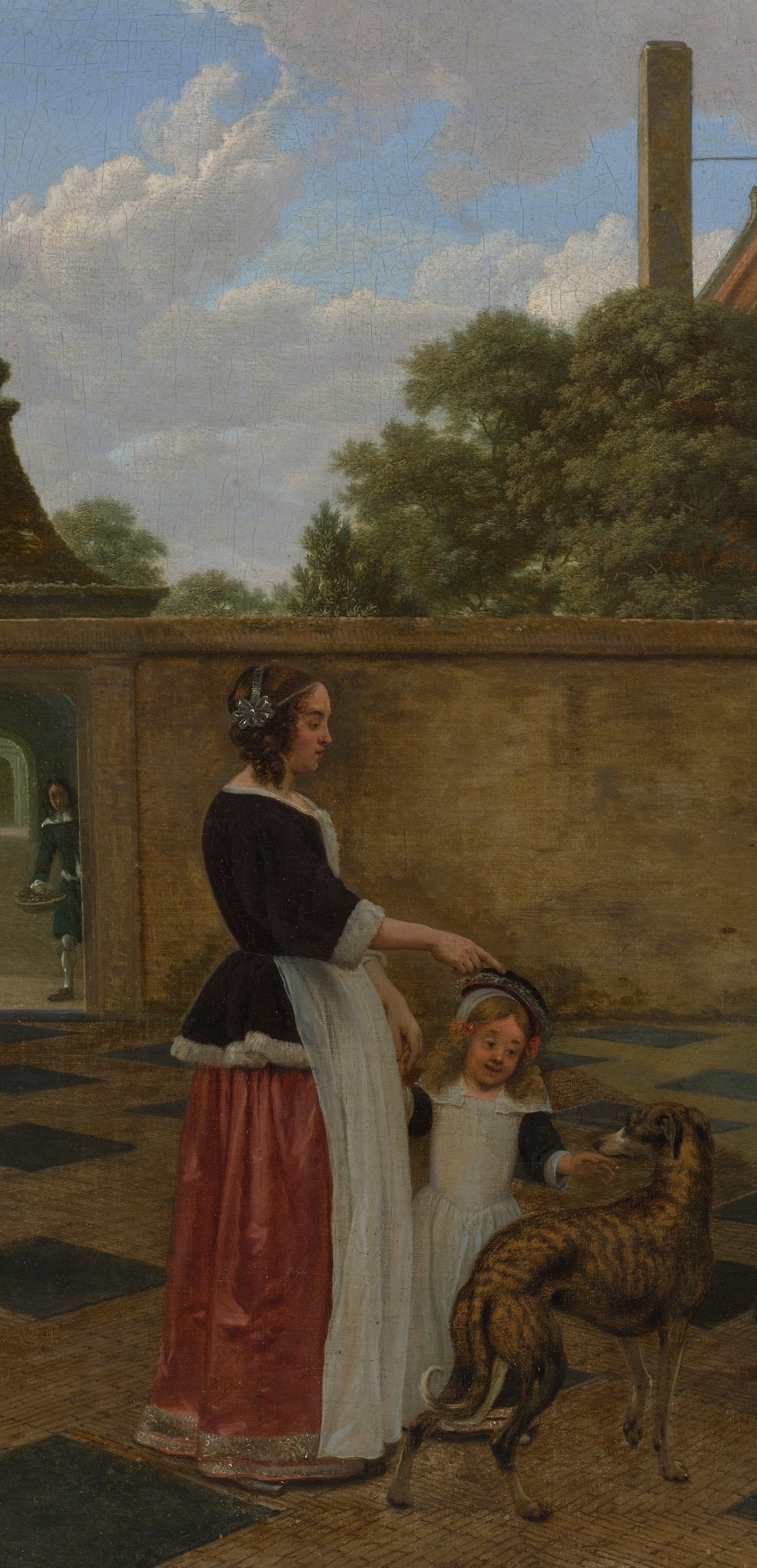
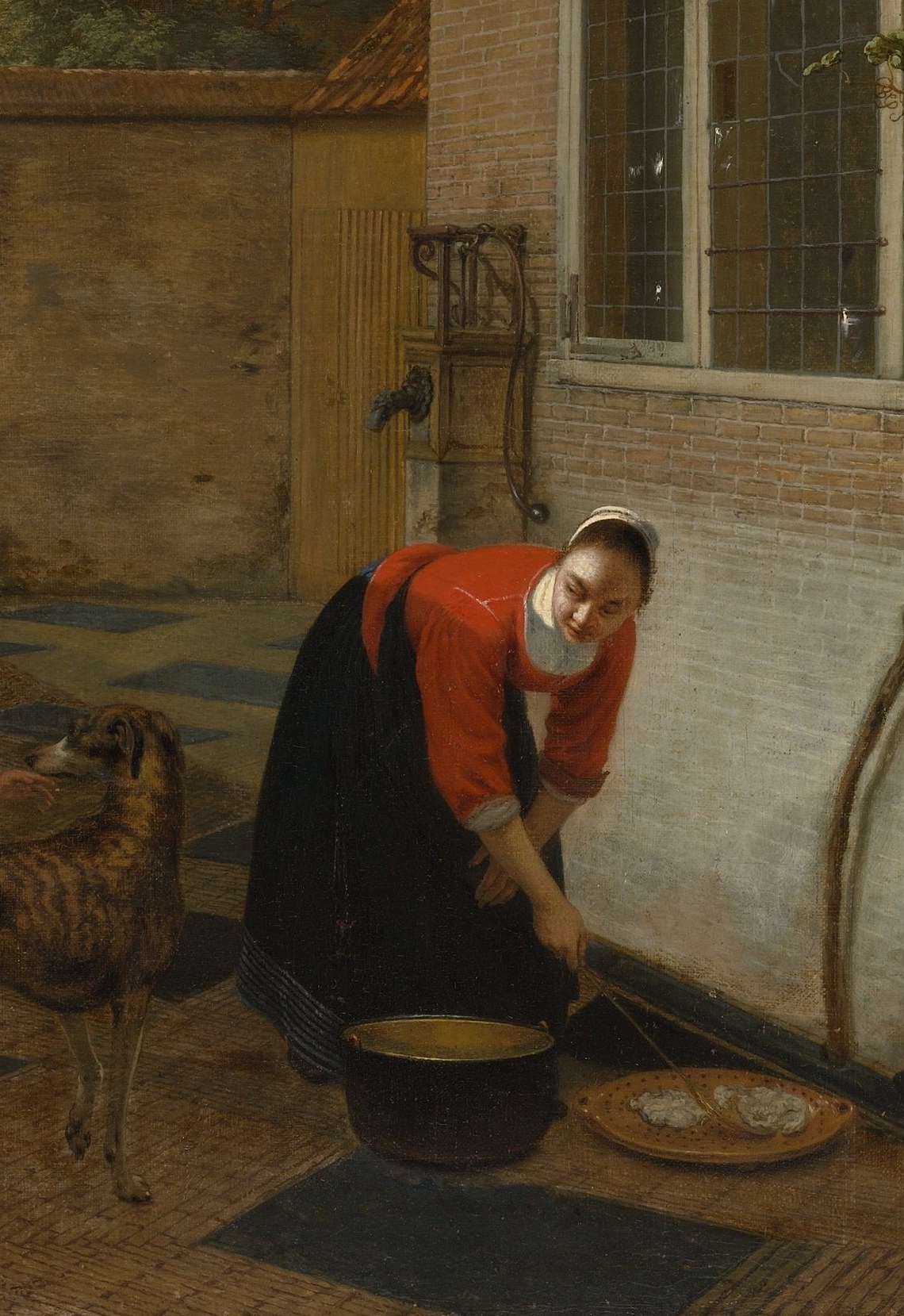
Ludolf de Jongh's 'Scene in a Courtyard' (1660) is a masterclass in using geometry to control where you look. The painting is a quiet domestic scene on the surface: a woman in a red skirt leads a small child, another kneels to feed a dog, all under a bright Dutch sky. But the courtyard itself is the real protagonist.
The black-and-white diamond floor isn't just decoration. It's a perspective engine. De Jongh angles the receding grid so your eye accelerates along the tiles, past the figures, straight toward the sunlit doorway at the back. He makes you physically trace the depth of the space before you realize what is waiting there.
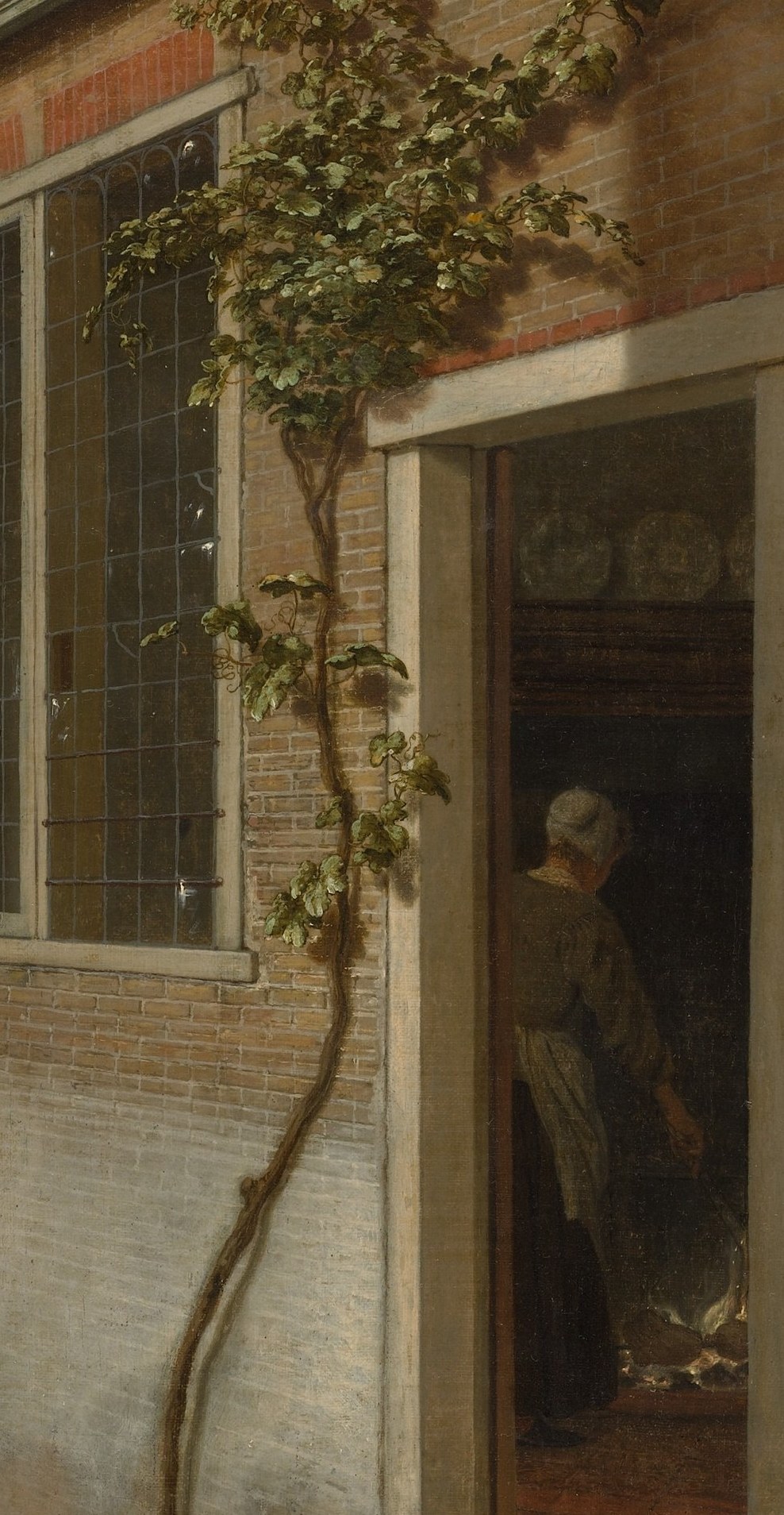
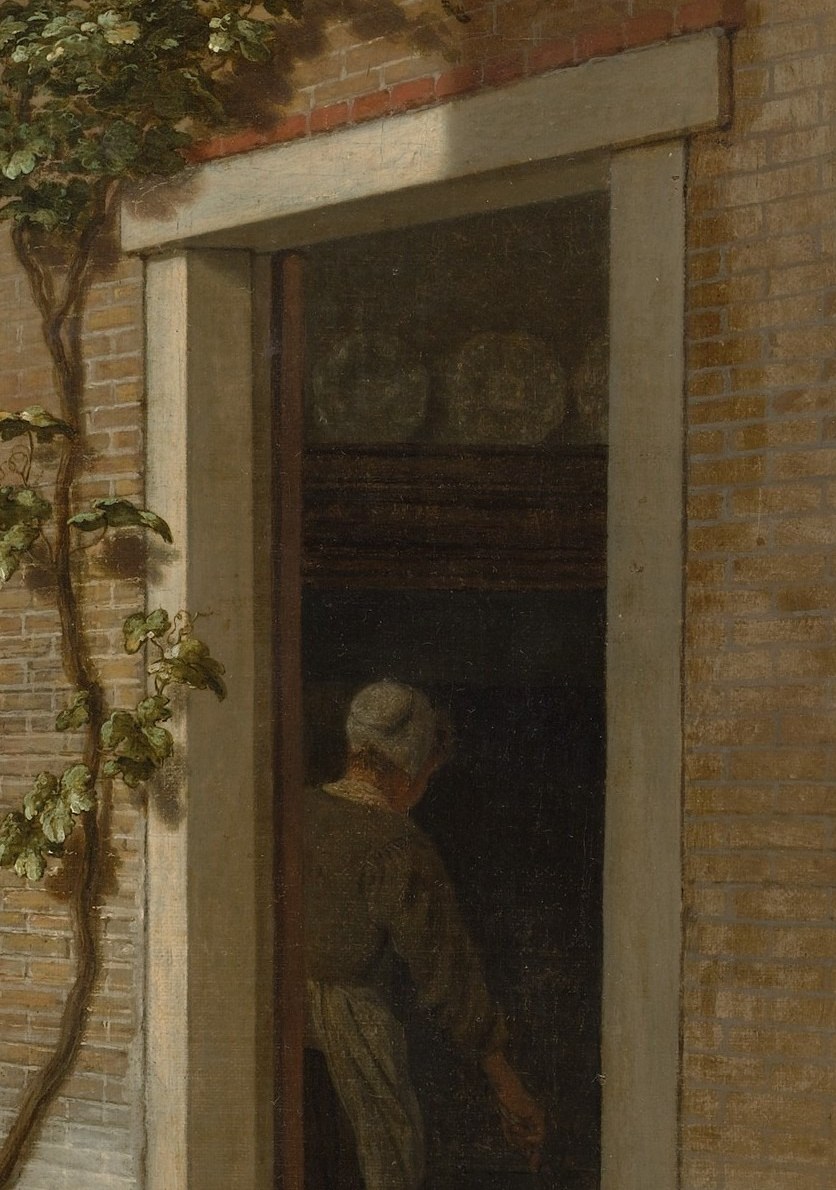
Inside that doorway stands a partially shadowed observer, watching the courtyard scene just as we are. And if you let your eyes adjust to the darker passage behind her, a fourth face emerges from the gloom. De Jongh, Rotterdam's leading genre painter of the 1650s, built a career on these layered social interiors. He trained his viewers to look twice.
The trick is still working, 350 years later. The floor pulls you in, the doorway stops you, and the hidden face keeps you looking.
Details
Transcript
A quiet courtyard. A woman, a child, a dog. But the real action is in the geometry beneath them. The diamond floor is a pure perspective machine. Your eye follows the receding tiles straight to the light. And there, in the doorway, someone is watching you back. Look deeper into the shadows behind her. A second hidden figure. The household has eyes everywhere.