Pont de la Tournelle, Paris by Lépine, Stanislas
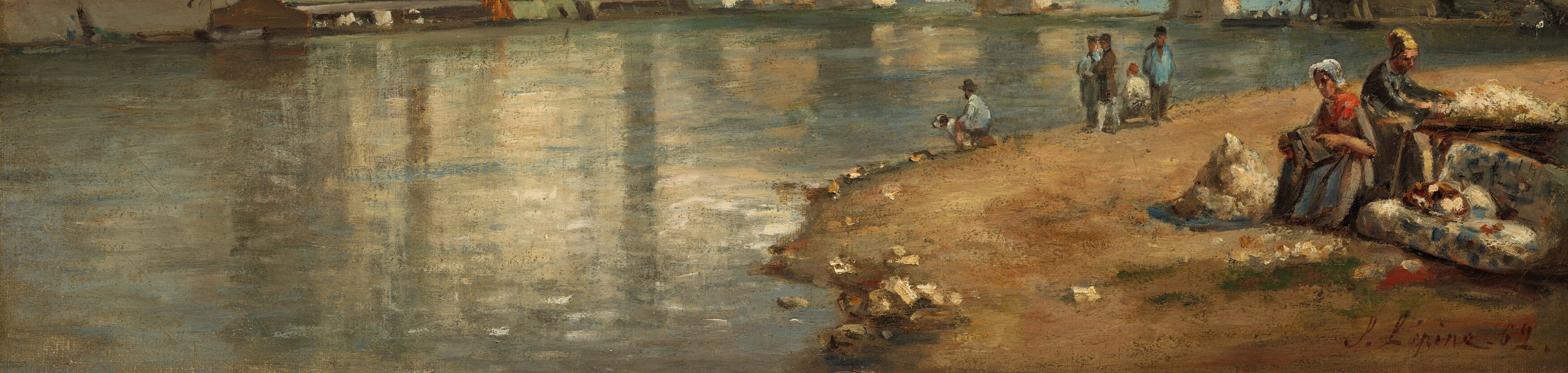
Stanislas Lépine's "Pont de la Tournelle, Paris," painted in 1862, captures a tranquil, everyday scene on the Seine amidst a period of rapid urban transformation in the city. The painting, now housed in a private collection, offers a glimpse into how ordinary Parisians lived along the river.
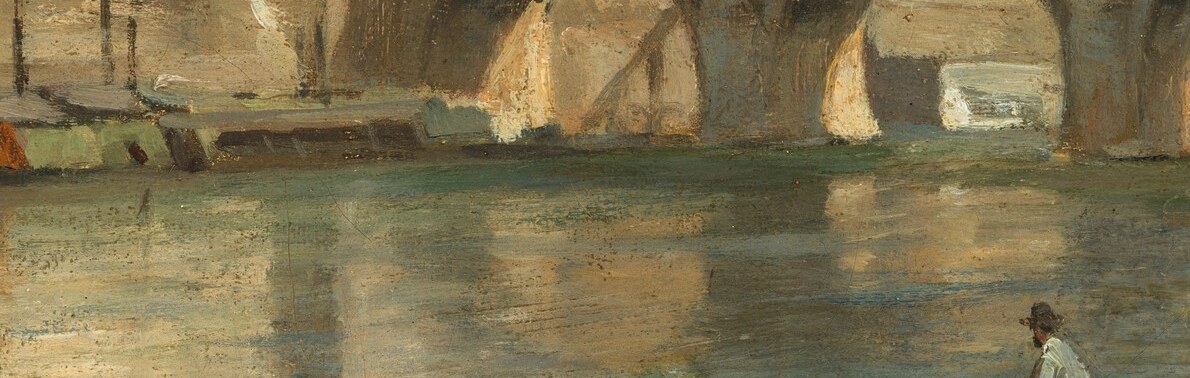
Lépine, a master of subtle light and atmosphere, used thin, translucent layers of paint to create a soft glow that reflects beautifully on the water. While grand boulevards were being built, Lépine focused on the quieter, functional structures and the lives unfolding around them.
He had a particular fondness for depicting the Seine, creating numerous vistas that documented the capital's waterways. This focus provides a valuable counterpoint to the more monumental art of the time, showing the city's human and infrastructural fabric.
What do these small, unhurried figures tell you about life in 19th-century Paris?
Details
Transcript
Paris, 1862. The city was changing fast. But life on the Seine remained constant. This painter loved capturing quiet, everyday moments. He used thin layers of paint for a soft, luminous light. Look closely at the figures on the bank. These small details tell a human story.