Trompe l'oeil. The reverse of a framed painting. by Cornelis Norbertus Gijsbrechts
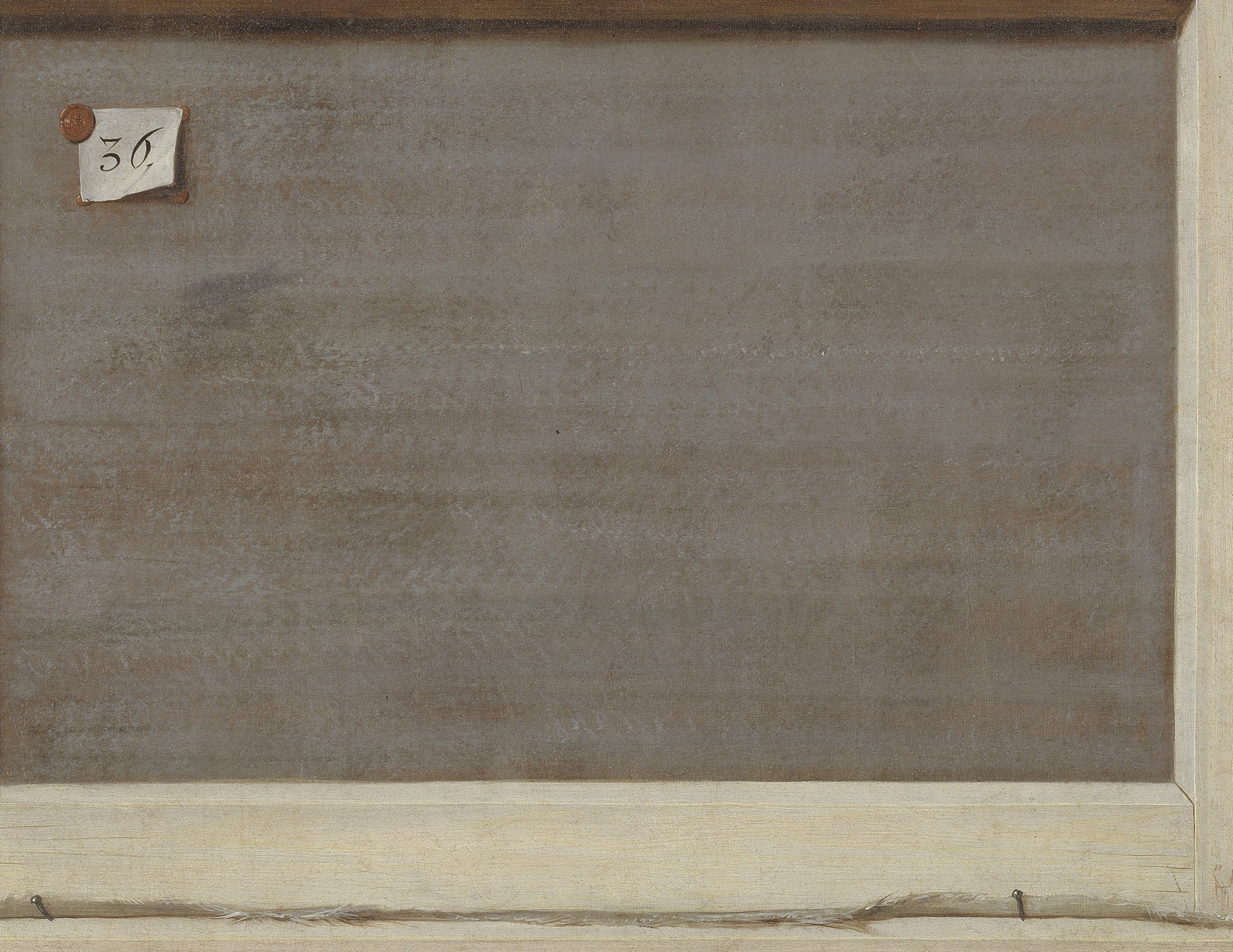
Cornelis Norbertus Gijsbrechts's "The Reverse of a Framed Painting," created in 1670, is a masterful example of trompe l'oeil, an artistic technique designed to fool the eye. This work, held in a museum collection, is not the back of a canvas, but a meticulously painted illusion.
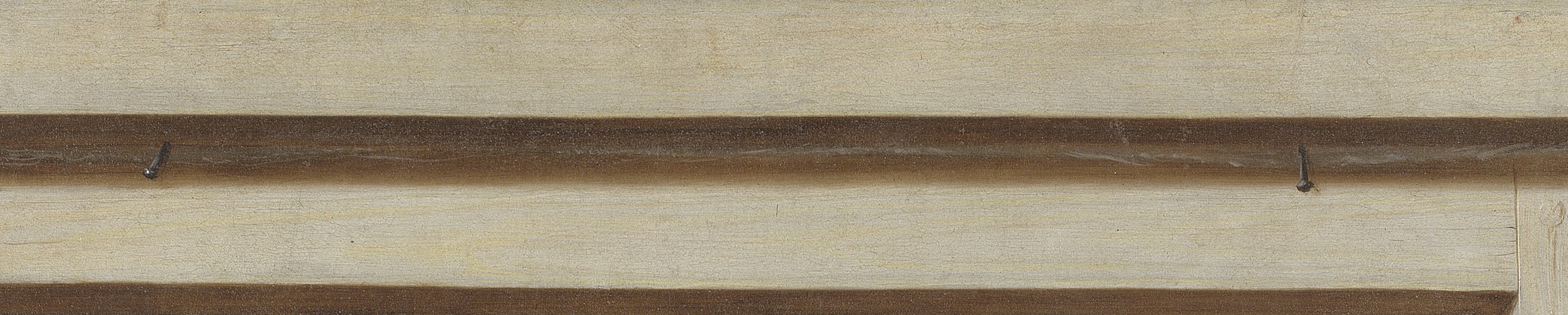
Look closely at the details: the subtle wood grain, the convincing shadows cast by the frame, and even the tiny paper label with the number 36. Every element is rendered with such precision that it tricks the viewer into believing they are seeing a three-dimensional object.
Gijsbrechts, who served as court painter to the Danish royal family, specialized in these visual tricks, challenging perceptions of reality and representation. His skill in rendering everyday objects with such realism highlights the power of oil paint to create an almost tangible illusion.
This painting invites us to pause and consider: where does the object end and the illusion begin?
Details
Transcript
This isn't the back of a canvas, it's a painting. The painter was a master of trompe l'oeil. He was court painter to the Danish King in 1670. Every grain, every scratch, is painted for illusion. Look closely at the shadow under the frame. It's all paint, making you question what is real.