Baoyang Lake by Song Xu
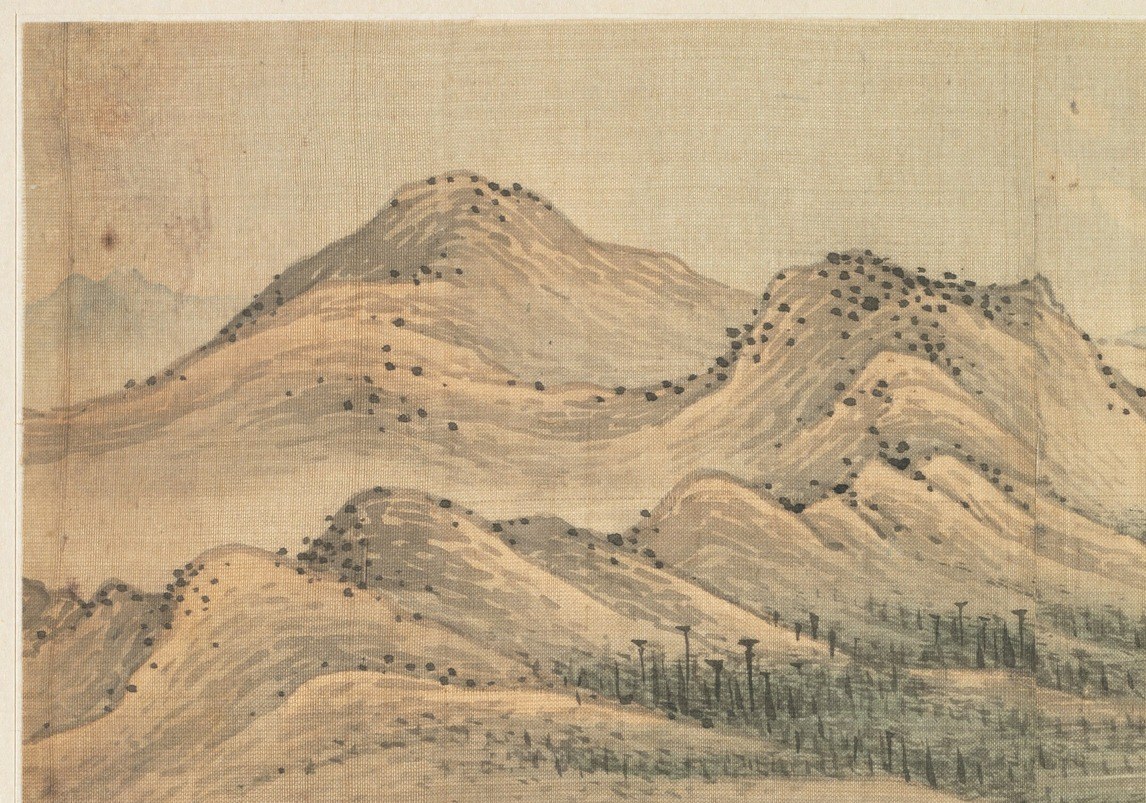
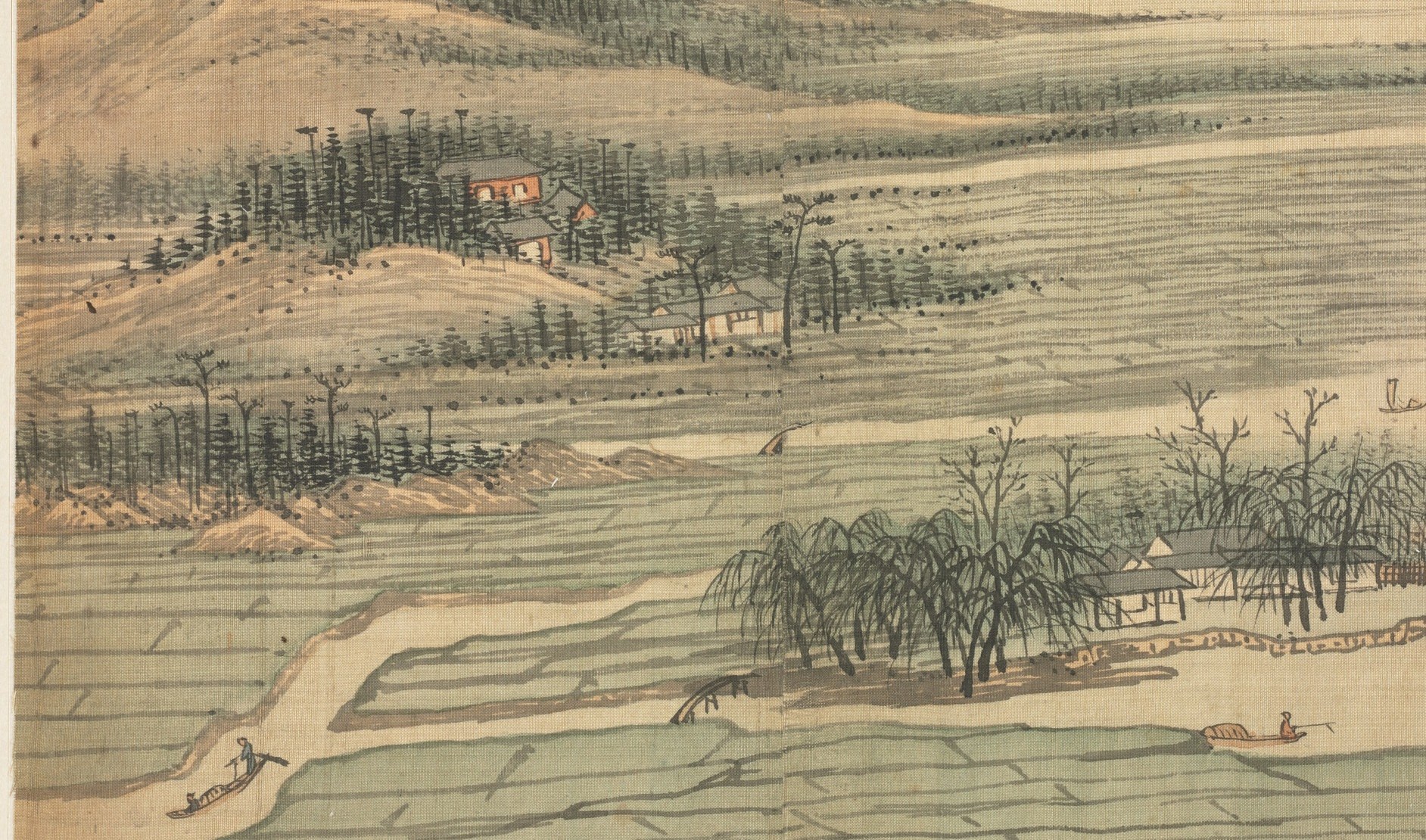
Song Xu's 'Baoyang Lake' (1594) rewards the patient viewer. At first glance it is an exercise in stillness, a vast, misty lake and receding hills rendered in delicate ink washes. But linger, and the landscape slowly reveals its inhabitants.
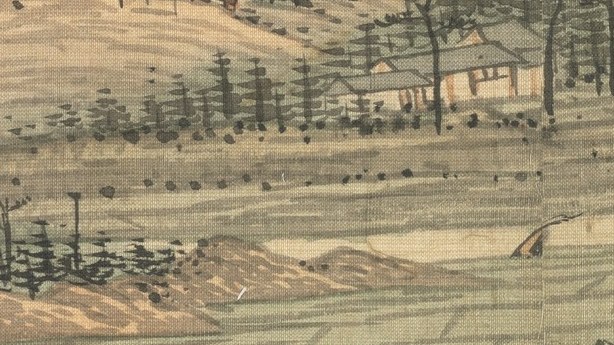
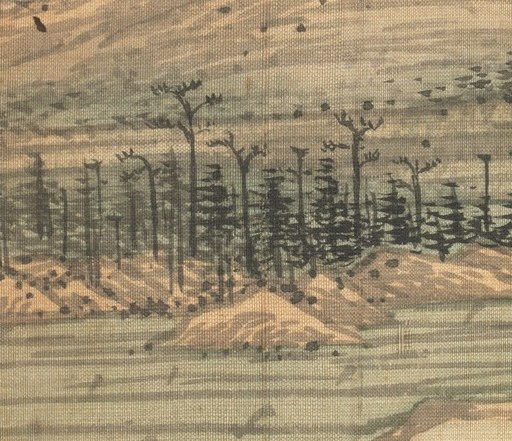
Look closely along the lower-left shore. The artist has tucked tiny figures there: a few barely legible strokes that suggest travelers or fishermen. Nearby, a warm cluster of red roofs nestles into the hillside, and a solitary boat drifts on the enormous water. These details are easily missed when scrolling past, yet they are the very heart of the painting’s meaning.
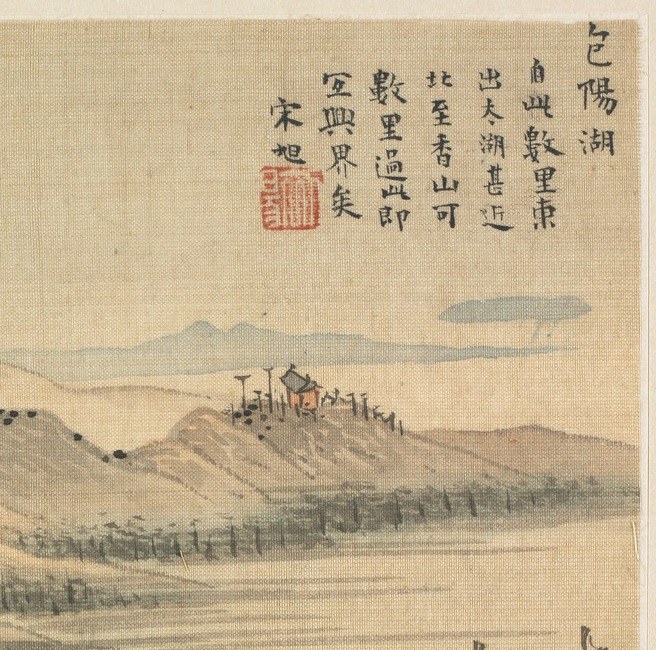
Song Xu belonged to the late Ming dynasty literati tradition, where painting was a form of poetry and friendship. This work was likely a farewell gift for a companion departing to the real Baoyang Lake. The calligraphy in the upper right, punctuated by bright vermilion seals, would tie the image to a specific classical verse, completing a conversation between word, image, and memory.
The hidden figures are not just decoration; they are an invitation. In the literati imagination, the ideal landscape was one you could mentally enter. Finding those travelers on the shore means accepting that invitation, stepping into the mist, and drifting for a while.
Details
Transcript
A vast lake, still and silent. The painter stacked these ridges in fading ink to build atmospheric depth. A solitary boat drifts. A classic invitation: imagine yourself there. Now look closer at the shore. Tiny figures. Travelers or fishermen, barely legible strokes. Song Xu painted this in 1594 for a friend traveling to Baoyang Lake.