The Execution of Saint John the Baptist by Ubaldo Gandolfi
View the artwork: The Execution of Saint John the Baptist →
This is The Execution of Saint John the Baptist, painted around 1770 by the Bolognese artist Ubaldo Gandolfi.
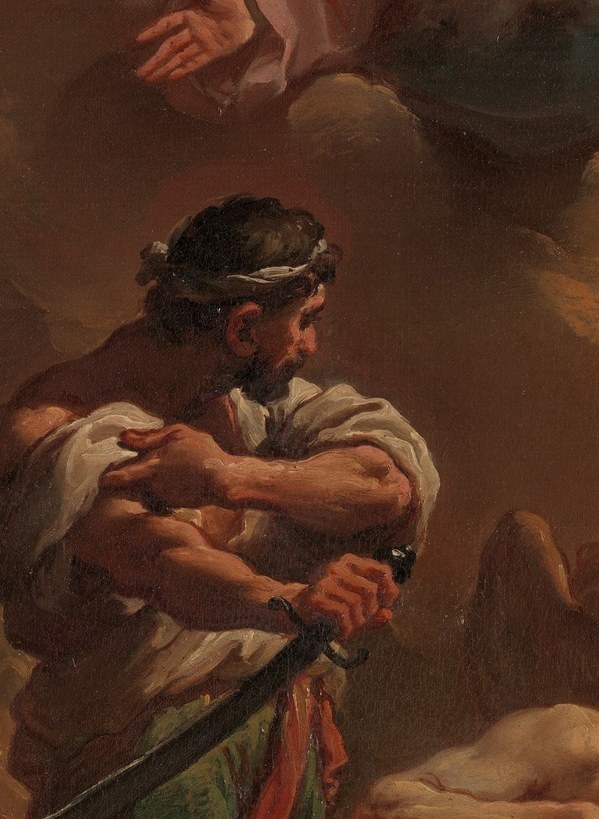
Watch what happens in the center of the canvas. The executioner's back is a masterclass in chiaroscuro, Gandolfi builds the entire musculature from a near-black ground, letting a single raking light pull the shoulder blades and spine into three dimensions. The body is borrowed directly from classical sculpture, but applied here to a paid instrument of state violence. The tension between heroic form and troubling function is the painting's real subject.
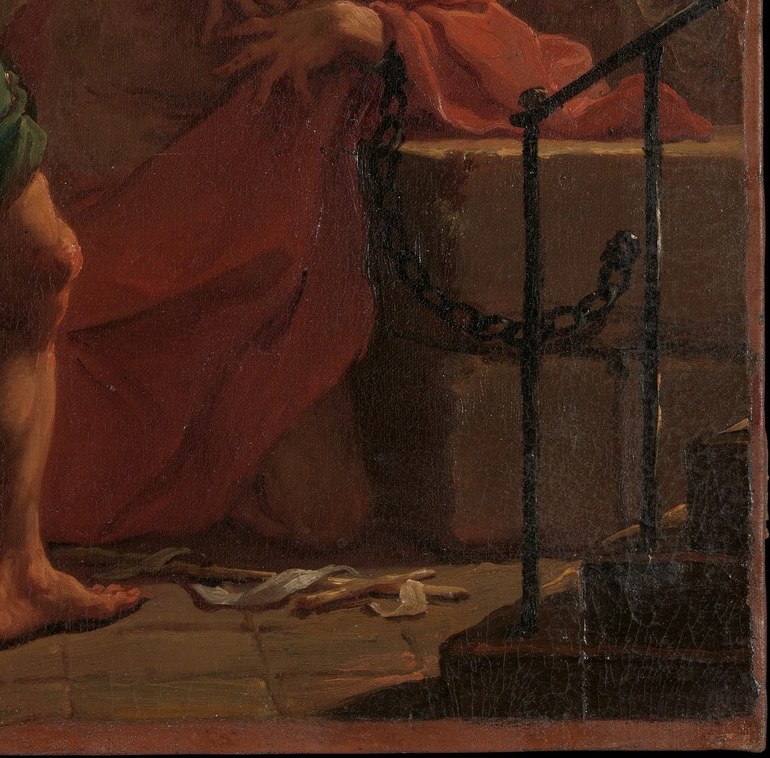
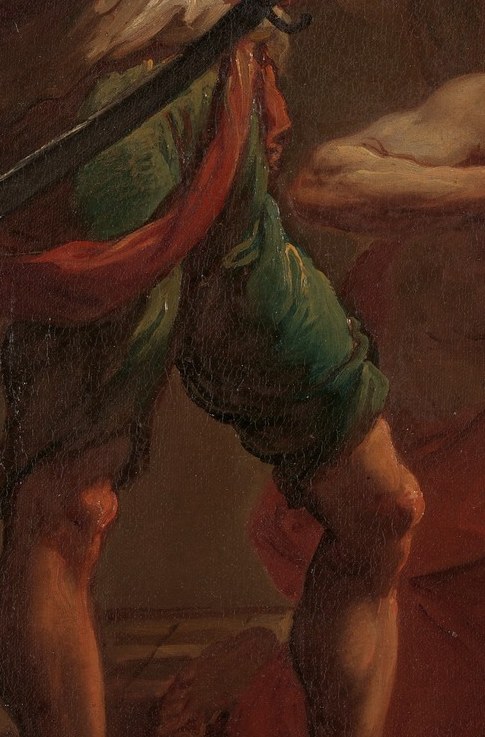
Then look at the color economy. Two saturated notes carry the whole lower register: the executioner's vivid green loincloth and the martyr's red drapery. The green anchors the killer. The red pulls your eye to the saint, but the cloth half-conceals the wound. Gandolfi knew that what the viewer imagines is always worse than what paint can show.
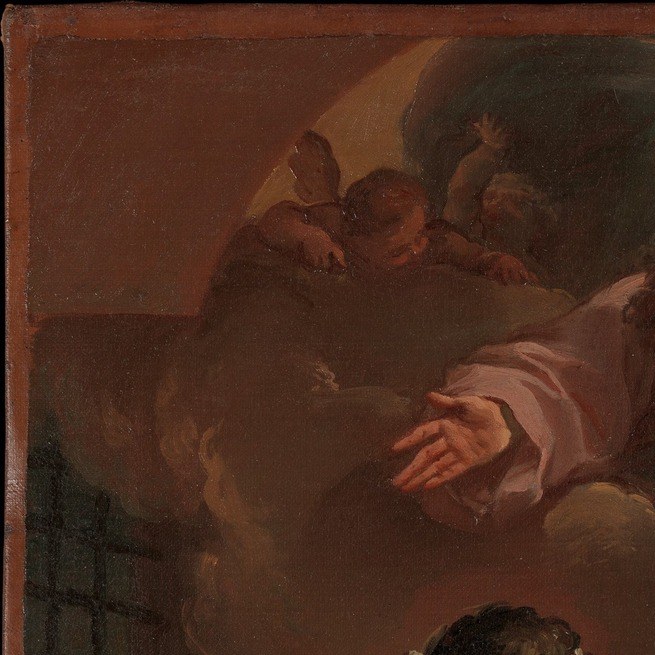
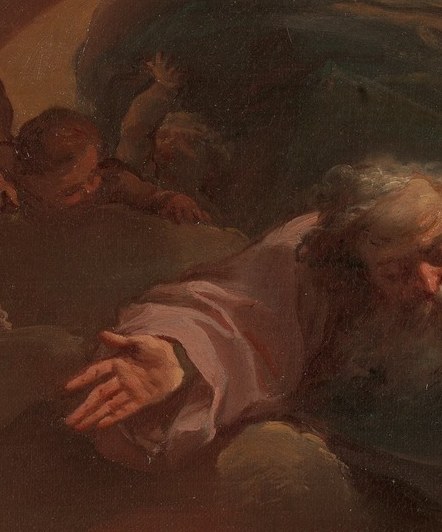
Gandolfi and his brother Gaetano were among the most celebrated painters in eighteenth-century Italy, working for courts across Europe. This canvas shows late Baroque technique at its most confident, the swirling clouds above signal cosmic disturbance at an unjust death, a divine witness watching from the upper left.
Next time you see a painting of a violent moment, notice what it refuses to show you. Often the restraint is the whole point.
#arthistory #baroque #chiaroscuro
Details
Transcript
Look at the light. The torso is carved from near-black shadow. Gandolfi borrowed this back from classical sculpture. A heroic physique doing a terrible job. Only two colors separate killer from victim. The green blazes. The red withholds. Half the wound is hidden in shadow. Your eye supplies the rest.