Artwork
The Execution of Saint John the Baptist
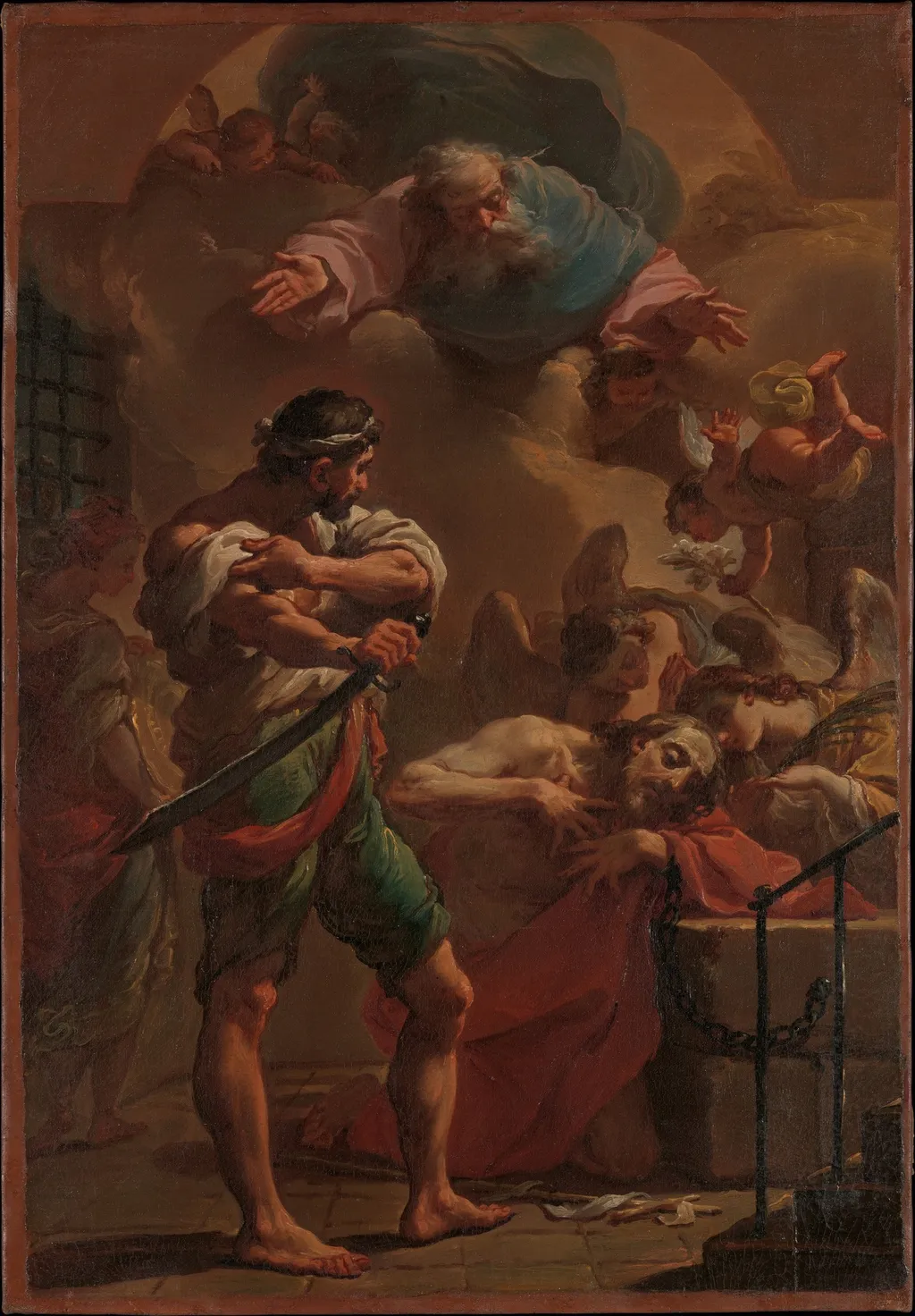
The Execution of Saint John the Baptist is an oil painting by the Rococo painting artist Ubaldo Gandolfi. It dates from 1770 and is held in the collection of the Metropolitan Museum of Art.
About this work
Subject & Meaning
Ubaldo Gandolfi's painting depicts the martyrdom of John the Baptist, a foundational episode in Christian tradition.
Ubaldo Gandolfi's painting depicts the martyrdom of John the Baptist, a foundational episode in Christian tradition. The composition visualizes the saint's beheading, with the sword serving as the instrument of execution and a male figure representing the executioner carrying out the act. The presence of God the Father signals divine witness to the martyrdom, while an angel introduces a celestial element that frames the moment as one of spiritual significance rather than mere violence.
Together, these figures transform the scene into an iconographic statement about John's role as the forerunner of Christ whose death fulfills a prophetic destiny. The combination of earthly participants and heavenly observers underscores the theological meaning of the event: the execution is simultaneously a brutal political act and a sacred passage, with the saint's death marking his transition to heavenly glory.
Technique & Style
The Execution of Saint John the Baptist is an oil painting on canvas created by Ubaldo Gandolfi in 1770. The work is executed in oil paint applied to a woven canvas support, with dimensions of approximately 24 units in height and 16.5 units in width. As a religious painting from the late eighteenth century, it employs the traditional medium of oil on canvas typical of Gandolfi’s output.
No further details regarding the artist’s handling, the painting’s current condition, or specific stylistic characteristics are provided in the sources.
History & Provenance
The Execution of Saint John the Baptist was painted in 1770 by Ubaldo Gandolfi, an Italian painter active in Bologna, as documented in contemporary records and the work’s catalog entry. Executed in oil on canvas, the painting measures 24 × 16.5 cm and depicts the martyrdom of Saint John the Baptist. Following its creation, the work remained in the artist’s studio until it entered the collection of the Metropolitan Museum of Art, where it has been on view since its acquisition.
No earlier ownership records are provided in the available sources, indicating that the museum is the current and sole documented owner.
The painting is held by the Metropolitan Museum of Art, New York, where it is inventoried as 1975.1.80. It has been exhibited at the museum as part of its permanent collection displays since its acquisition, though no temporary exhibitions are recorded in the provided sources.
Overview
This painting, titled The Execution of Saint John the Baptist, depicts a moment of intense drama and violence. The canvas captures the aftermath of a fatal act, with a central figure wielding a sword standing over a prostrate body. Surrounding figures contribute to the scene's tension, while a celestial observer appears from above. The composition emphasizes the gravity of the event through its dark palette and urgent narrative.
Own this work as a print
Artist & collection
Artist
Ubaldo Gandolfi (1728–1781) was an Italian painter, draughtsman and sculptor of the late-Baroque period, mainly active in and near Bologna.

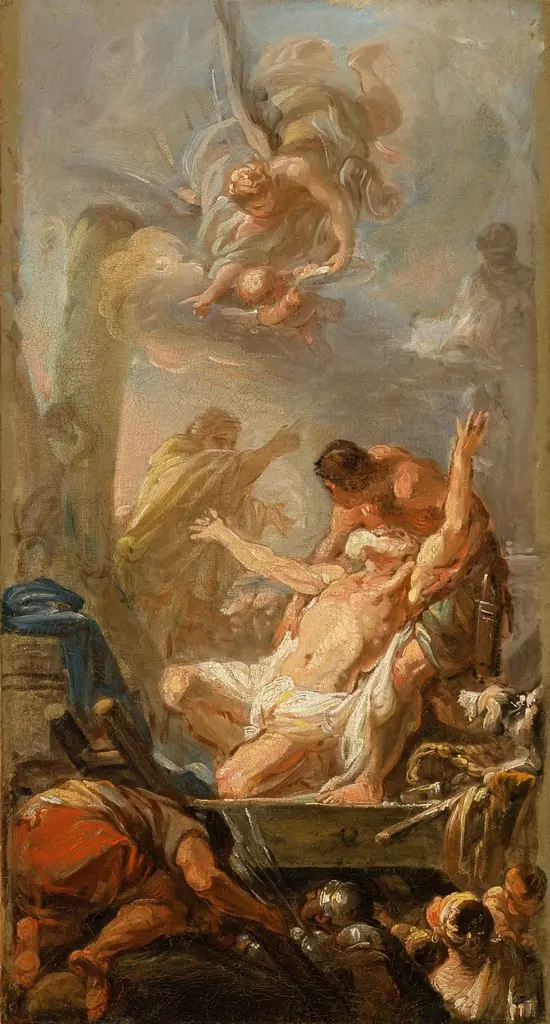
- Scene from the Martyrdom of St. Andrew
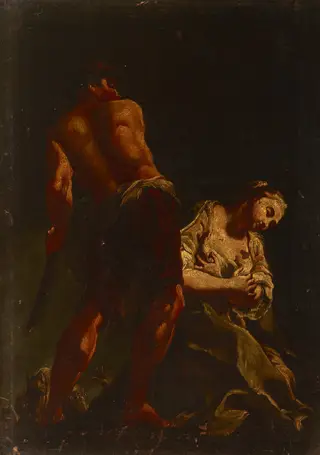 Martyrdom of the Saint Woman
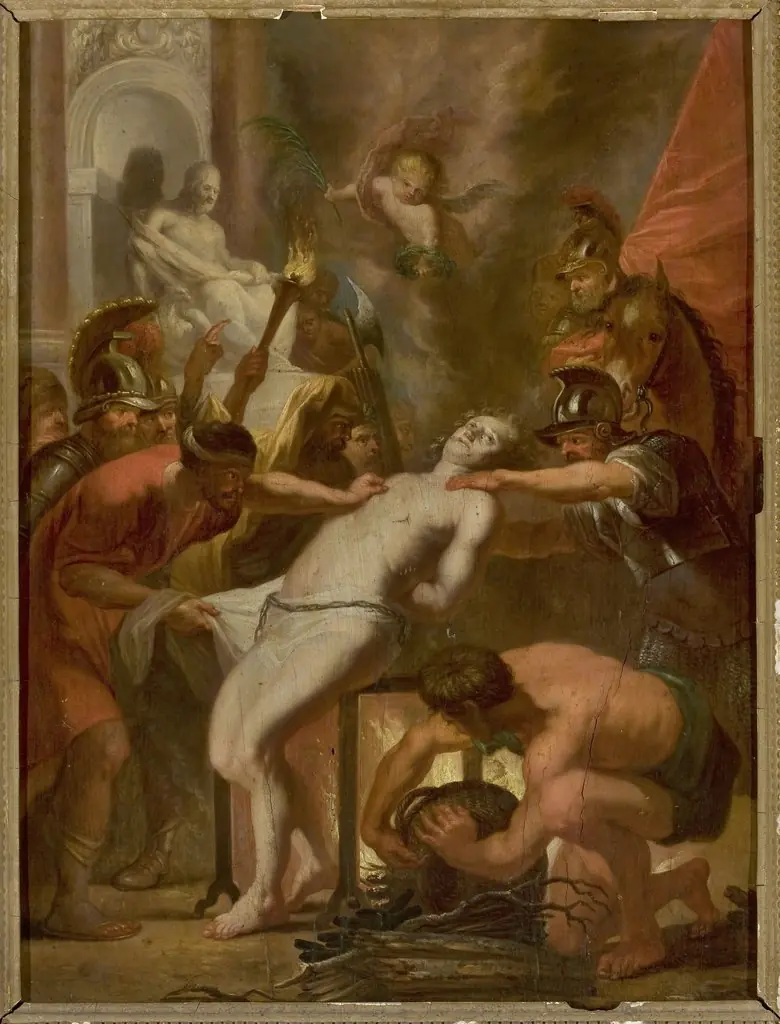 Martyrdom of St. Lawrence
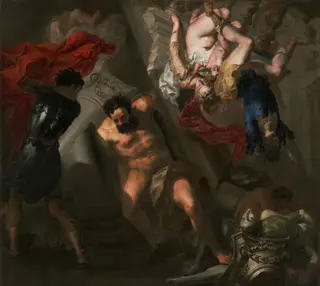 The Death of Samson
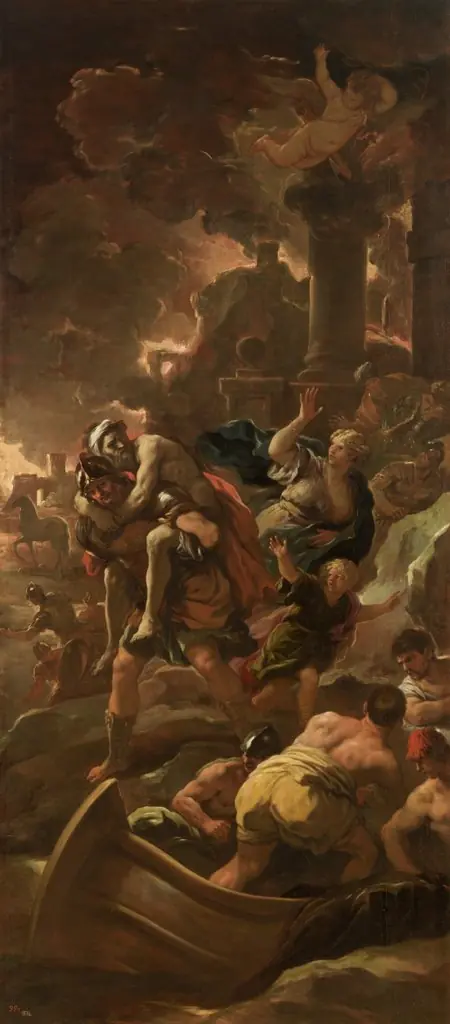 Eneas, fugitivo con su familia
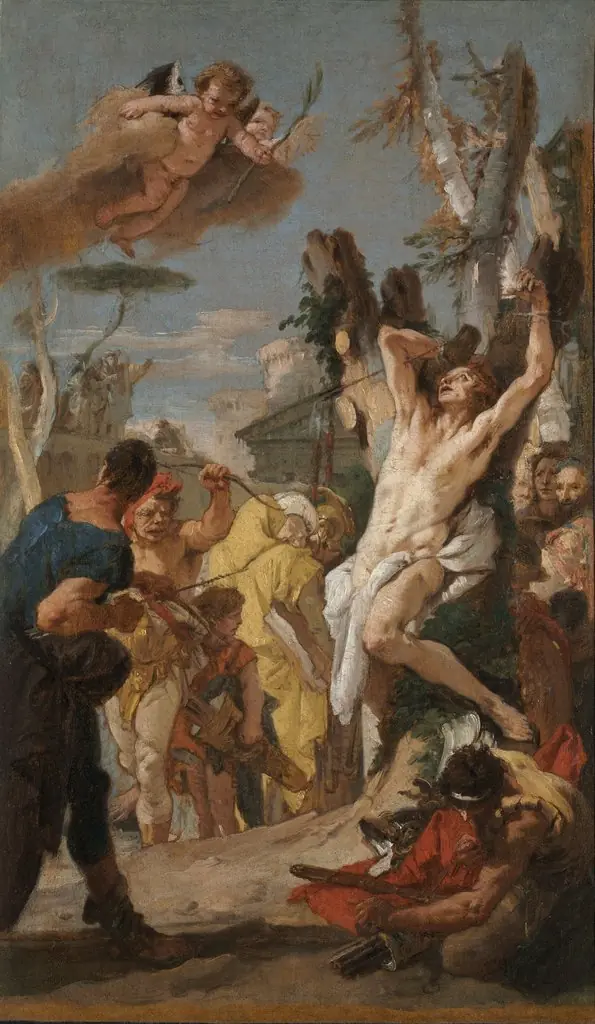 Study for "The Martyrdom of Saint Sebastian" (for the Augustinian monastery at Diessen, Germany)
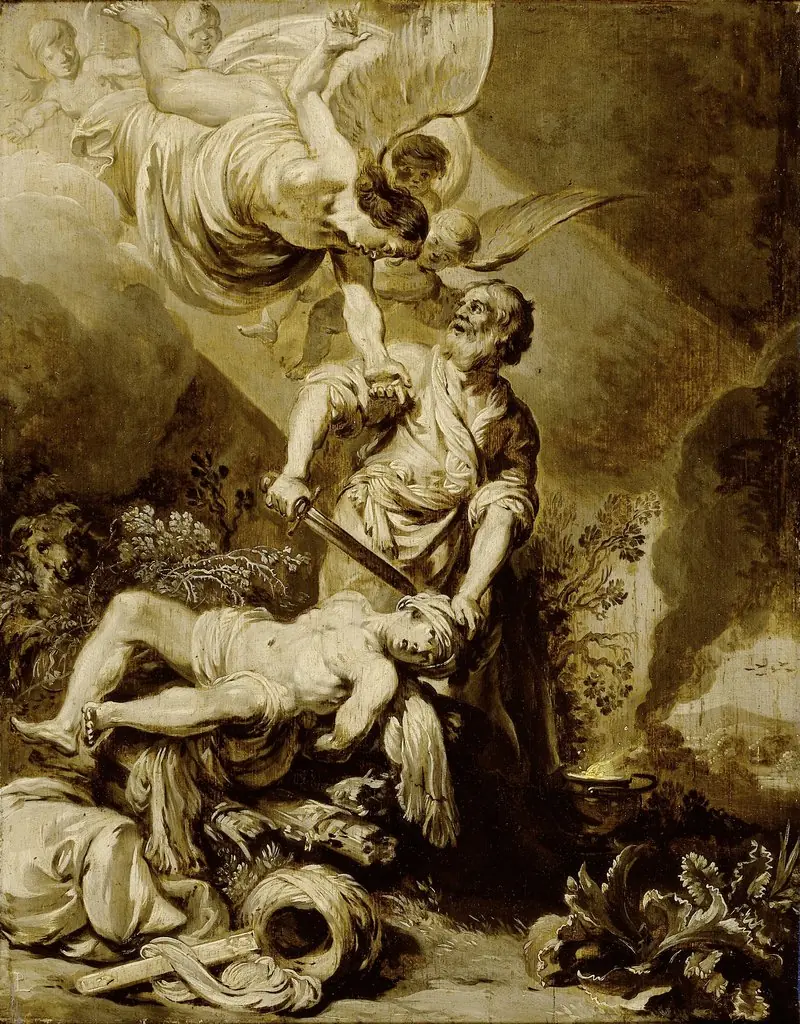 The sacrifice of Abraham
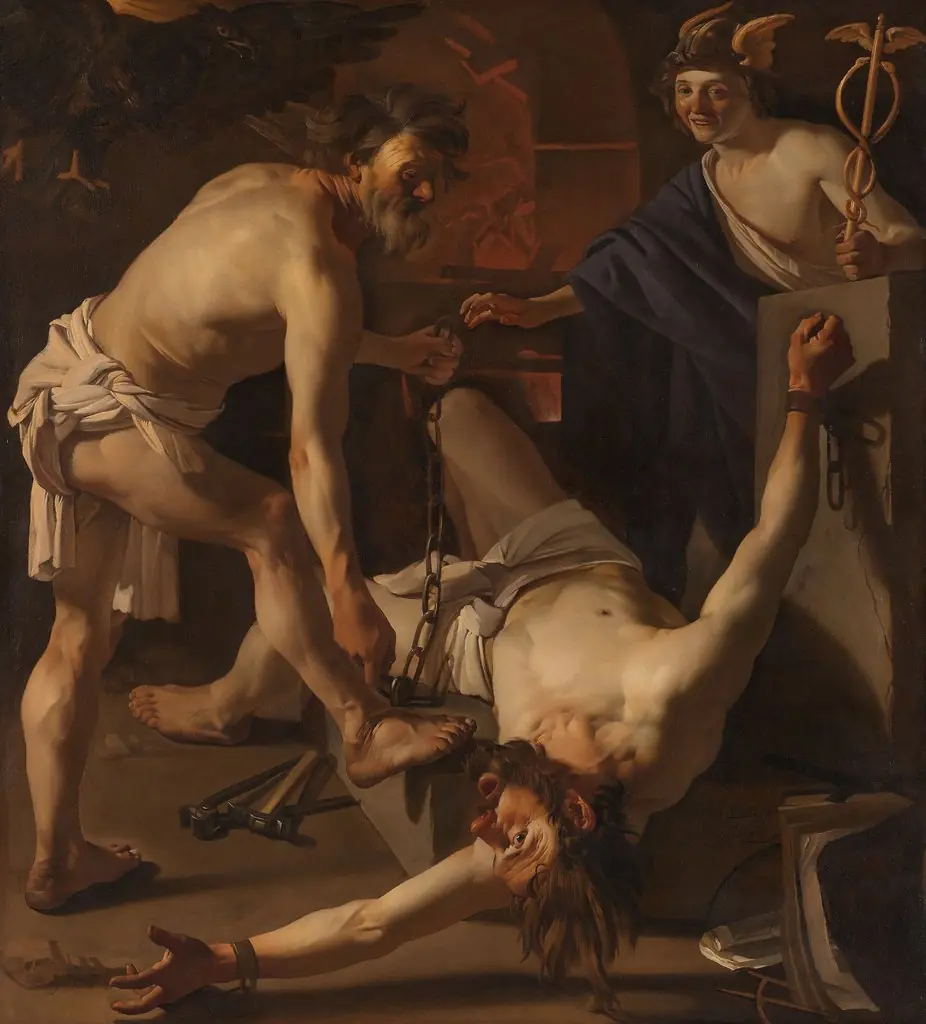 Prometheus Being Chained by Vulcan
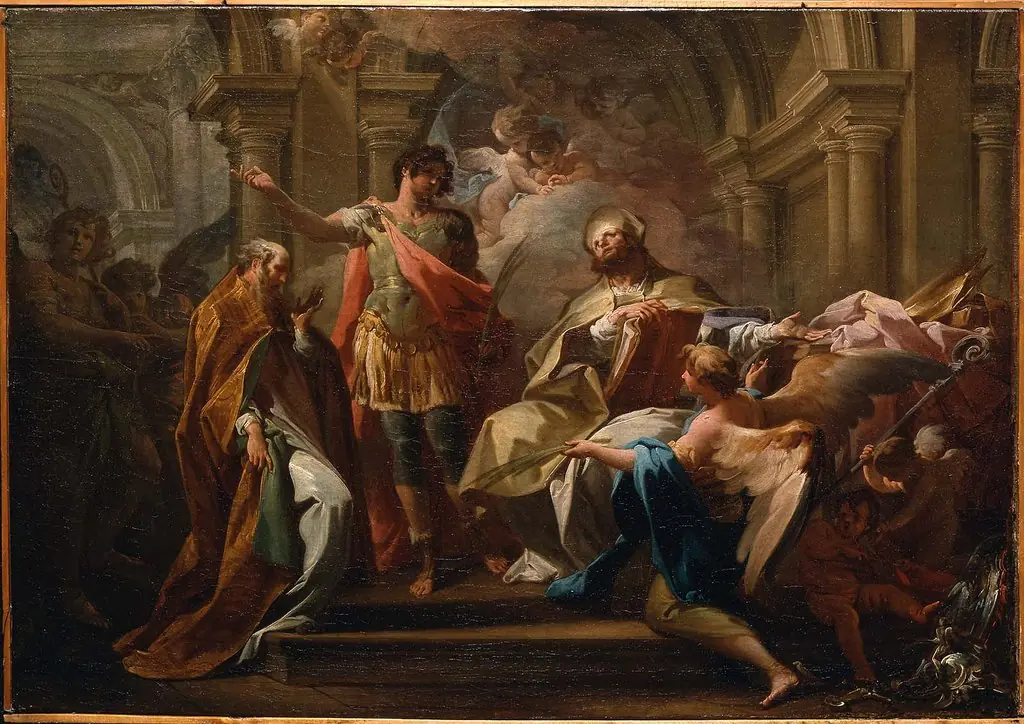 Saints Ippolito, Taurino, and Ercolano
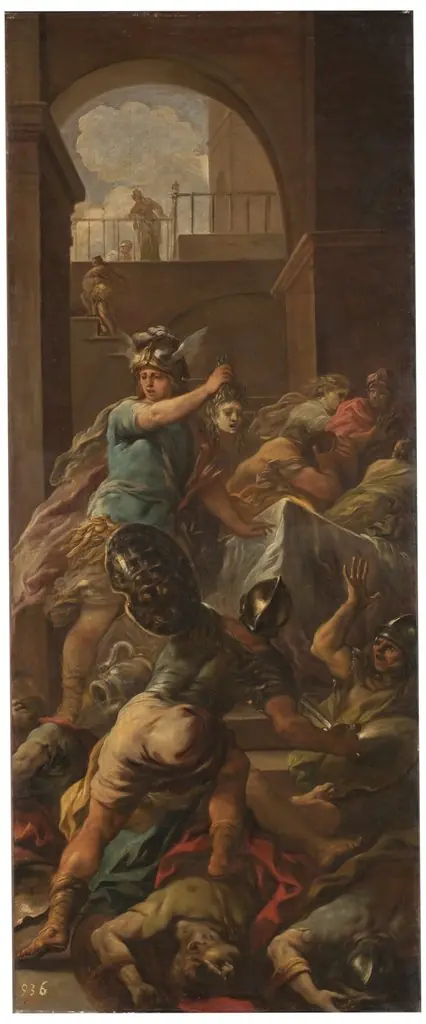 Perseo vencedor de Medusa
 Martyrdom of Saint Peter
 Jael and Sisera