The Nativity by Lippi, Filippo, Fra
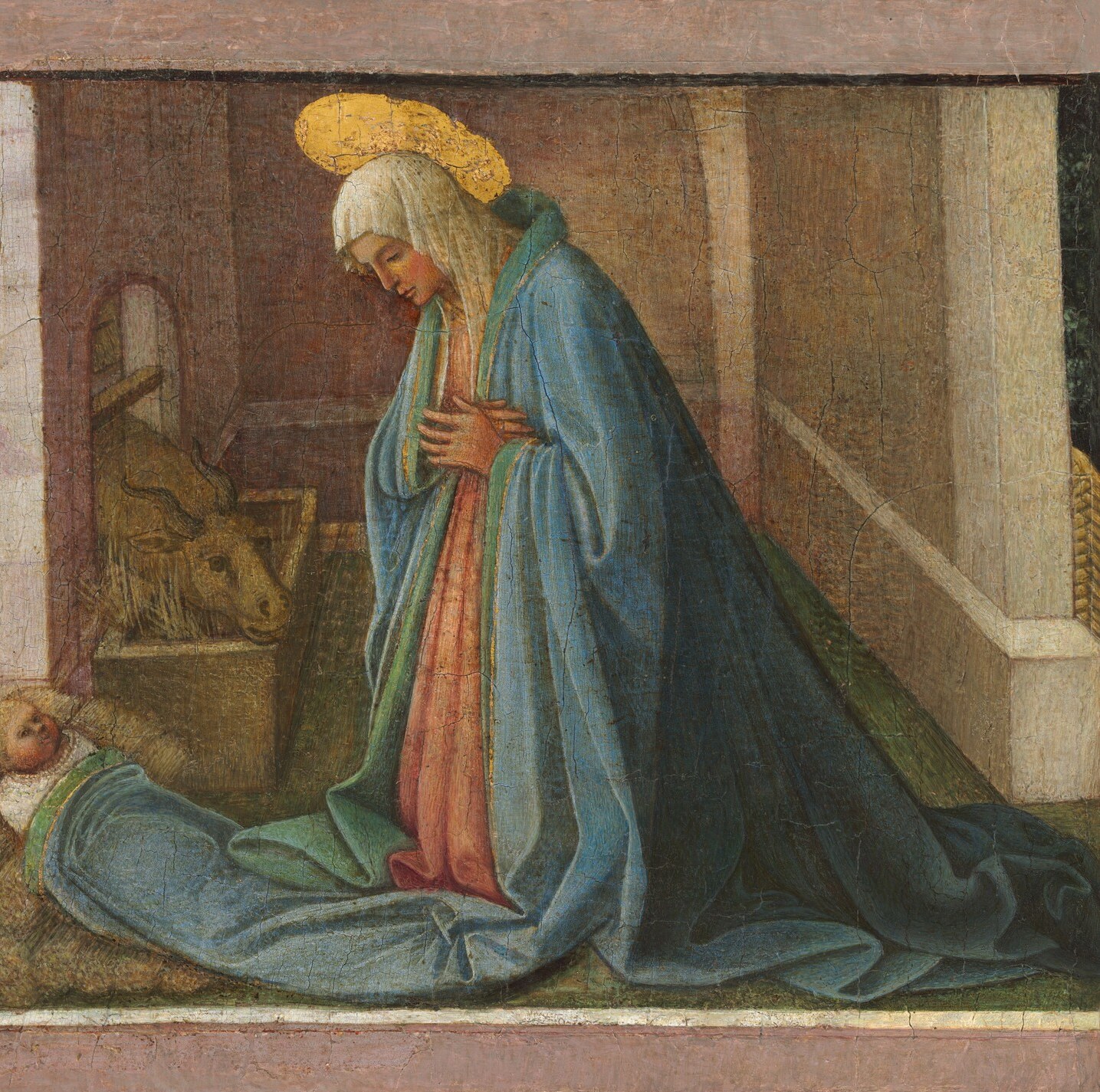
Fra Filippo Lippi's The Nativity, painted around 1445, is a small panel built like a locked box of Renaissance codes. Every detail carries iconographic weight, and one detail has never been solved.
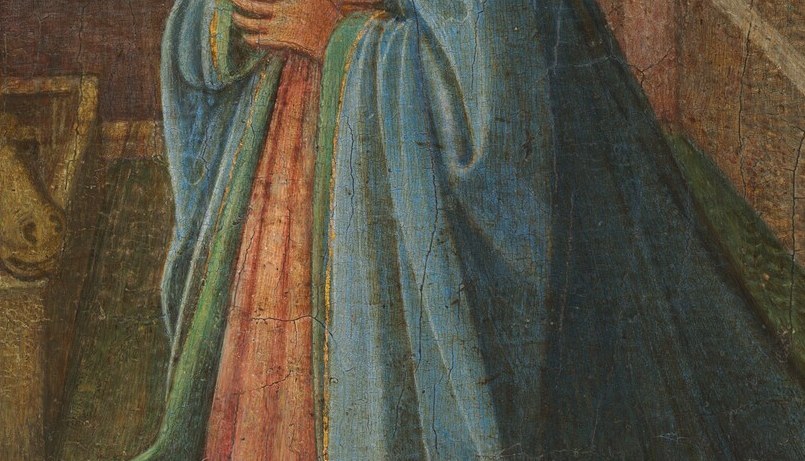
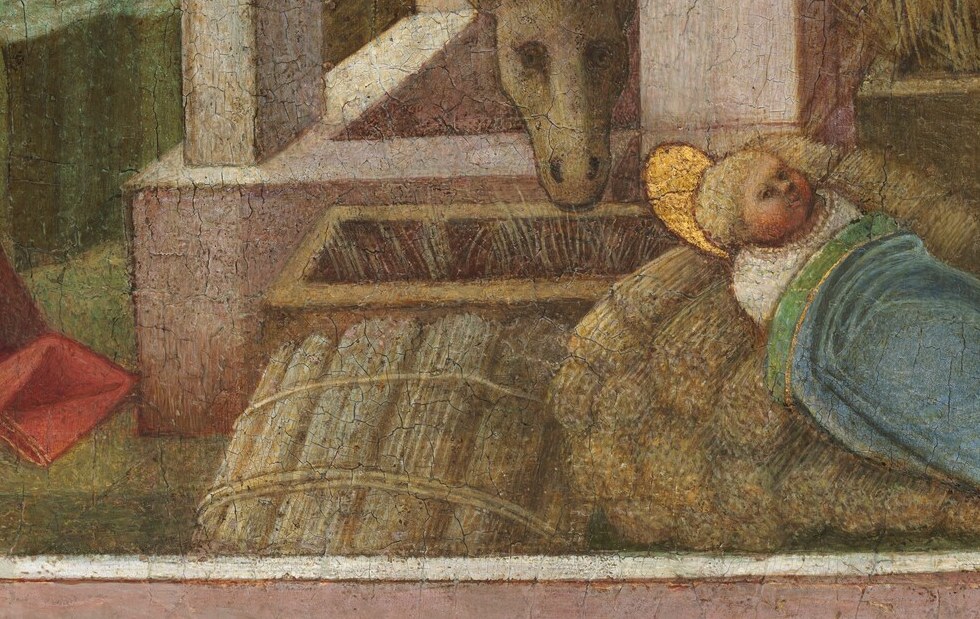
Start with her mantle. That deep blue is ultramarine, ground from lapis lazuli mined in Afghanistan and shipped to Florence at a price that exceeded gold. The patron who commissioned this panel paid for Mary to radiate divine queenship. The infant Christ lies directly on bare earth, a theological choice, not an oversight. The ground beneath him prefigures the tomb.
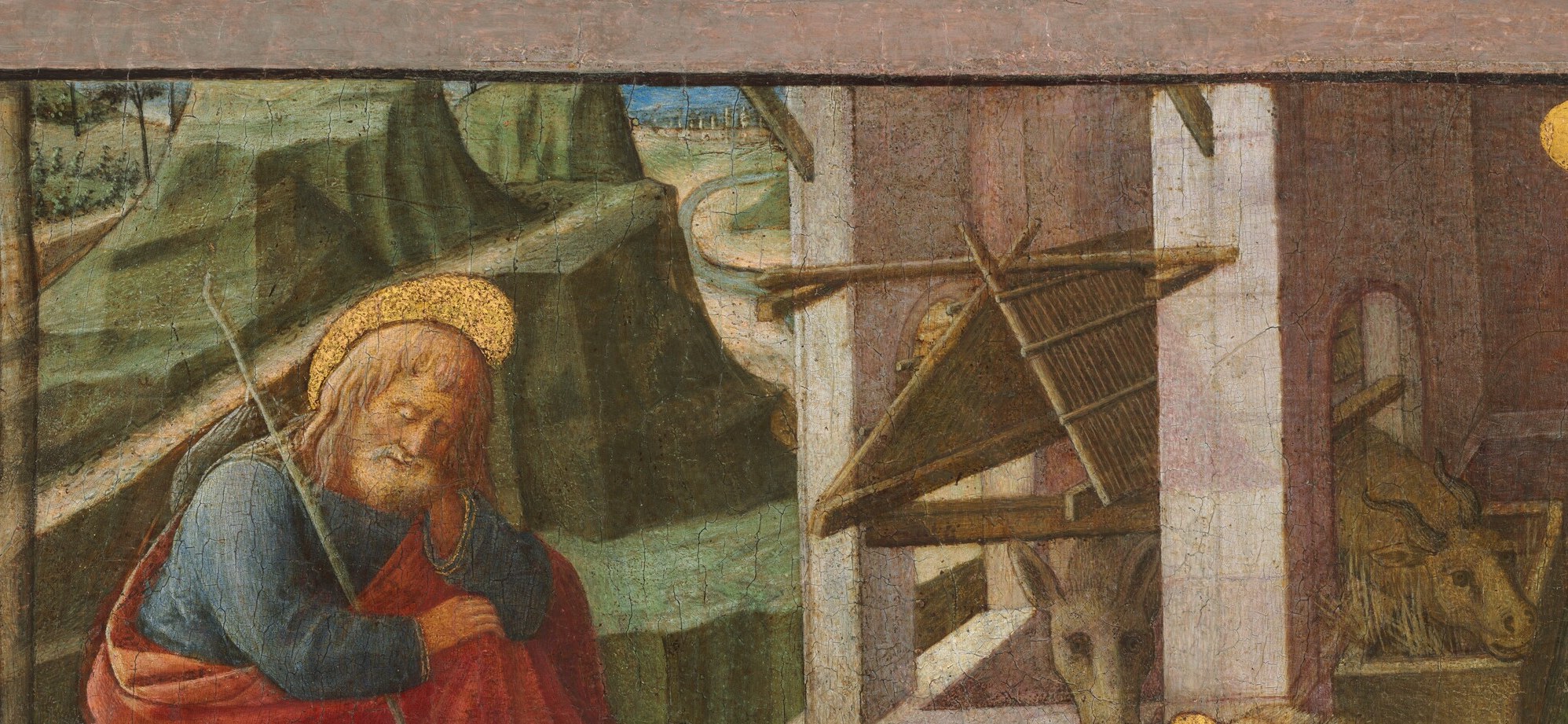
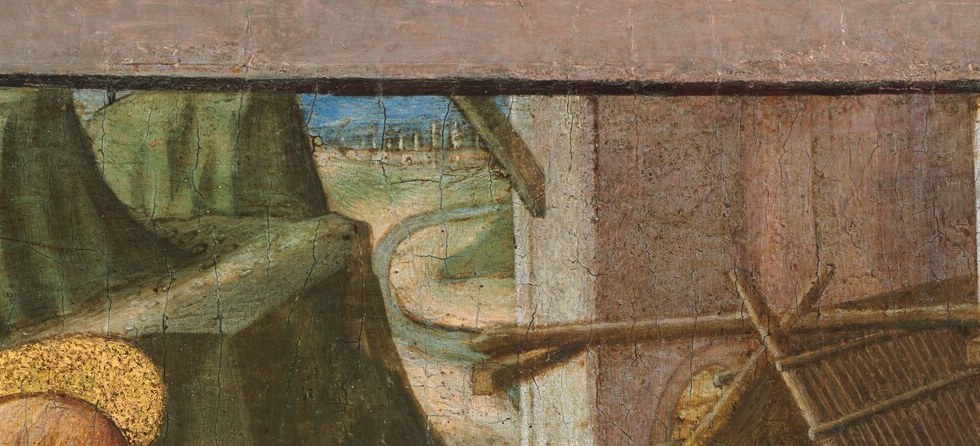
The ruined Roman arch behind them works the same way. For a 15th-century Florentine viewer, classical ruins repurposed as a stable meant one thing: the old pagan order has been dismantled and the Christian world built on top of it. Even Joseph's small fire, borrowed from apocryphal gospel traditions, grounds the miracle in bodily experience, cold, warmth, a humble domestic act.
And then there is the scroll. The angel hovers above the scene holding an inscription that cannot be read. Not by us, and not by the scholars who have argued over it for centuries. No one has resolved whether the characters are Hebrew, pseudo-script, or pure ornament. Lippi left us a devotional image that still withholds its final word.
Details
Transcript
She wears the most expensive color in the world. Ultramarine blue, ground from lapis lazuli shipped from Afghanistan. The pigment cost more than gold. The patron paid to make her divine. The infant lies on bare earth, not a manger. A deliberate choice: the ground foreshadows the tomb. The ruins behind them are a Roman building, repurposed as a stable. Florentines read this instantly: the pagan world has been superseded. Now look at the angel's scroll. Scholars have debated it for centuries.