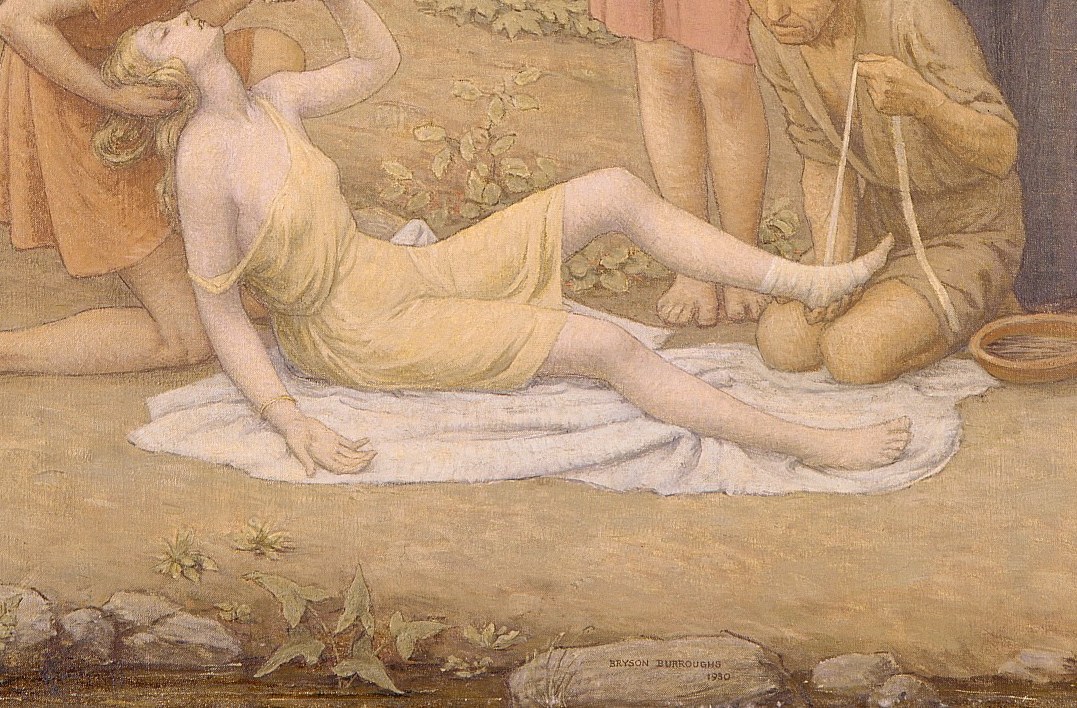
Eurydice Bitten by the Snake by Bryson Burroughs
View the artwork: Eurydice Bitten by the Snake →
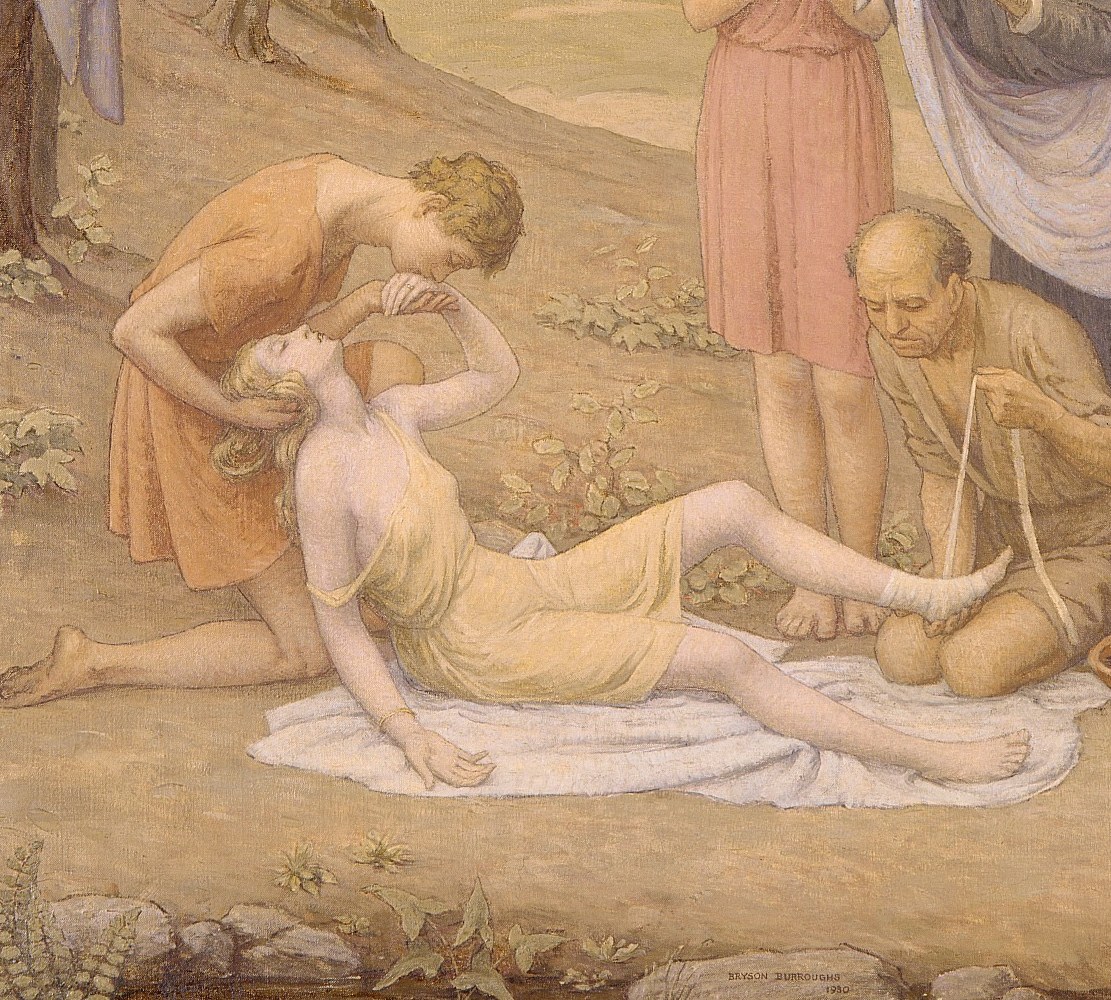
This is “Eurydice Bitten by the Snake,” painted in 1930 by Bryson Burroughs. And the wildest thing about it may be the painter himself.
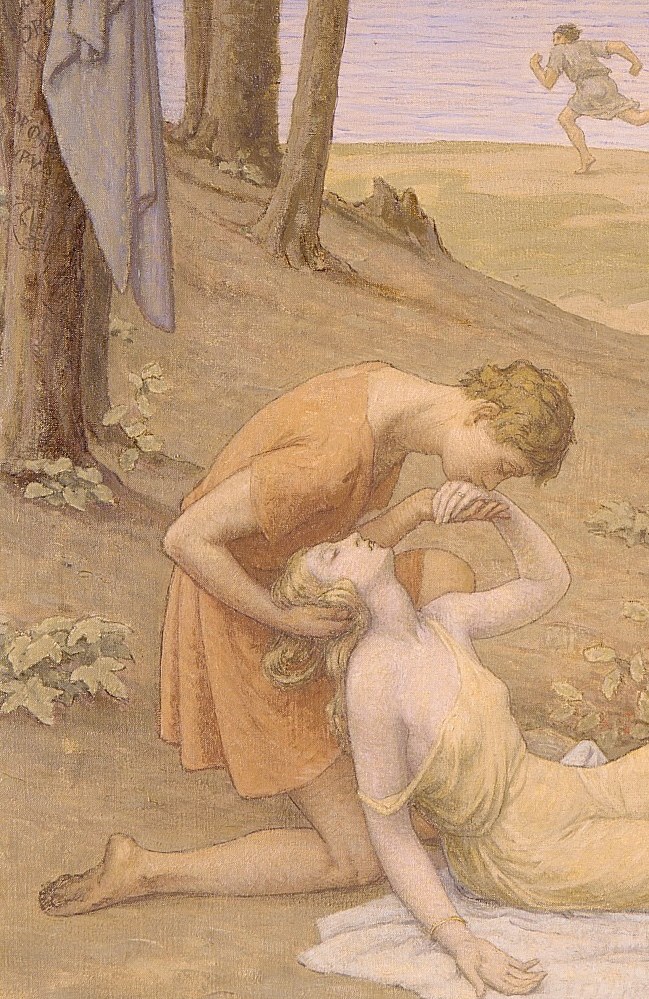
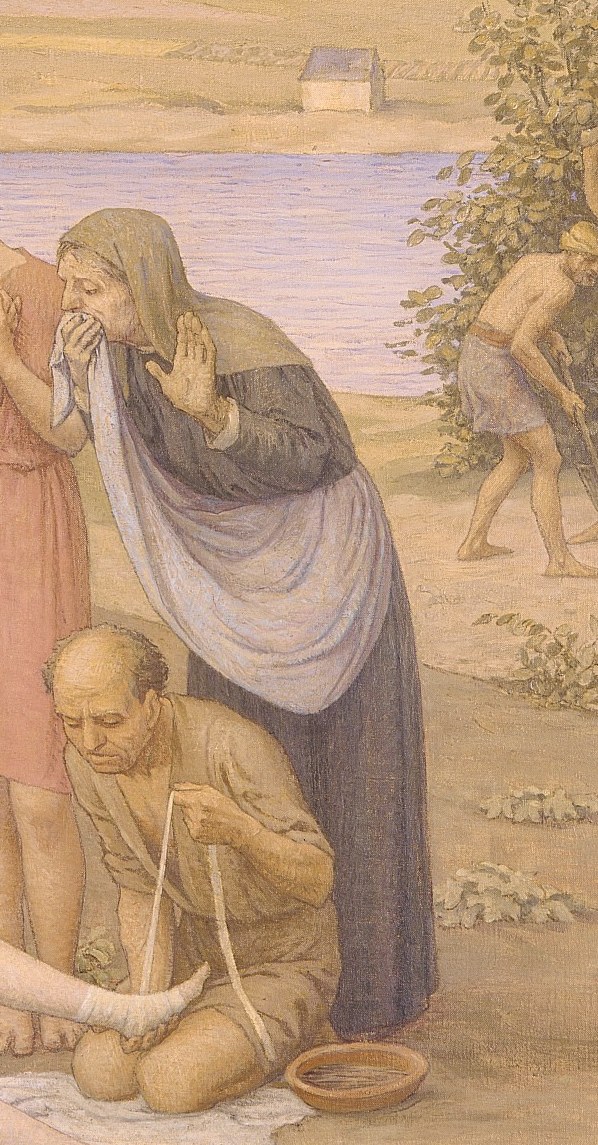
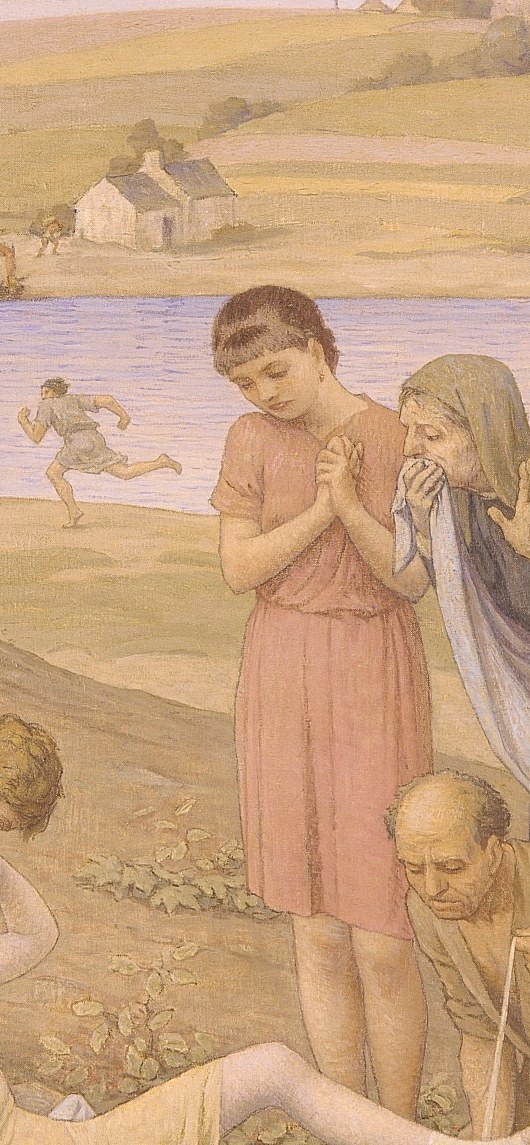
Look at how the grief migrates across the canvas. Eurydice lies in the center, pale and limp on a white cloth that anticipates a funeral shroud. To her left, a kneeling woman supports her head; to the right, another hides her face behind a dark veil. The real subject is how mourning moves from body to body, even before the myth tells us Orpheus is still running.
Burroughs was not a full-time painter. He was an assistant curator at the Metropolitan Museum of Art, where he bought the first Cézanne ever to enter an American public collection, “View of the Domaine Saint-Joseph.” He also purchased Bruegel’s “The Harvesters” for the Met. Before all that, he was a competitive racing cyclist who nearly turned professional.
He painted his own canvases between acquisitions, in the hours a museum man keeps to himself. This one hangs in a quiet corner somewhere, and it asks nothing of you except to look.
#arthistory #brysonburroughs #classicalmyth
Details
Transcript
He was an assistant curator who bought America its first Cézanne. And before that, a racing cyclist who almost went pro. Then he picked up a brush and painted this. The title says Eurydice, but the grief is spread through everyone. This veiled mourner does not need to show her face. And the pale cloth beneath her already reads as a shroud. Burroughs spent his life buying masterpieces for the Met. He painted his own in the hours left over.