Autumn Oaks by George Inness
George Inness painted Autumn Oaks around 1878, almost immediately after returning from a four-year sojourn in Europe. It is now held by the Metropolitan Museum of Art. The painting captures a quiet American pasture at a moment of deep transition, both in the season and, implicitly, in the nation. Inness wasn't just documenting a field. He was recording a feeling, a fleeting atmospheric effect that a photograph of the time could never quite hold.
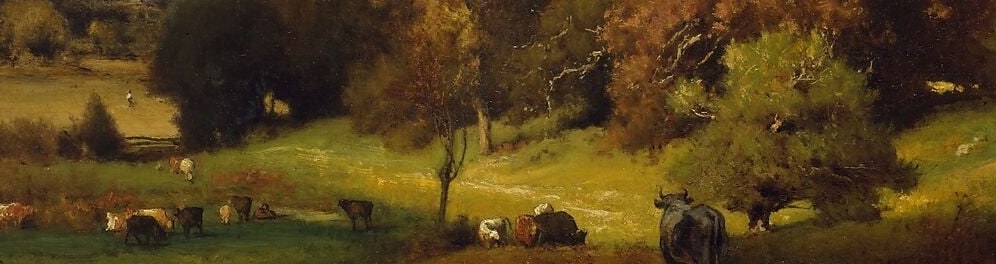
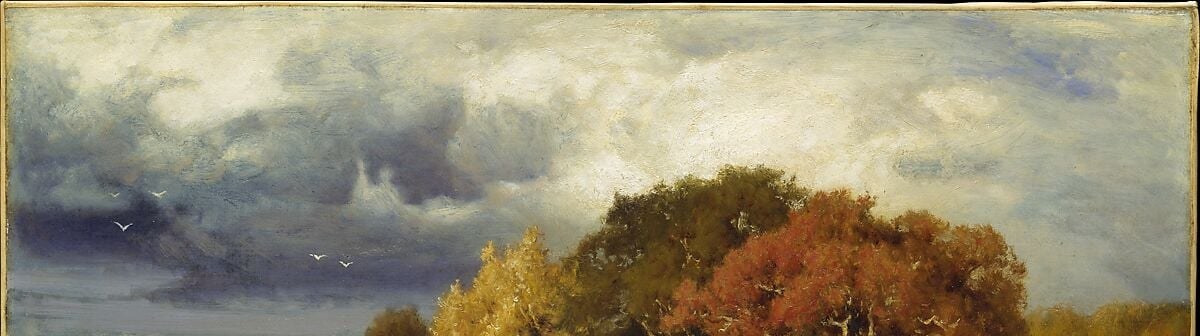
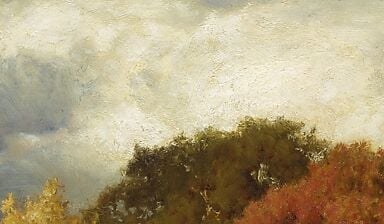
Look at how the sunlit golden meadow in the middle ground pushes against the brooding, grey-green storm clouds above. The grazing cattle in that bright band are tiny but essential. Their calm, unhurried presence makes the coming weather feel all the more dramatic. Then find the faint white farmhouse nearly swallowed by the trees on the right. It anchors the whole scene in lived-in countryside, not empty wilderness.
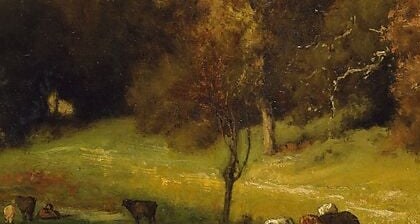
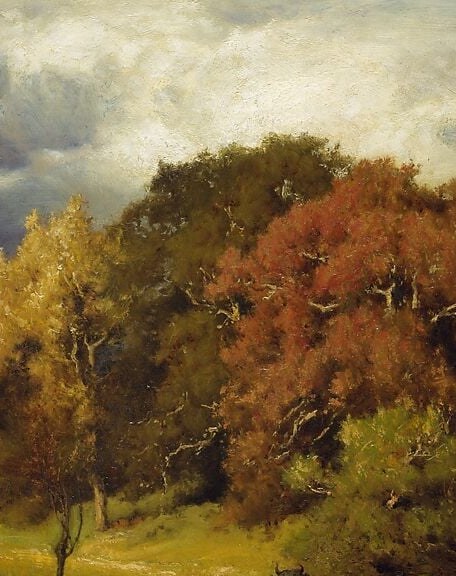
Inness had spent the years prior in Italy and France, absorbing the lessons of the Barbizon school. He returned with a richer, more European palette and a commitment to painting mood over meticulous detail. Here, the central oak's orange canopy dissolves into loose, gestural strokes up close, a deliberate technique meant to capture the thick autumn air itself. He was a transitional figure, moving American landscape painting away from strict literalism toward Tonalism and the spiritual.
What feels most modern about Autumn Oaks is its honesty about looking. The storm will pass. The light will shift. The meadow will change. Inness asks us to be present for exactly this moment, before it vanishes.
Details
Transcript
America, around 1878. The land is changing fast. A golden meadow still catches the last warm light. A few cows graze, undisturbed. But the sky tells a different story. George Inness had just returned from four years in Europe. He painted this with a richer palette and looser brushwork. He wanted you to feel the air, not count the leaves. A quiet American pasture, holding its breath before the storm.