Last Words of the Emperor Marcus Aurelius by Eugène Delacroix
Delacroix's *Last Words of the Emperor Marcus Aurelius* (1844) captures a profound moment of imperial succession. The painting, housed in the Musée des Beaux-Arts de Lyon, showcases the artist's turn towards classical themes and somber historical subjects.
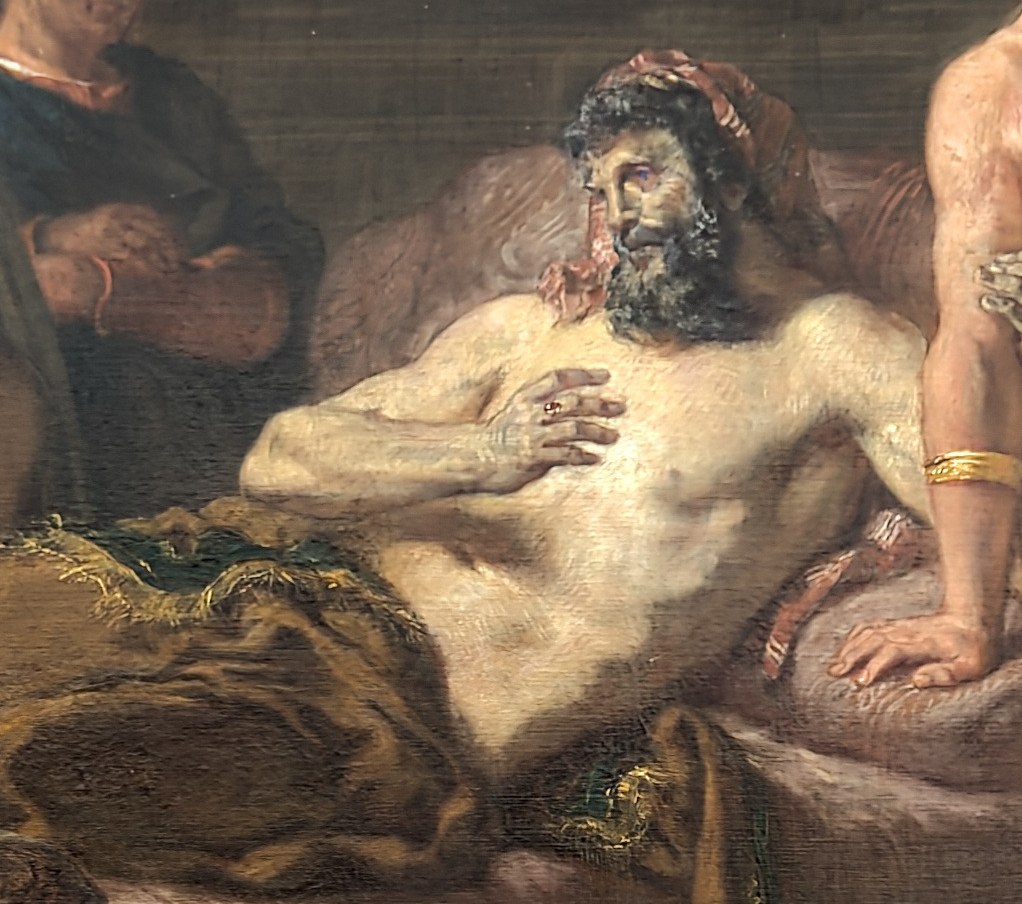
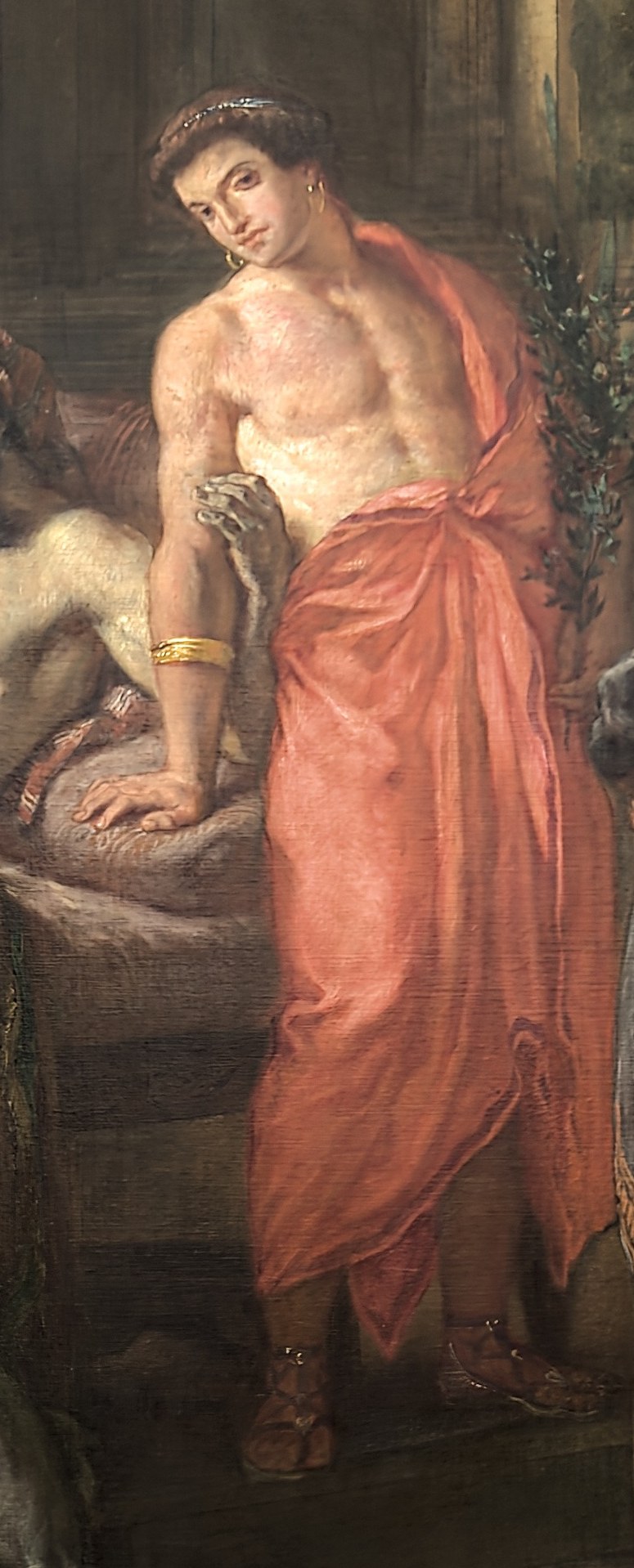
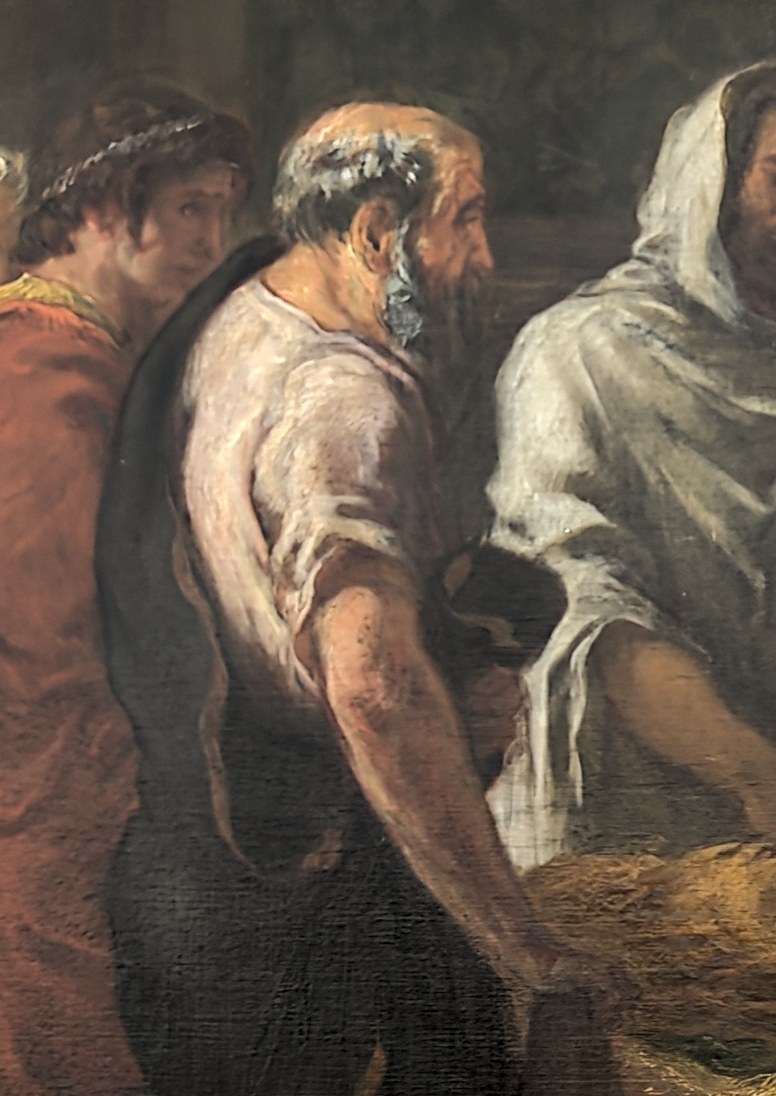
Look at the emperor, Marcus Aurelius, frail on his deathbed. His son, Commodus, stands ready to receive the empire, adorned with a significant gold armband. Notice the concerned expressions of the advisors and generals gathered, their somber visages reflecting the gravity of the impending transition.
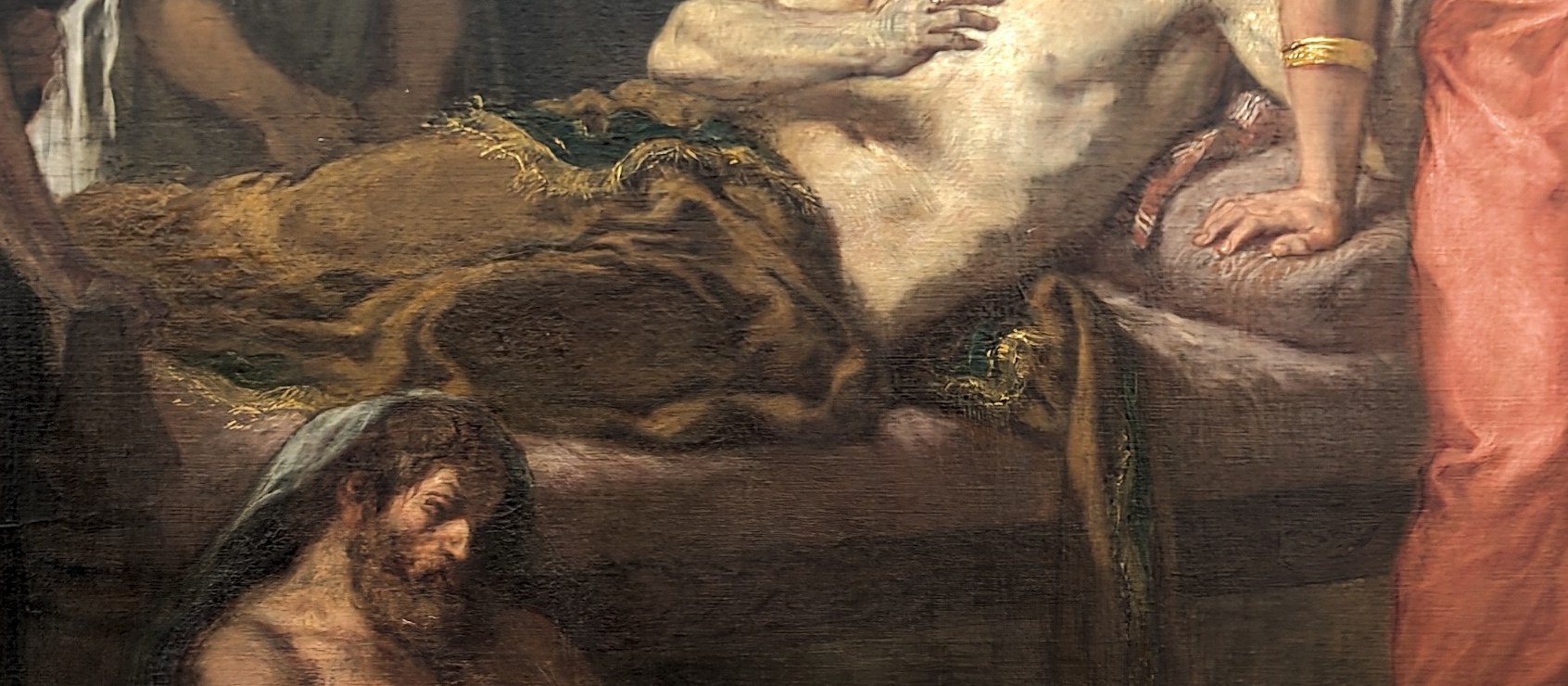
Delacroix himself had a complex relationship with this work, as documented in his journals. He revisited the theme of classical antiquity, a departure from his more overtly Romantic subjects, here focusing on the weight of duty and legacy. The scroll on the floor subtly hints at the laws and philosophies that defined Aurelius's reign.
This scene is a powerful meditation on power, responsibility, and the burden of history. What does the emperor's weary gaze communicate about the future he is shaping?
Details
Transcript
Marcus Aurelius lies in his final moments. His son Commodus will inherit the empire. Delacroix painted this in 1844. The emperor entrusts him to his council. The artist struggled with this painting. Look at the gold armband on the son. Imperial power, a heavy, ornate burden. His legacy was debated for years.