The Mill by Rembrandt van Rijn
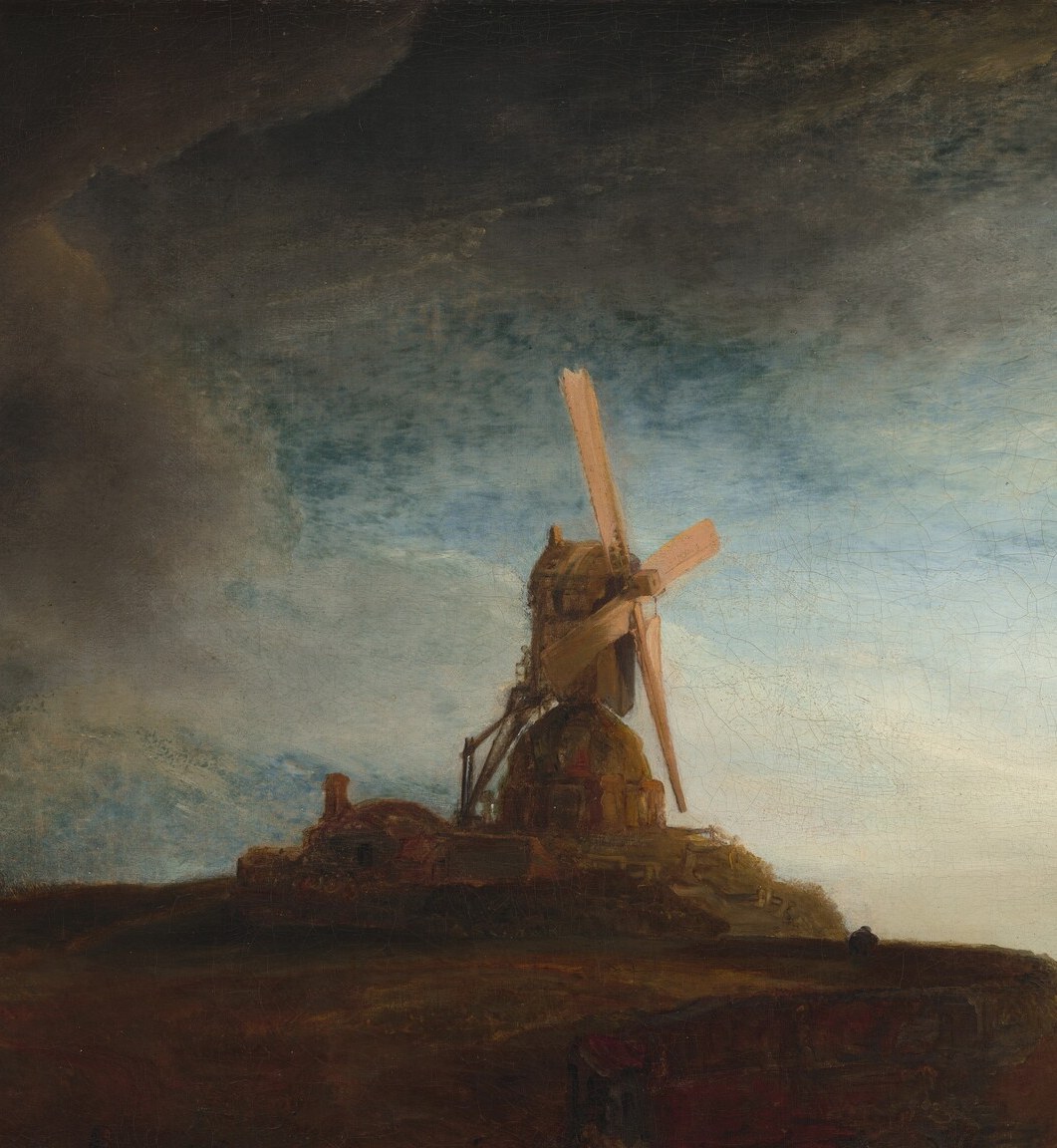
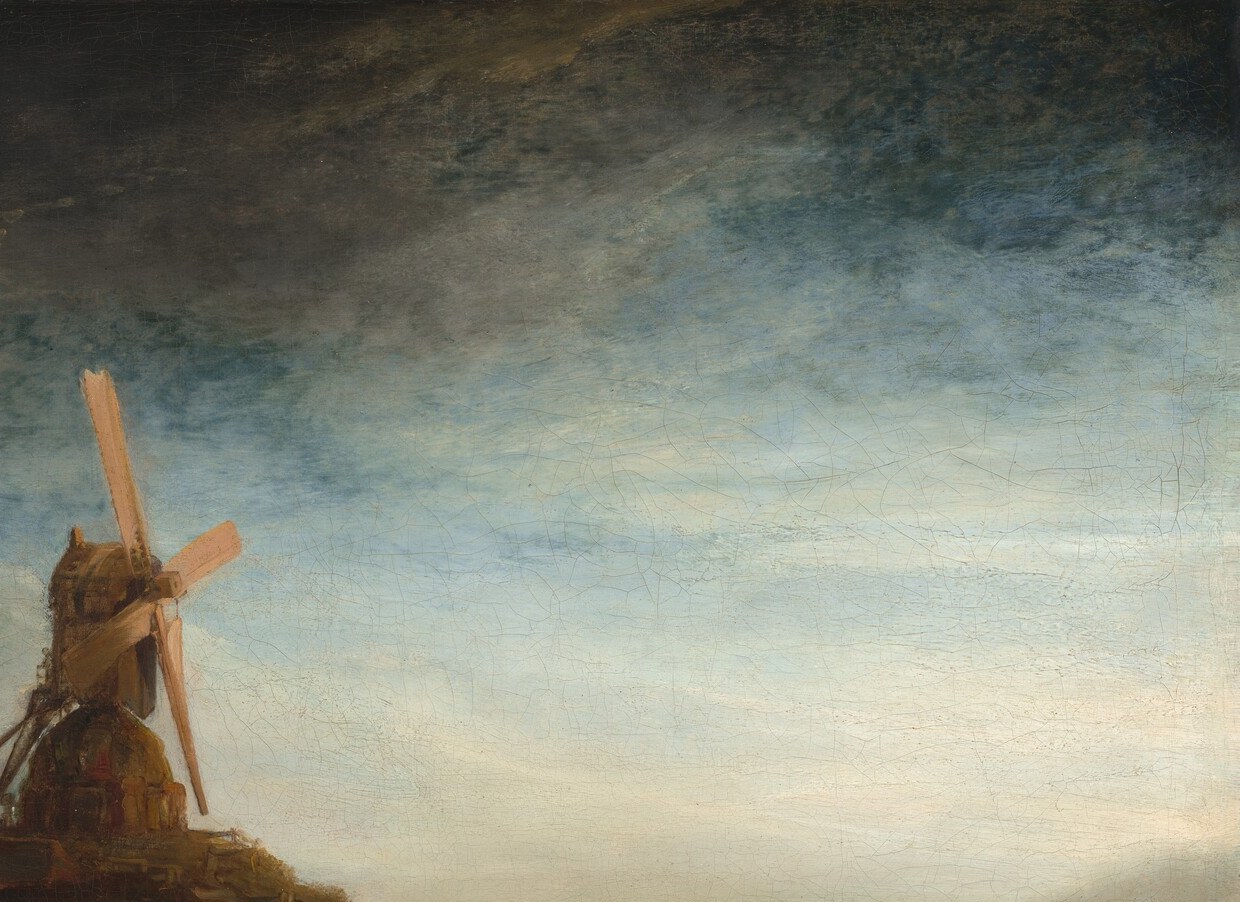
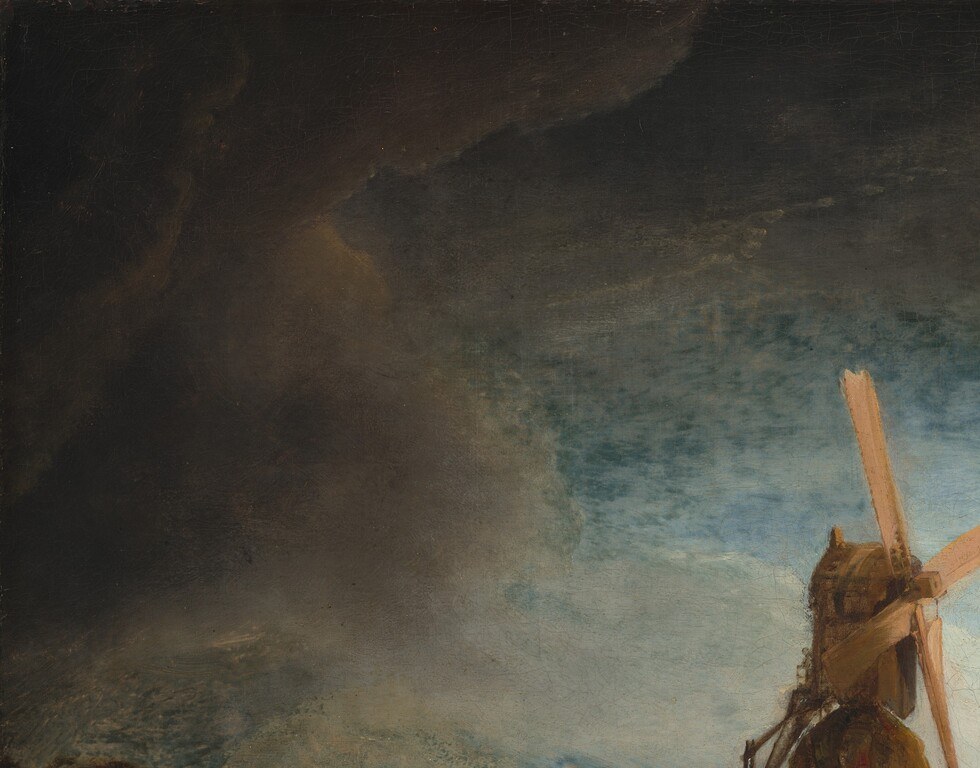
Rembrandt's The Mill hangs in the National Gallery of Art in Washington DC. Painted around 1645/1648, it is a master class in how little actual light a painter needs to create a world that glows. More than three-quarters of the canvas is held in deep shadow, and the entire luminous event depends on one warm patch of amber sky on the upper right.
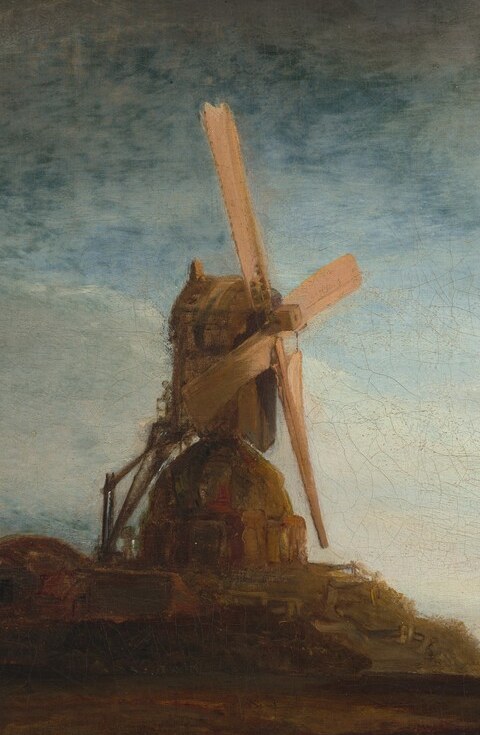
Watch the four sails of the windmill. The uppermost vane is light against a dark storm cloud. The one opposite it is dark against the glowing sky. A third points toward you, dark against dark. The fourth, farthest away, is light against light. Rembrandt systematically gave each sail a different tonal relationship to its background, a compositional choice that turns a silhouette into a study of light itself.
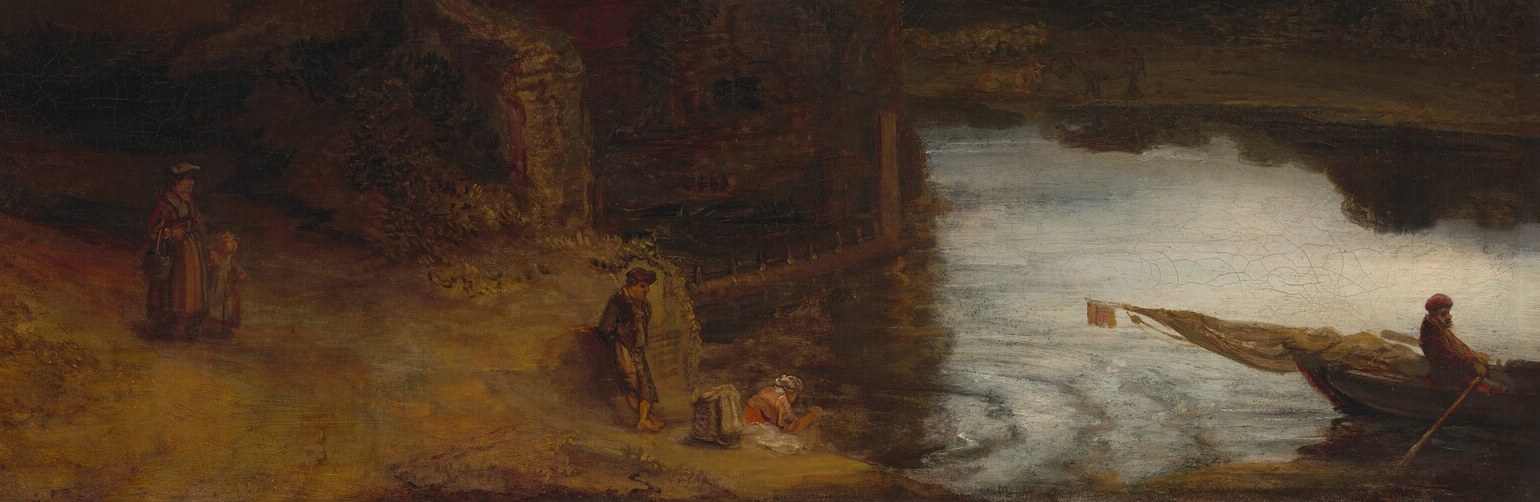
The ruined circular bastion the mill stands on was once a military fortification. A man pushes a barrow up the slope. A woman washes linen at the water's edge. The reflection of the amber sky sits still in the moat in the lower right. Everything human in this painting is small and absorbed into the fading light, while the mill stands monumental against the coming dark.
The painting was once in the Orleans Collection and later sold to Peter Arrell Brown Widener in 1911 for a hundred thousand pounds. Its attribution to Rembrandt was long doubted, but recent conservation work has reaffirmed it, though the debate among scholars has never fully closed. The uncertainty only sharpens the question the canvas asks: who else in the Dutch Golden Age thought this hard about what light does when it strikes four different edges of a turning sail?
#arthistory #rembrandt #dutchgoldenage
Details
Transcript
Three-quarters of this canvas is near-total darkness. Only one small patch of sky carries the light. Yet the whole painting reads as a luminous evening. That is the trick. Look at the mill's highest sail. Light against the dark sky. Now the opposite sail. Dark against the light. Rembrandt gives each of the four sails a different tonal arrangement. The foreground water echoes the sky. Light answers light. And in the shadow below, a woman washes linen, indifferent to the drama above.