Pont de Palmiers and Tiger Shooting by Catlin, George
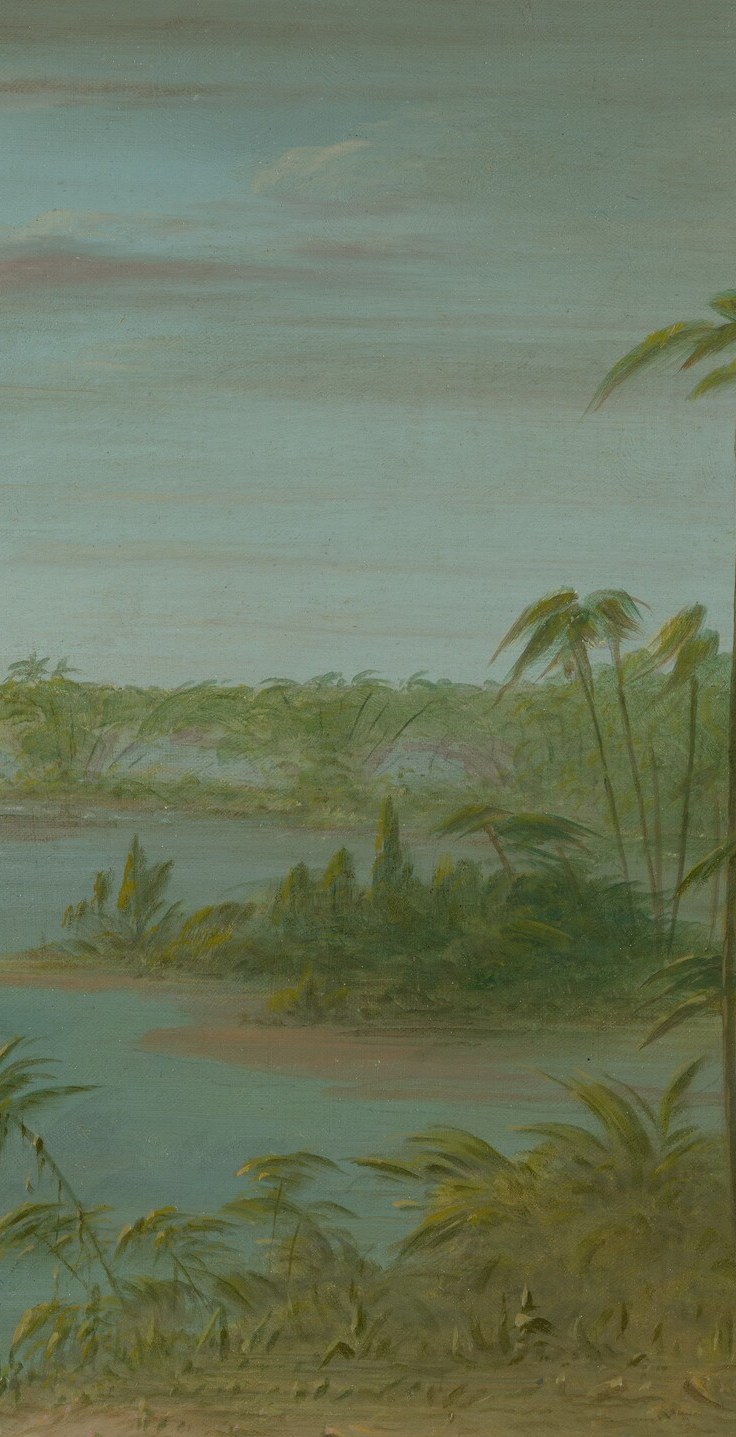
George Catlin's "Pont de Palmiers and Tiger Shooting," created in 1862, at the Smithsonian American Art Museum, initially appears as a serene tropical landscape. However, a closer look reveals a tense scene of colonial hunting.
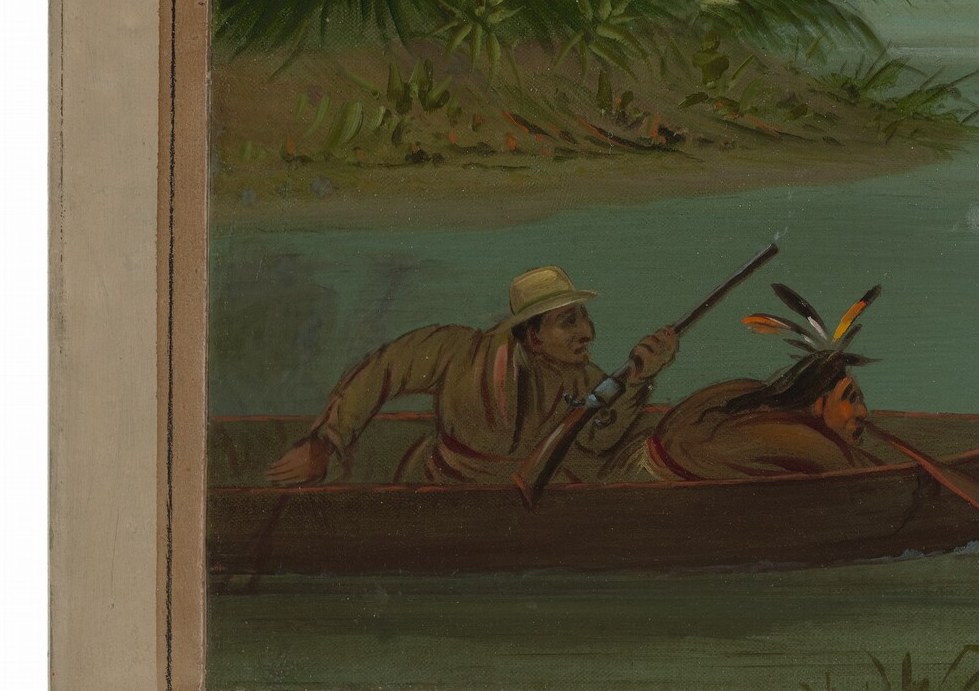
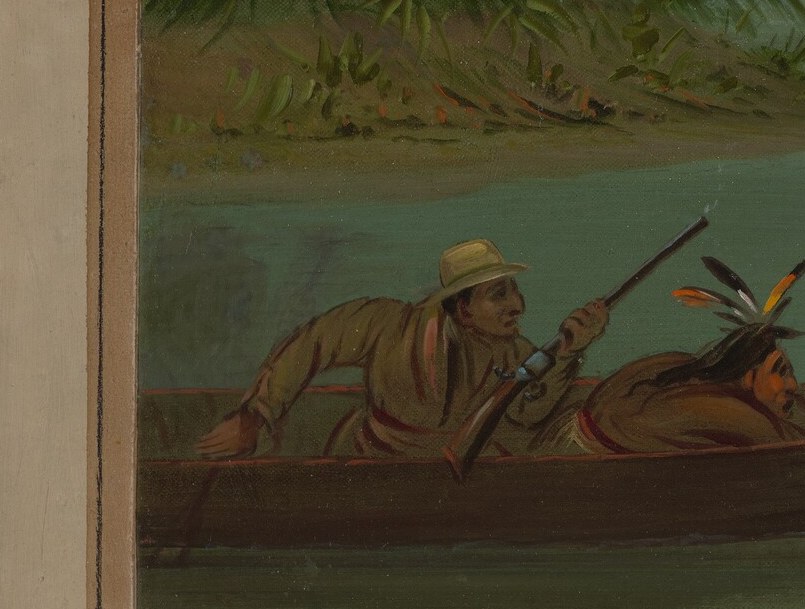
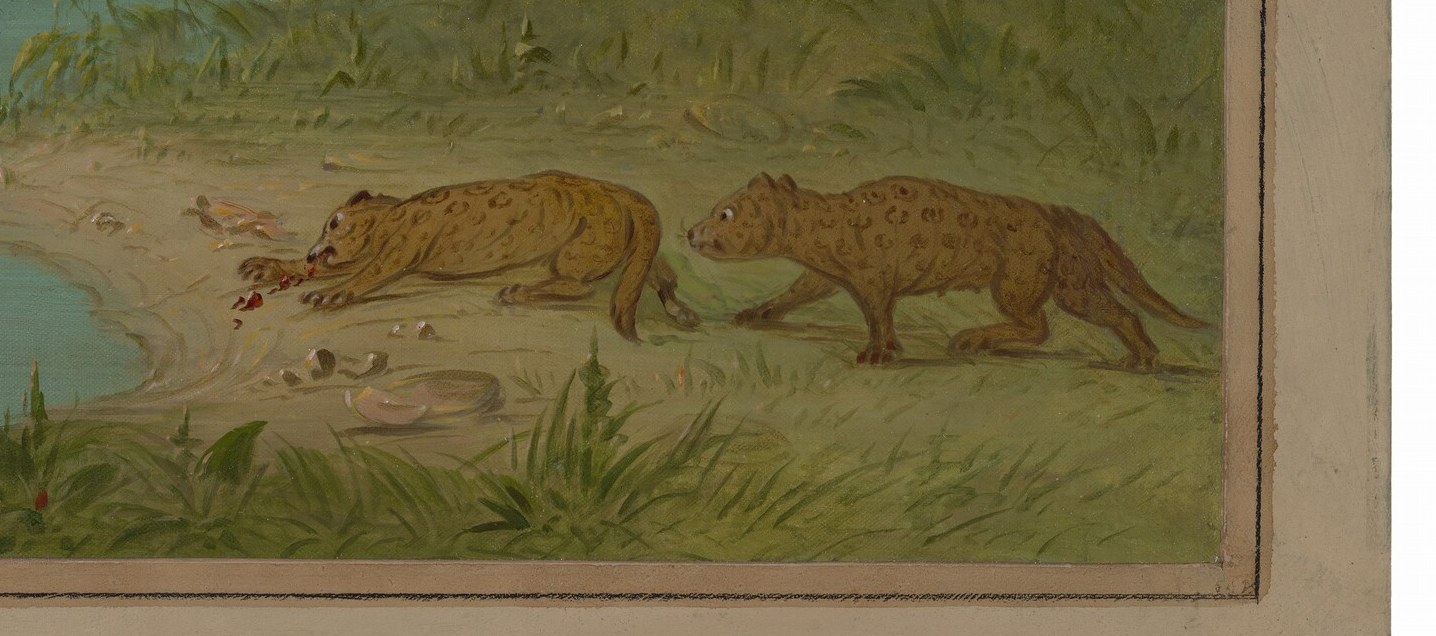
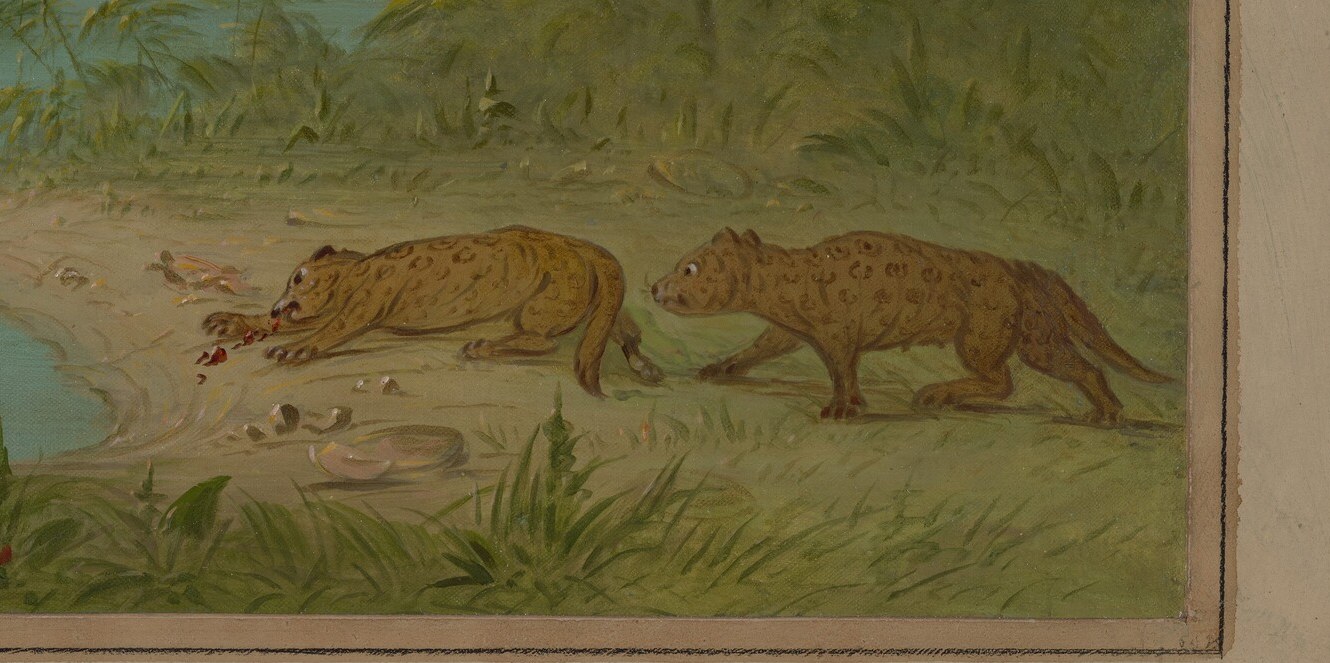
The painting's drama hinges on the hidden details: a small boat carrying hunters, positioned for a kill, and two almost camouflaged tigers on the far bank, blending seamlessly into the dense vegetation. Catlin's skillful use of light and shadow builds this quiet tension, inviting viewers to discover the story within the scenery.
Catlin, an American lawyer turned painter, is best known for his portraits of Native Americans. This landscape showcases his broader interest in natural environments, moving beyond ethnographic subjects to capture narratives embedded in the wilderness. His technique, likely involving thin, translucent layers of paint, creates a diffused light that both unifies the scene and heightens the sense of a world waiting to be explored.
What other hidden details do you think he might have included if he had continued this series?
Details
Transcript
Most landscapes simply show a beautiful scene. But this one, from 1862, tells a very specific story. A small hunting boat floats quietly on the water. Inside, hunters are ready, aiming at something unseen. Look closely at the right bank, in the tall grasses. Two tigers, camouflaged, crouch at the water's edge. The whole painting is built on this hidden moment of prey.