Prince Regent Luitpold of Bavaria (1821–1912) by Franz von Lenbach
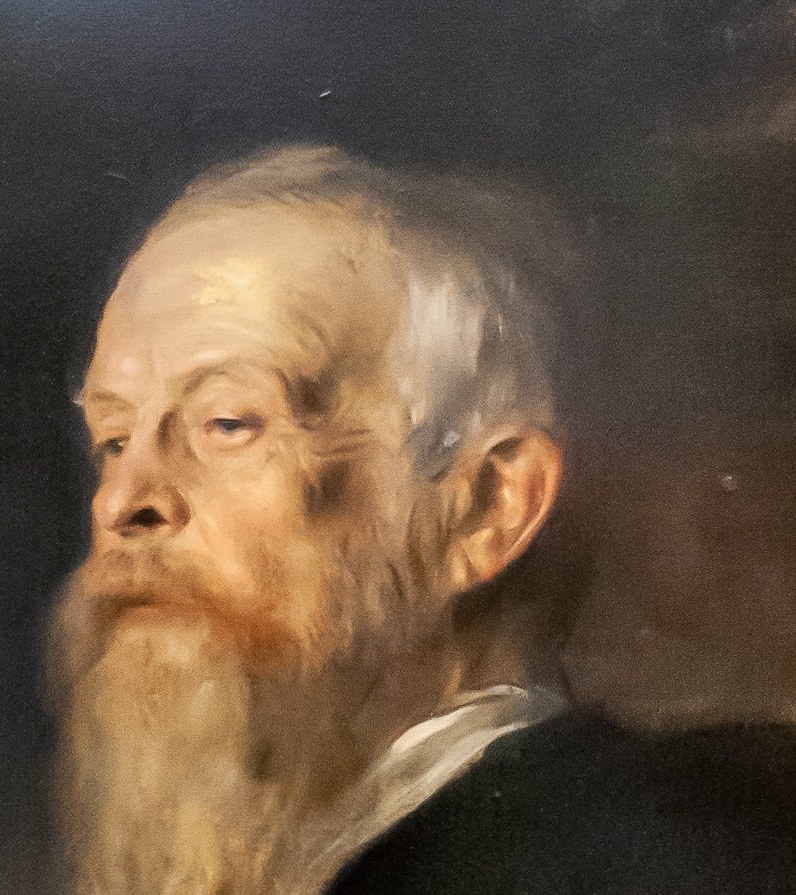
Franz von Lenbach's *Prince Regent Luitpold of Bavaria*, painted in 1902 and now in the Metropolitan Museum of Art, is a portrait that physically demonstrates why the artist was called the 'Painter Prince'. He was the most sought-after portraitist of the German aristocracy, and this work shows his signature move: borrowing the sfumato technique of the Old Masters to make his sitters look like they are emerging from history itself.
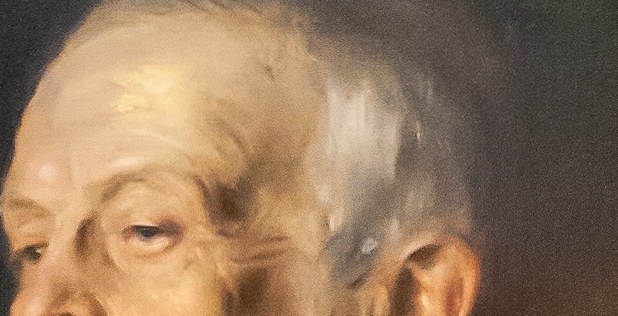
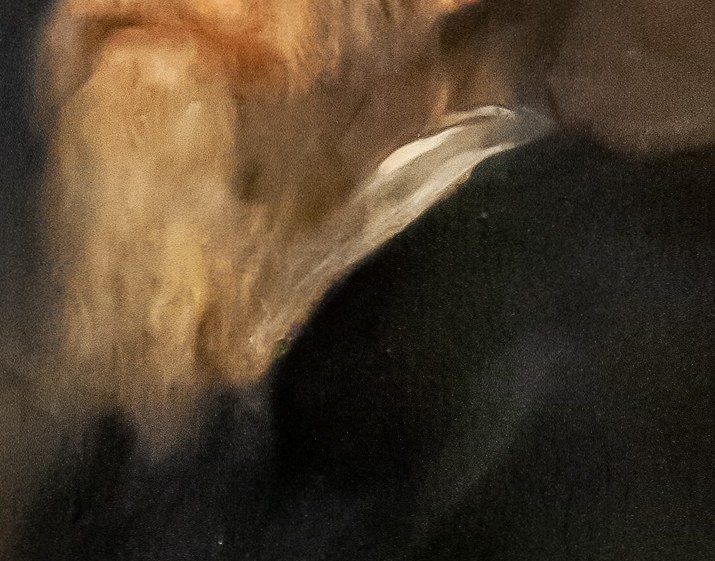
Watch the left shoulder, where the heavy dark coat meets the background. Lenbach doesn't paint a hard edge. He uses layers of translucent brown and ochre glaze to let the figure dissolve into the darkness. The boundary simply stops existing. Then look back up at the face, the white beard, and the collar, every detail there is crisp and permanent. The contrast is the point.
The subject is Luitpold, who became Prince Regent of Bavaria and steered the kingdom into the modern era. Lenbach painted him near the end of his own life, just two years before the artist's death. The old painter and the old regent shared a moment where a face could be made to look like a monument.
How long did it take you to notice the shoulder had disappeared?
Details


Transcript
He was known as the Painter Prince. A portrait of the Prince Regent of Bavaria. The face is solid. Every age line holds its shape. But follow the left shoulder down. The coat and the background become the same substance. Lenbach built the shadows in layers of brown glaze. The body vanishes. Only the face is permanent.