The Ragan Sisters by Eichholtz, Jacob
Jacob Eichholtz's 1818 painting, "The Ragan Sisters," at the National Gallery of Art, at first glance seems a straightforward portrait, but a hidden architectural detail invites closer inspection.
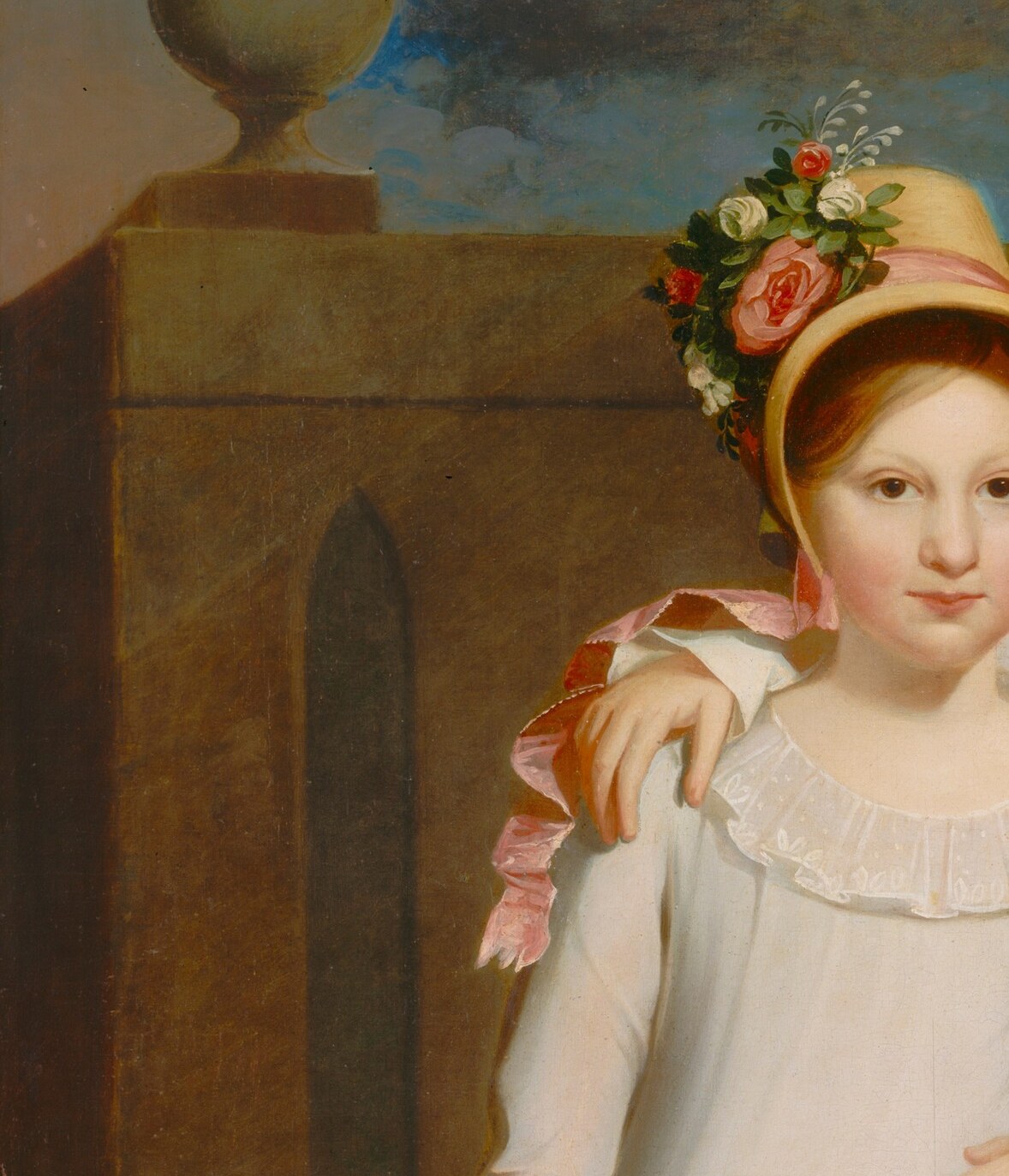
The painting focuses on the two young girls, dressed in delicate white gowns, with intricate ruffles that speak to the period's fashion. The older sister holds a book, suggesting a privileged upbringing and intellectual pursuits, while her protective hand on her younger sister’s shoulder highlights their familial bond.
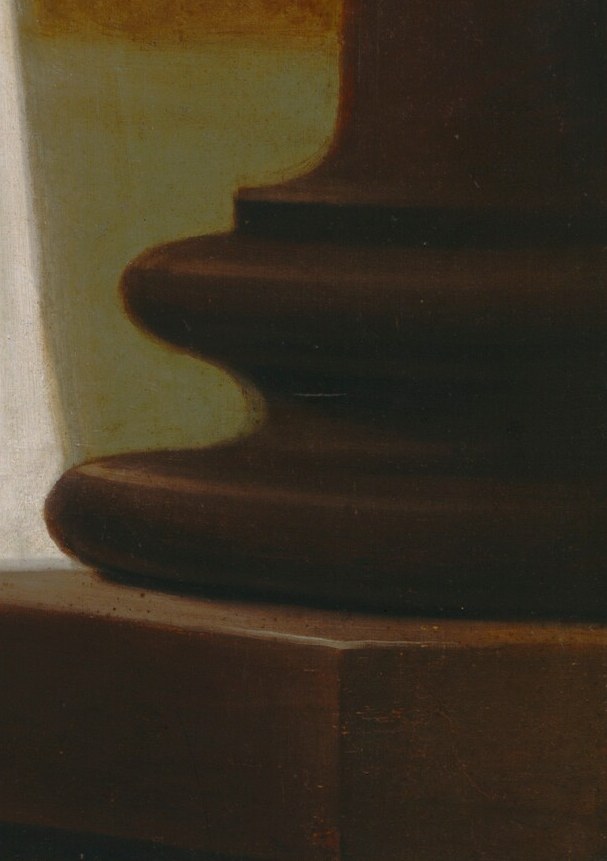
Eichholtz, an American artist, meticulously rendered the details of their attire and the flowers adorning their straw hats. However, it's the subtle background elements, like the base of a column and a grand archway, that hint at a more expansive setting than just a simple studio portrait. These details suggest a larger, perhaps even theatrical, story unfolding beyond the immediate frame.
What might lie beyond that archway, and what further stories do you imagine for these sisters?
Details
Transcript
Meet the Ragan sisters, painted in 1818. Their white dresses show the fashions of the era. The older sister holds a book, hinting at their education. Her hand rests gently on her younger sister’s shoulder. But look closely at the background architecture. Beyond the column, a grand archway suggests a deeper scene.