Construction of an Elevated Railway: Bridge over the Cours de Vincennes by Paul Désiré Trouillebert
Paul Désiré Trouillebert's 1888 painting, "Construction of an Elevated Railway: Bridge over the Cours de Vincennes," captures a rarely seen side of Paris in transformation. Held at The Cleveland Museum of Art, it's a window into the industrial changes sweeping the city.
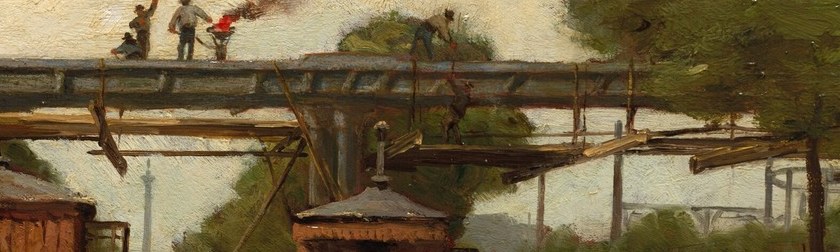
The painting isn't just about structures; it's about the people who built them. Look closely at the small figures on the unfinished bridge, diligently at work. These anonymous laborers are the true protagonists, shaping the urban landscape with their hands and sweat.
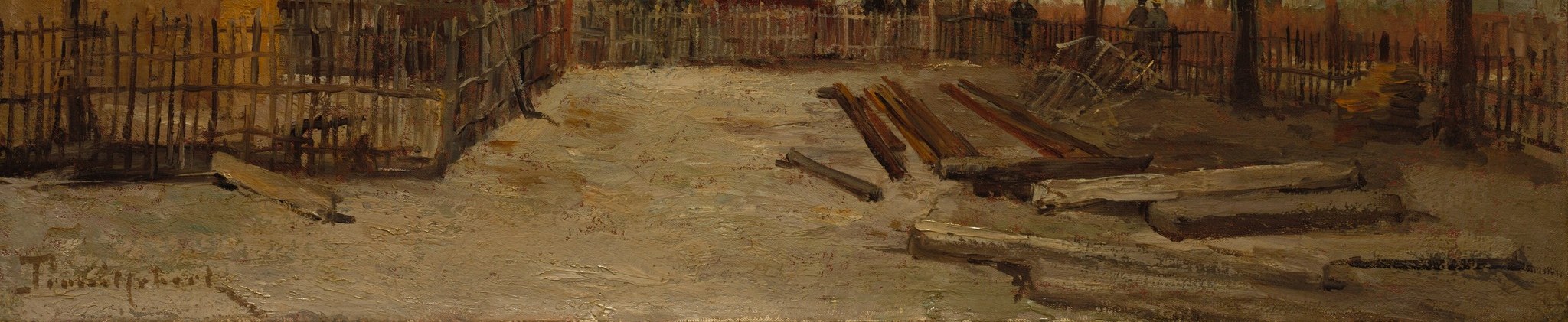
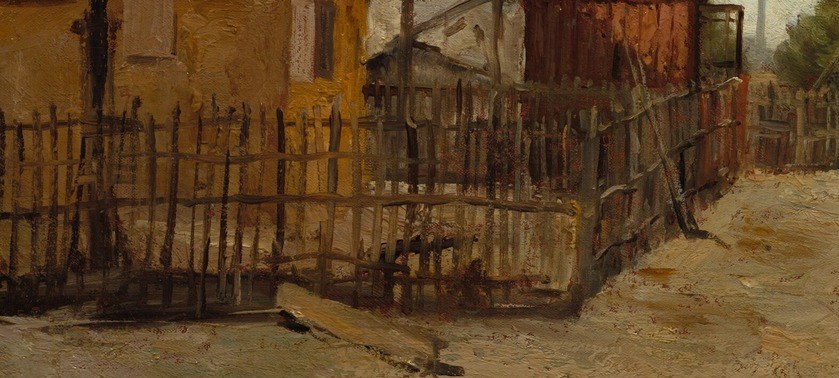
Trouillebert, known for his Barbizon School landscapes, turned his gaze to a contemporary subject here. His brushstrokes give a raw, tangible quality to the construction site, emphasizing the grit and reality of the labor. This piece bridges traditional art with the evolving industrial realities of the late 19th century.
It's a powerful reminder of the human effort behind every grand city, often overlooked but essential. What stories do you imagine these workers carrying?
Details
Transcript
In late 19th-century Paris, the city was rapidly changing. This painter captured the everyday work of building a new city. Notice the figures, small yet vital, on the bridge. These are the laborers, reshaping Paris, brick by brick. Their unseen effort built the modern city we know today. A monument to human endeavor, captured in a dusty scene.