The Stream (Le Ruisseau du Puits-Noir; vallée de la Loue) by Courbet, Gustave
Gustave Courbet’s The Stream (Le Ruisseau du Puits-Noir; vallée de la Loue), painted in 1855, is a seminal work in the Realism movement and is housed in a prominent museum.
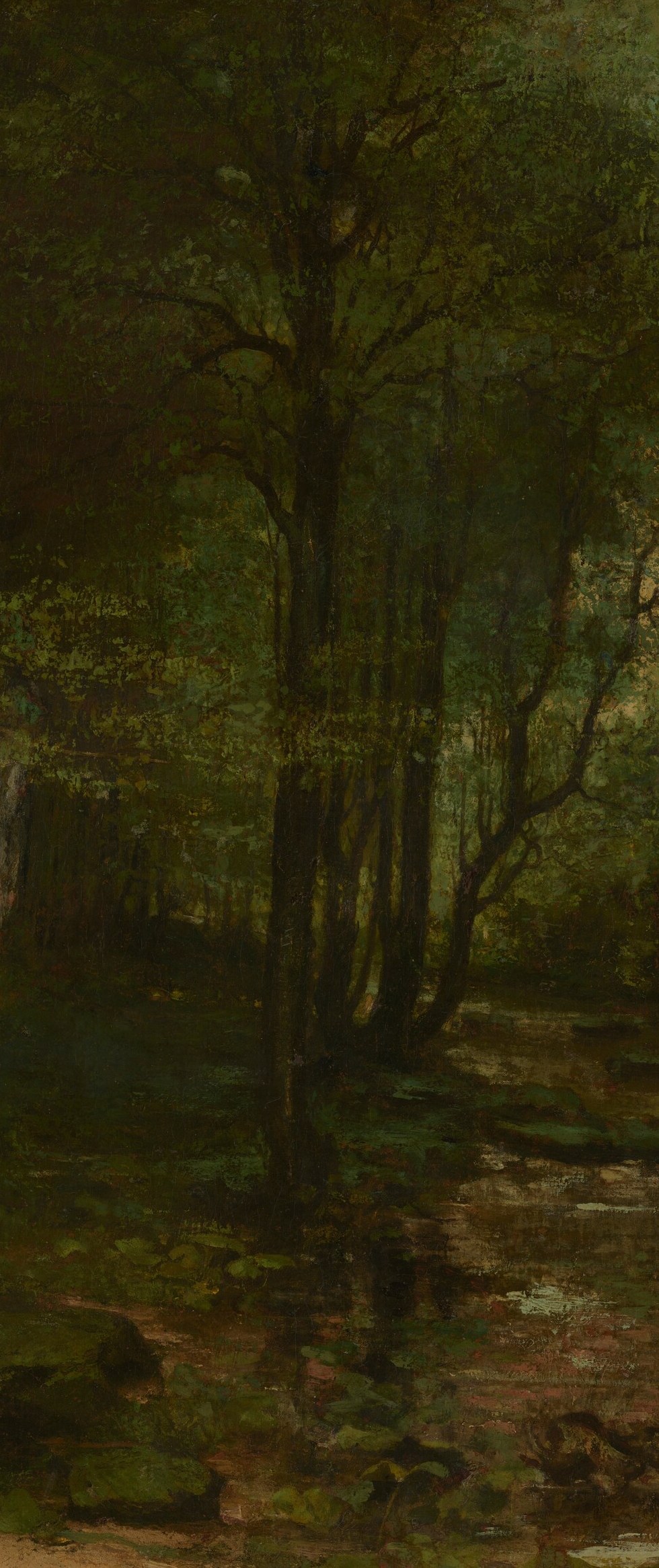
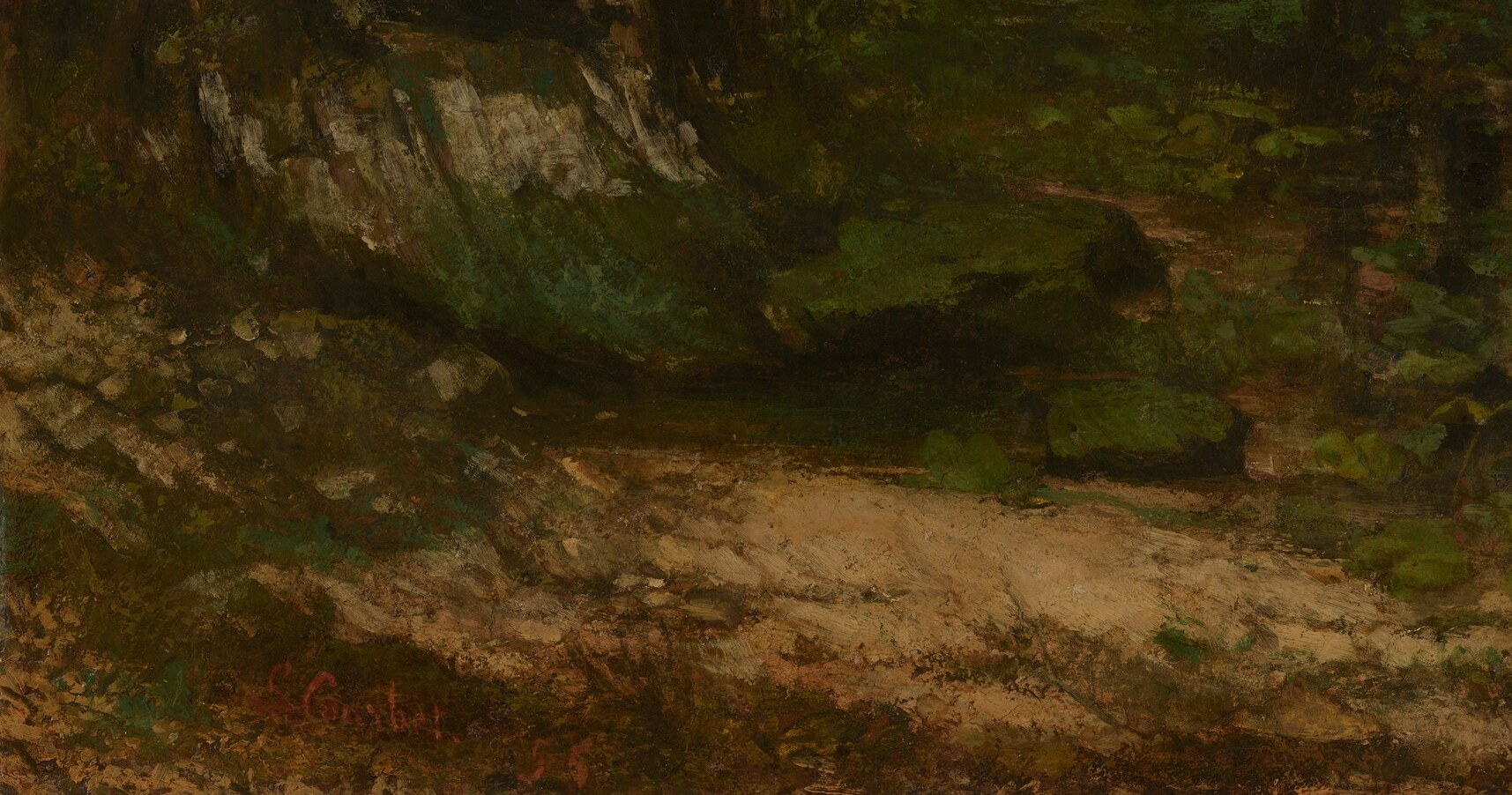
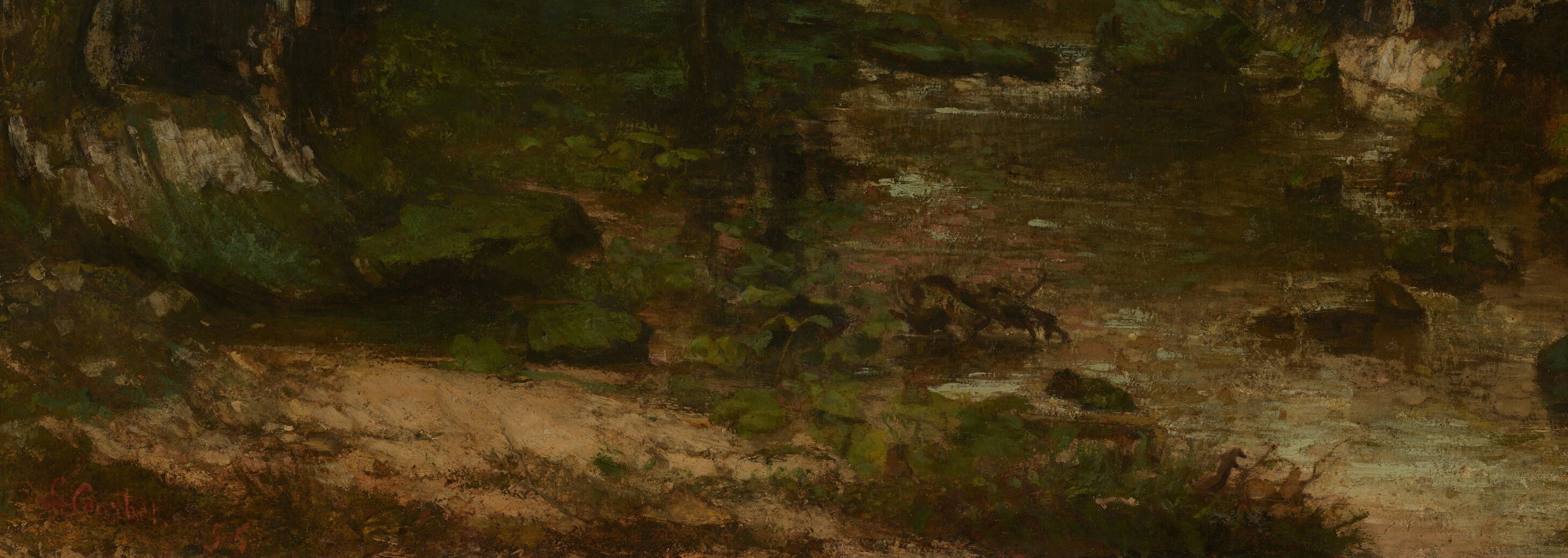
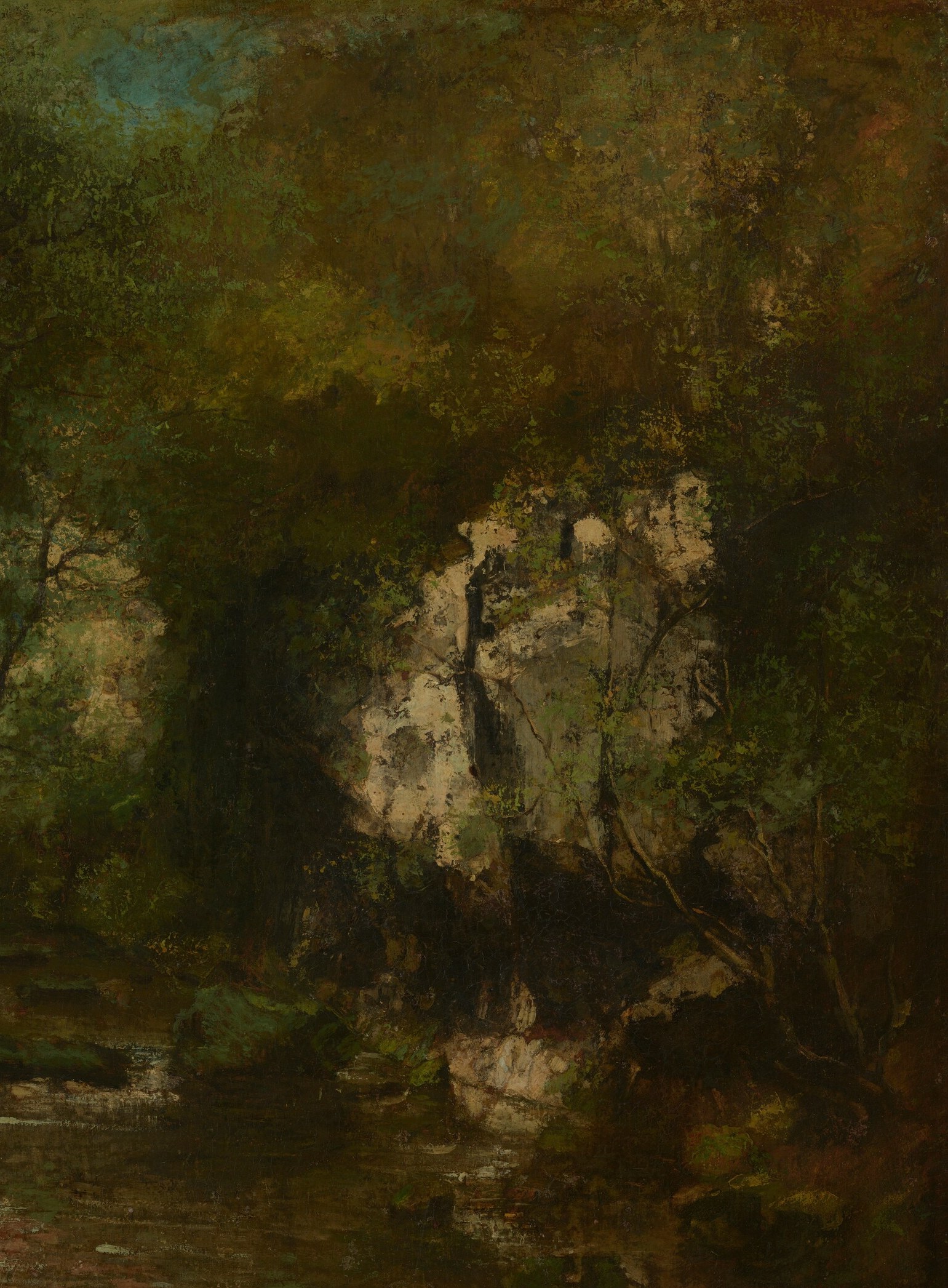
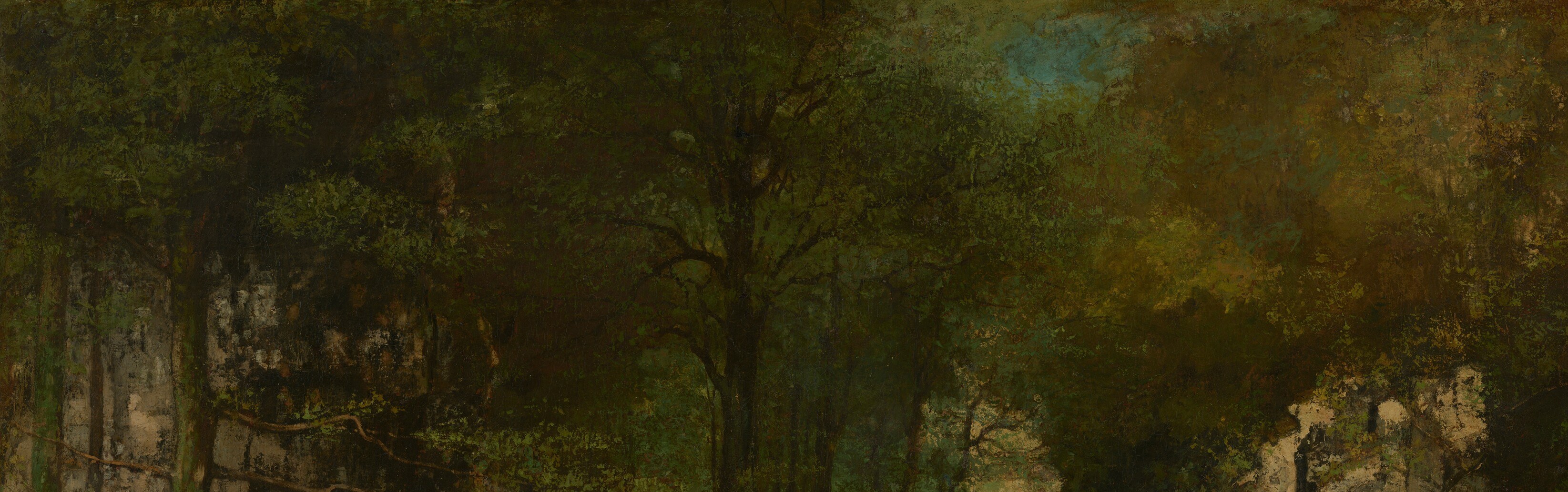
Courbet rejected the academic traditions and Romanticism of his time, choosing instead to depict nature exactly as he observed it. Notice the rich, tactile quality of the tree trunk and the mossy rocks in the foreground, achieved through his bold application of thick paint. The subdued palette and absence of idealization make the scene feel grounded and authentic.
This commitment to unembellished truth laid crucial groundwork for future art movements. His direct observation and rejection of conventional beauty influenced artists like the Impressionists, who focused on capturing light and atmosphere, and even the Cubists, who broke from traditional representation. Courbet's work showed that everyday reality could be a powerful subject.
What details in the painting surprise you most with their raw depiction of nature?
Details
Transcript
This painter rejected all the rules of art. He refused grand scenes, painting only what he saw. Look at the texture of this trunk, almost like stone. He used thick paint to show the raw weight of nature. This unvarnished realism inspired Impressionists and Cubists. He found beauty in simple observation, not drama.