Vanitas still life by Maria van Oosterwijck
This is Maria van Oosterwijck's *Vanitas still life* (1668), housed in the Kunsthistorisches Museum. It's a dense allegory about the fleeting nature of life and worldly possessions.
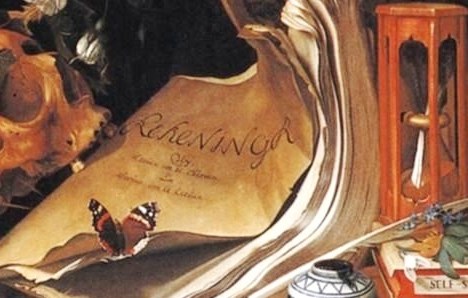
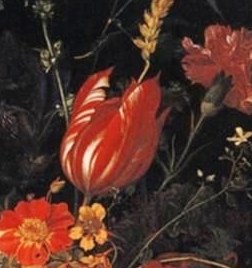
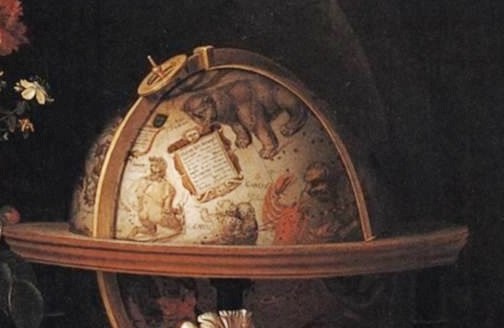
Look closely at the symbols: a skull reminds us of mortality, a wilting tulip represents fading beauty, and an hourglass marks time's relentless march. Even earthly ambitions, symbolized by the celestial globe, are transient.
Van Oosterwijck, a prominent Dutch Golden Age female artist, specialized in such moralizing still lifes. These paintings served as contemplative reminders of life's impermanence and the vanity of earthly concerns, encouraging introspection.
By decoding these objects, we see a message about virtue, like self-control, as a way to navigate life's transience.
Details
Transcript
This painter used symbols to talk about life. Look at the skull. It means life is short. This wilting tulip is beauty that fades. An hourglass shows time passing quickly. The inscription reads: Self-Stryt. Self-control offers a way through vanitas.