Seascape at Port-en-Bessin, Normandy by Seurat, Georges
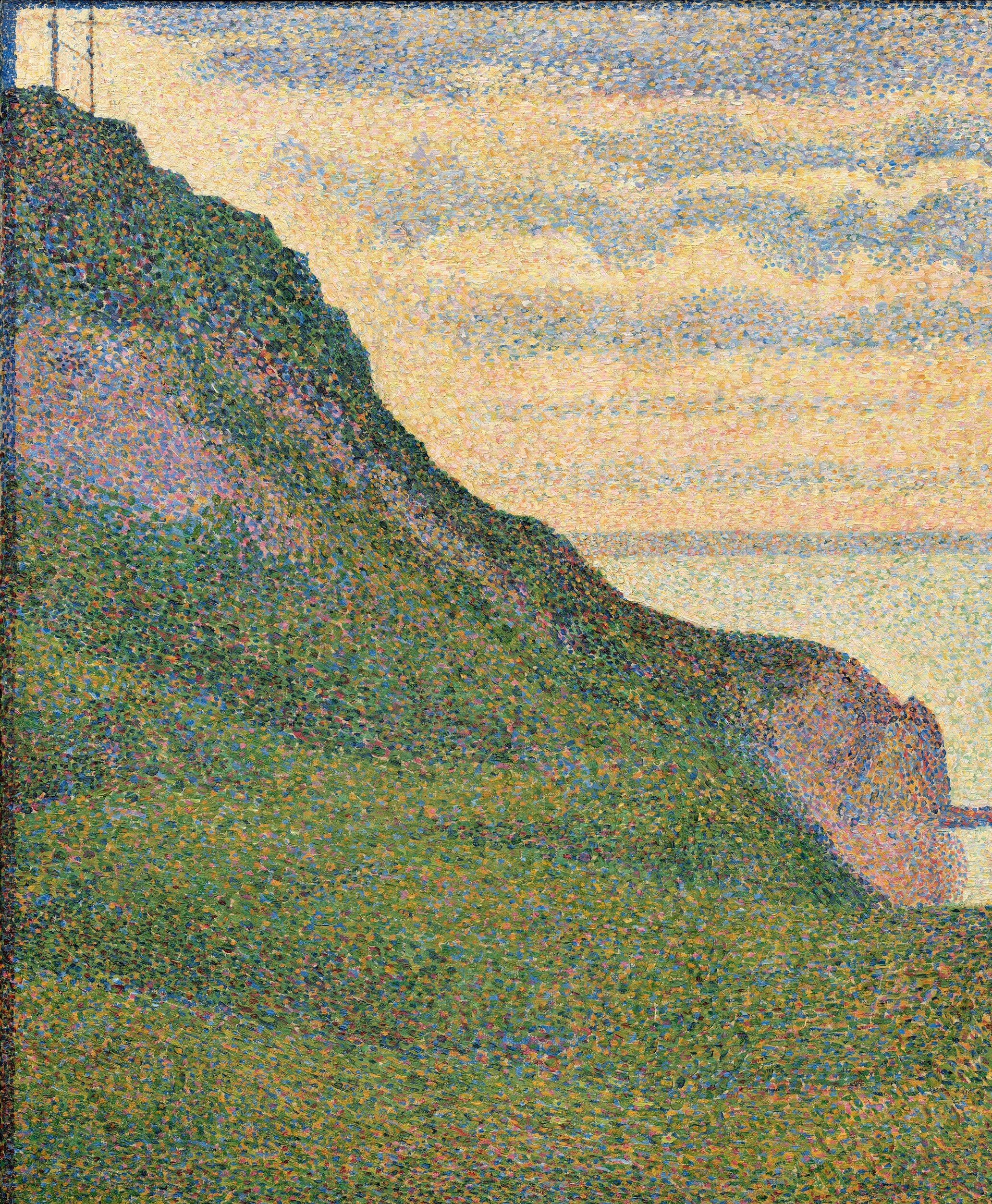
Georges Seurat’s “Seascape at Port-en-Bessin, Normandy,” painted in 1888, is a meticulous study of light and color, housed at the National Gallery of Art in Washington. This work provides a fascinating glimpse into the nascent stages of his revolutionary Pointillist technique.
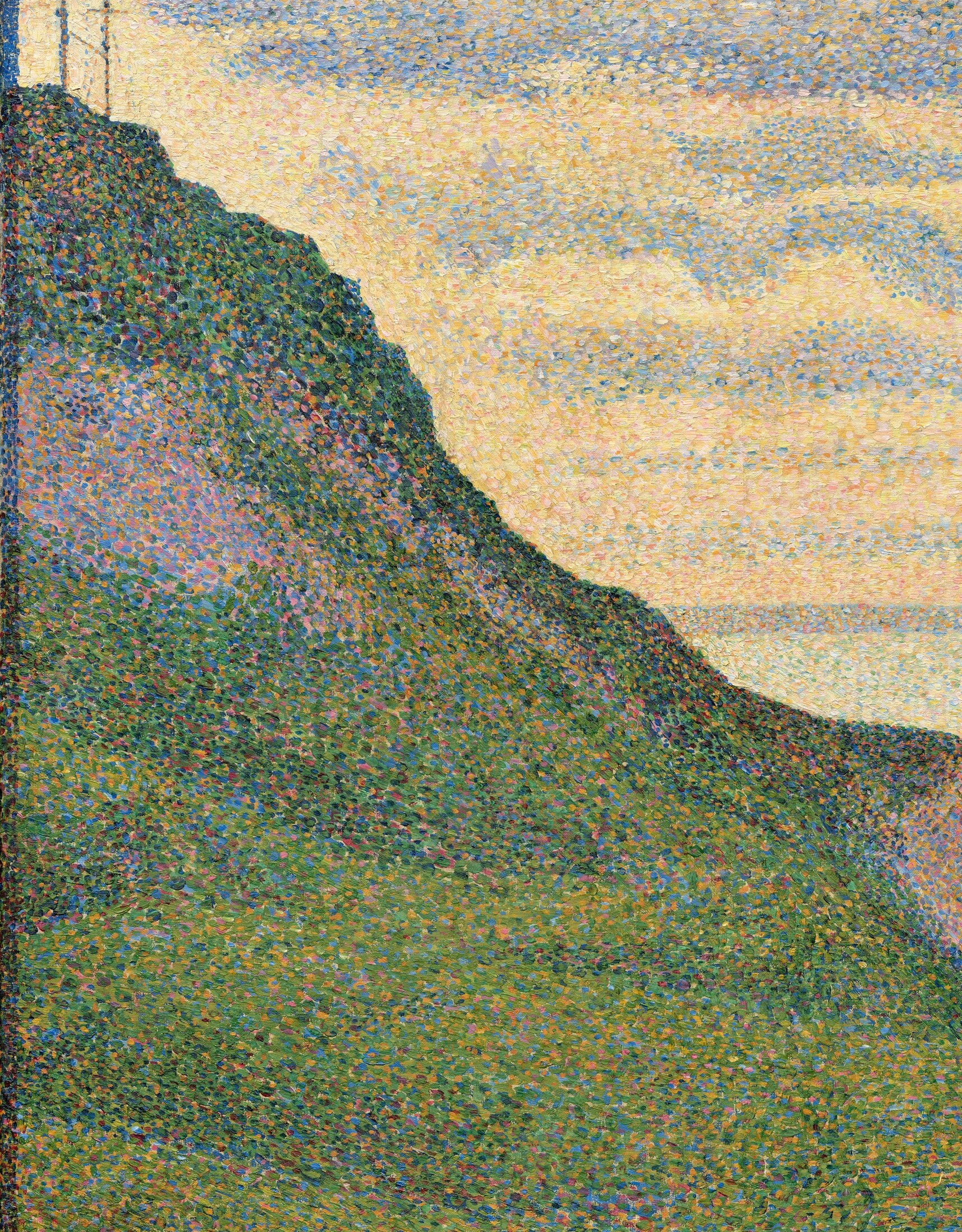
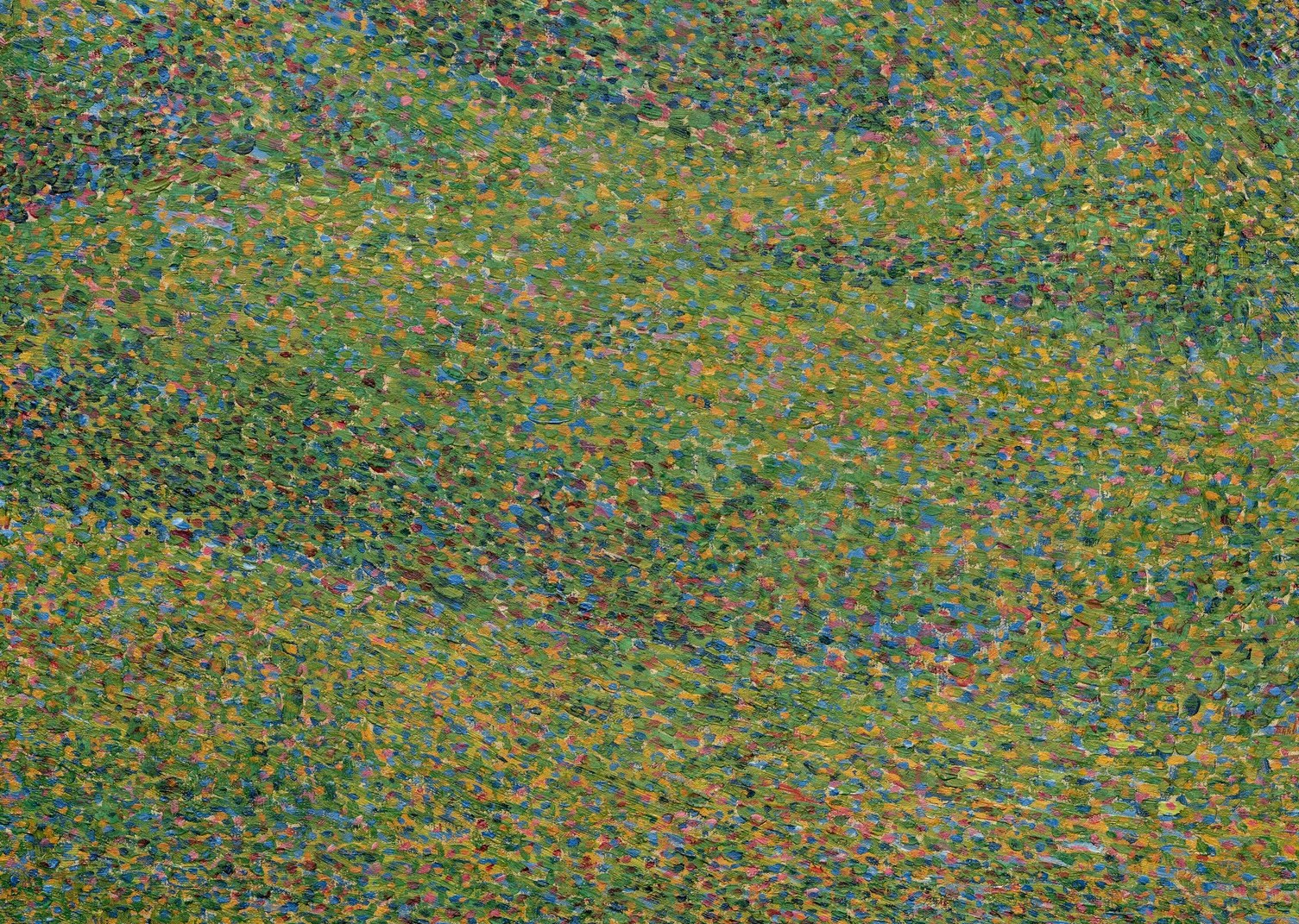
Look closely at how Seurat renders the scene with small, distinct touches of color, particularly in the vegetation and the subtle shadows on the cliffs. Instead of using traditional dark tones for shadows, he employs vibrant violets and blues, creating a luminous effect that brings the painting to life. This systematic approach to color theory was a precursor to the fully developed Pointillism that would define his later career.
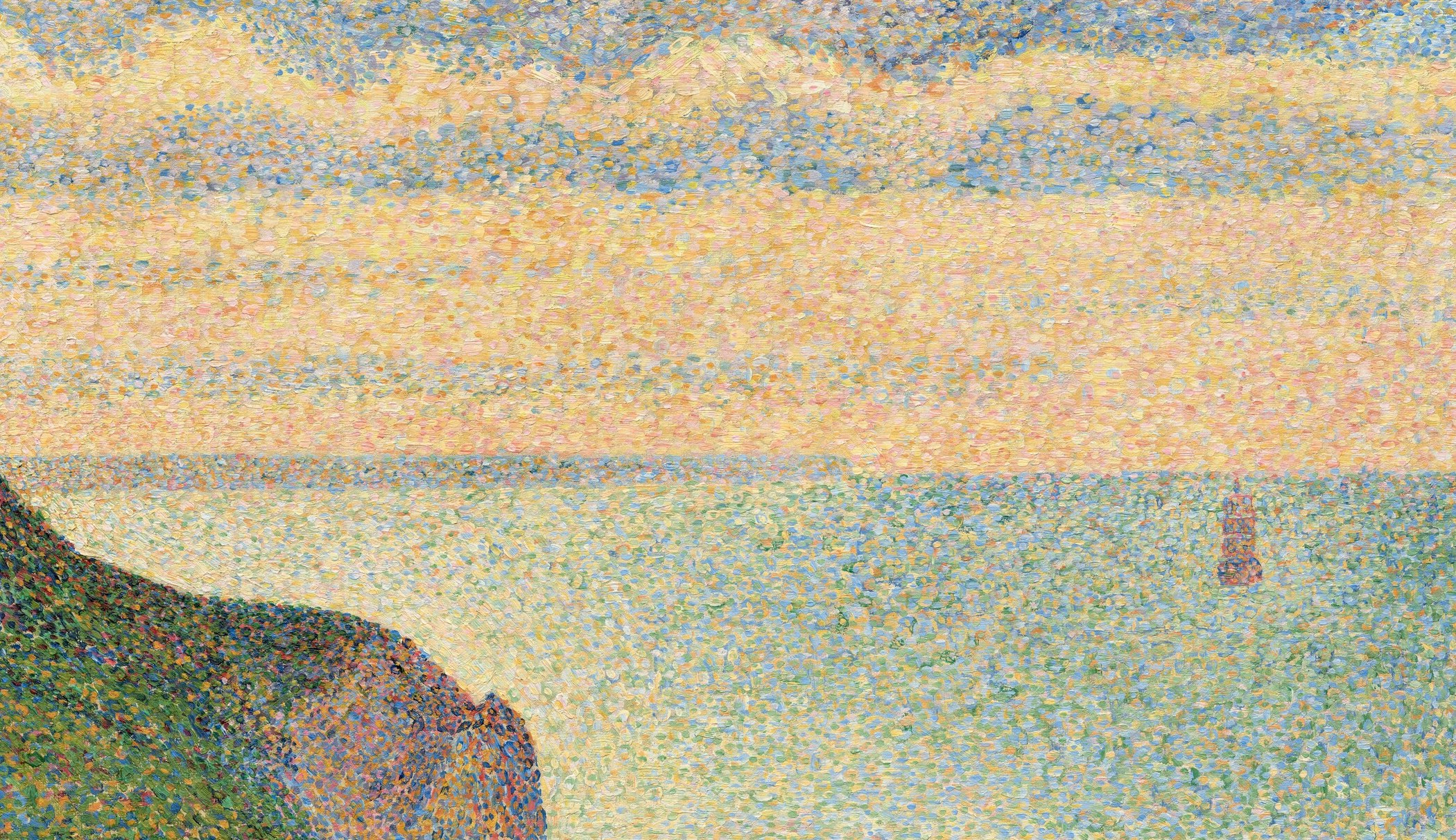
Created relatively early in his career, the painting captures the quiet atmosphere of an early morning along the Norman coast, integrating natural elements with subtle hints of human presence, such as the distant sailboat and the telegraph poles. It exemplifies Seurat's dedication to understanding and replicating the effects of light through scientific principles.
What details do you notice in his early application of these distinct color touches?
Details

Transcript
This isn’t just a painting, it’s a scientific study of light. Seurat uses tiny, distinct touches of color. Look closely at the shadow on this cliff face. He replaces dark tones with luminous violets and blues. This was his early step toward Pointillism. Capturing the still, early morning light on the Normandy coast.