The Annunciation by http://www.wikidata.org/.well-known/genid/1e389c35154a72807c567f290c50c0ab
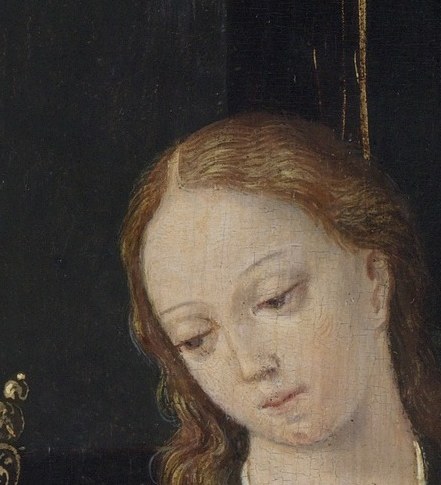
Tintoretto's 'The Annunciation' (circa 1550) at a private collection, beautifully captures the pivotal moment from the New Testament. The painting's deep chiaroscuro and rich colors draw the viewer into an intimate, sacred space.
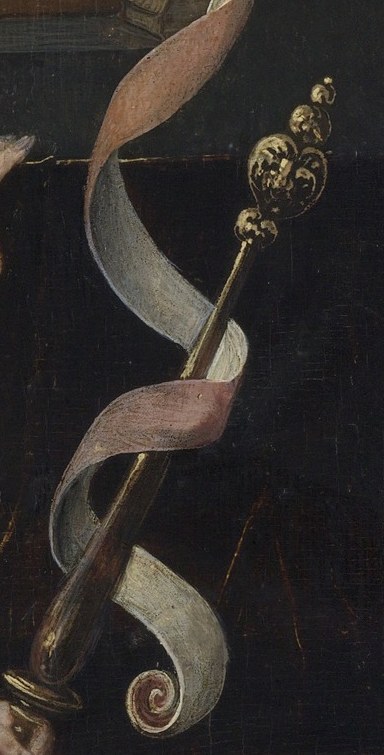
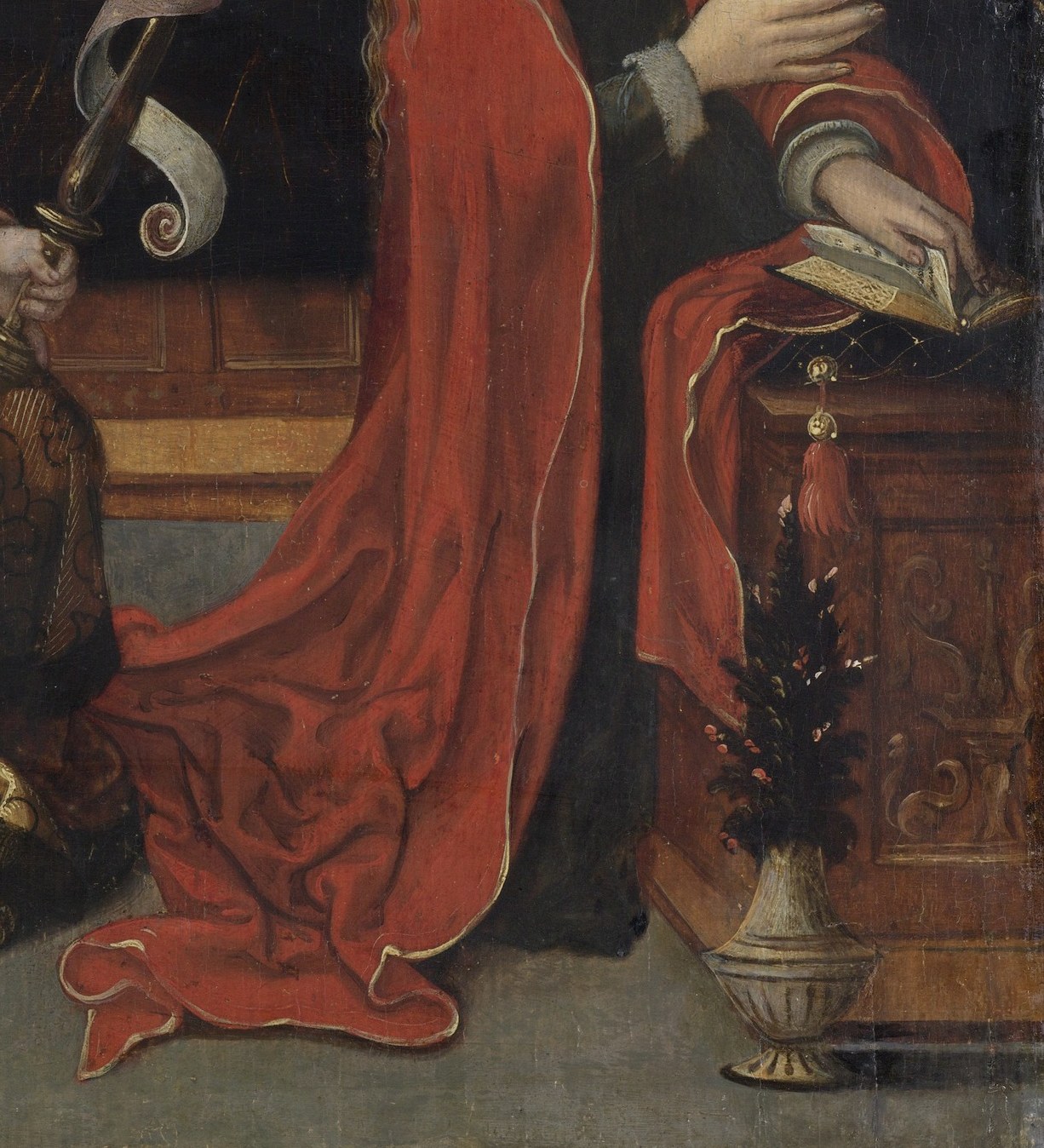
Notice the key symbols: the dove represents the Holy Spirit's miraculous presence, while the Archangel Gabriel's scepter underscores his divine authority. The open book on Mary's lap emphasizes her devotion and grounding in scripture, all reinforcing the profound theological significance of the scene.
Tintoretto, a prominent Venetian Renaissance artist, masterfully uses light and shadow to give the figures a three-dimensional quality, making the divine encounter feel immediate and real. The intricate patterns on Gabriel's robe and Mary's voluminous red dress also highlight the artist's attention to detail.
This painting invites us to contemplate the quiet power of faith and the profound impact of divine revelation. What other details in the scene capture your attention?
Details
Transcript
This painting tells a familiar story. Mary is told she will bear a divine child. Above her, the Holy Spirit appears as a dove. Gabriel holds a scepter, symbolizing divine authority. The open book signifies her piety and scriptural knowledge. Every detail reinforces the miracle of the Annunciation.