Young Woman with Ibis by Edgar Degas
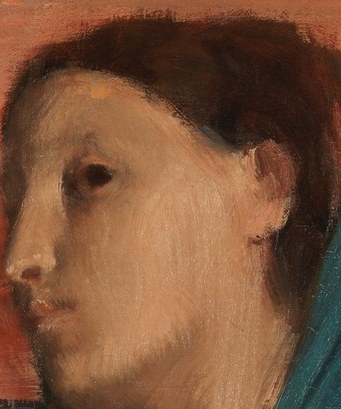
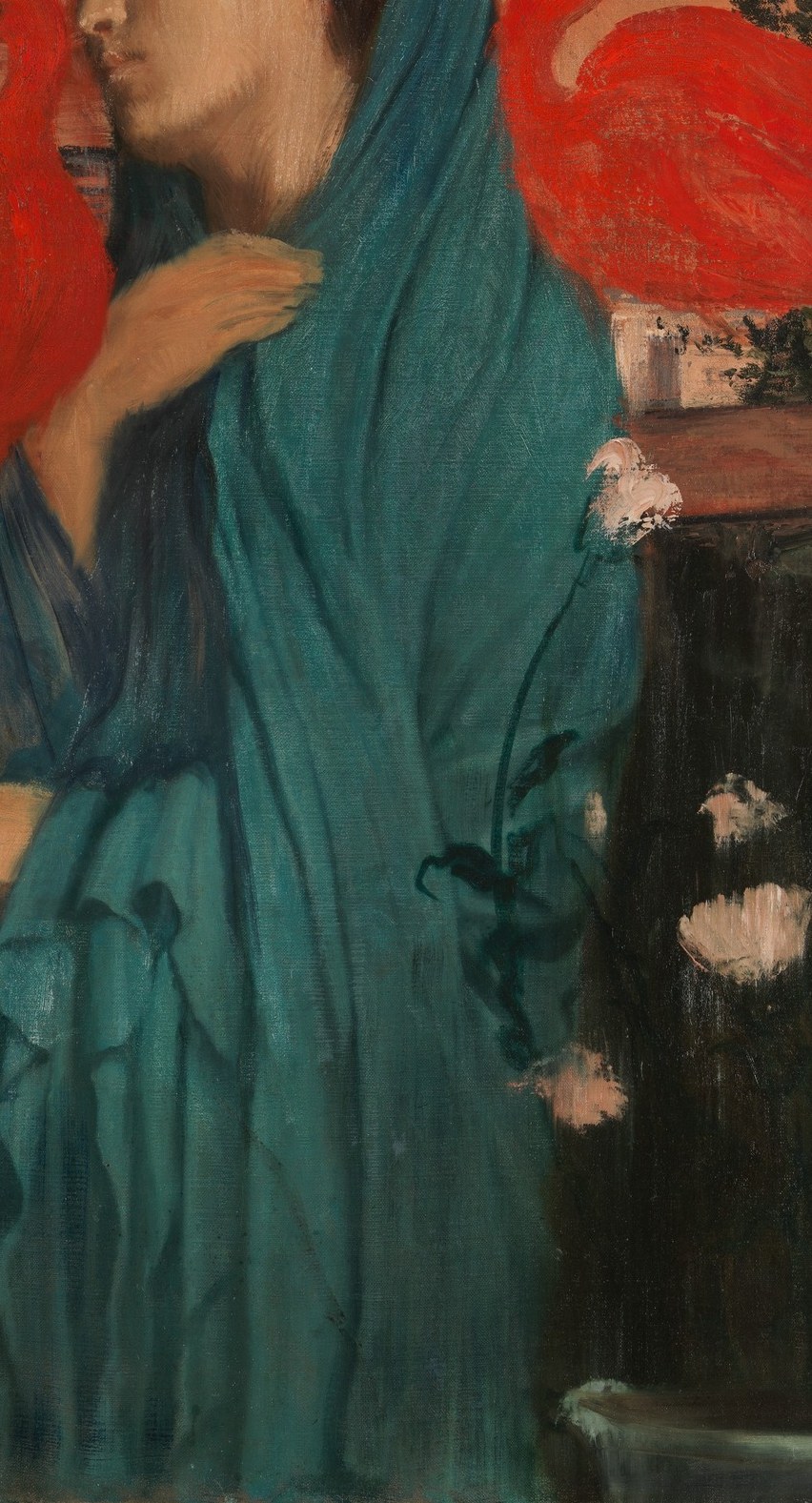
Edgar Degas’s “Young Woman with Ibis,” painted in 1860 and now at The Metropolitan Museum of Art, shows the artist already experimenting with techniques that would define his later work. While the woman's face is rendered with soft, diffused strokes, the vibrant ibis birds reveal a striking contrast.
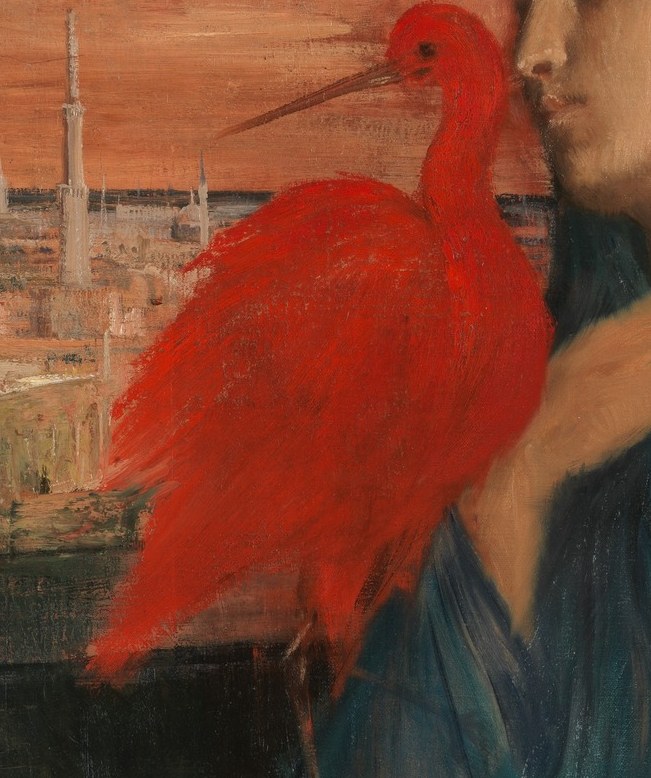
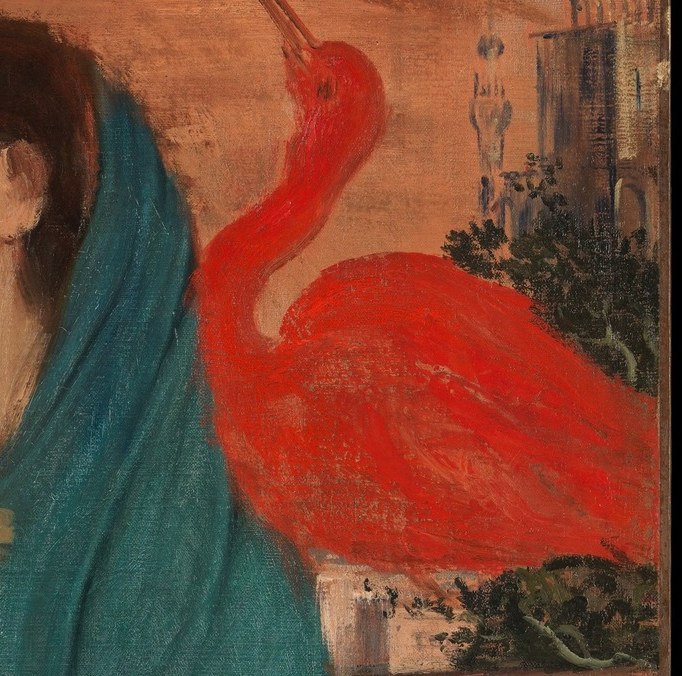
Look closely at the birds on her shoulders. Degas used a technique called impasto, applying paint in thick, textured layers. This gives the feathers an almost three-dimensional quality, making them appear to shimmer and move as if truly alive.
Degas, born Hilaire-Germain-Edgar De Gas, came from an affluent Parisian family. After abandoning legal studies, he trained at the École des Beaux-Arts and traveled to Italy, copying old masters. Early in his career, he aspired to history painting, but soon shifted to contemporary subjects, bringing classical discipline to modern life.
This early work hints at the innovative techniques Degas would continue to develop, transforming flat paint into living forms. What other details do you notice that bring this painting to life?
Details

Transcript
Degas painted this woman in 1860, early in his career. But the real trick is how he painted these ibis birds. He used thick, textured brushstrokes, called impasto. The paint stands up from the canvas, catching the light. It makes their feathers seem to shimmer and move. The paint itself seems to breathe with life.