Elijah Taken Up in a Chariot of Fire by Angeli, Giuseppe
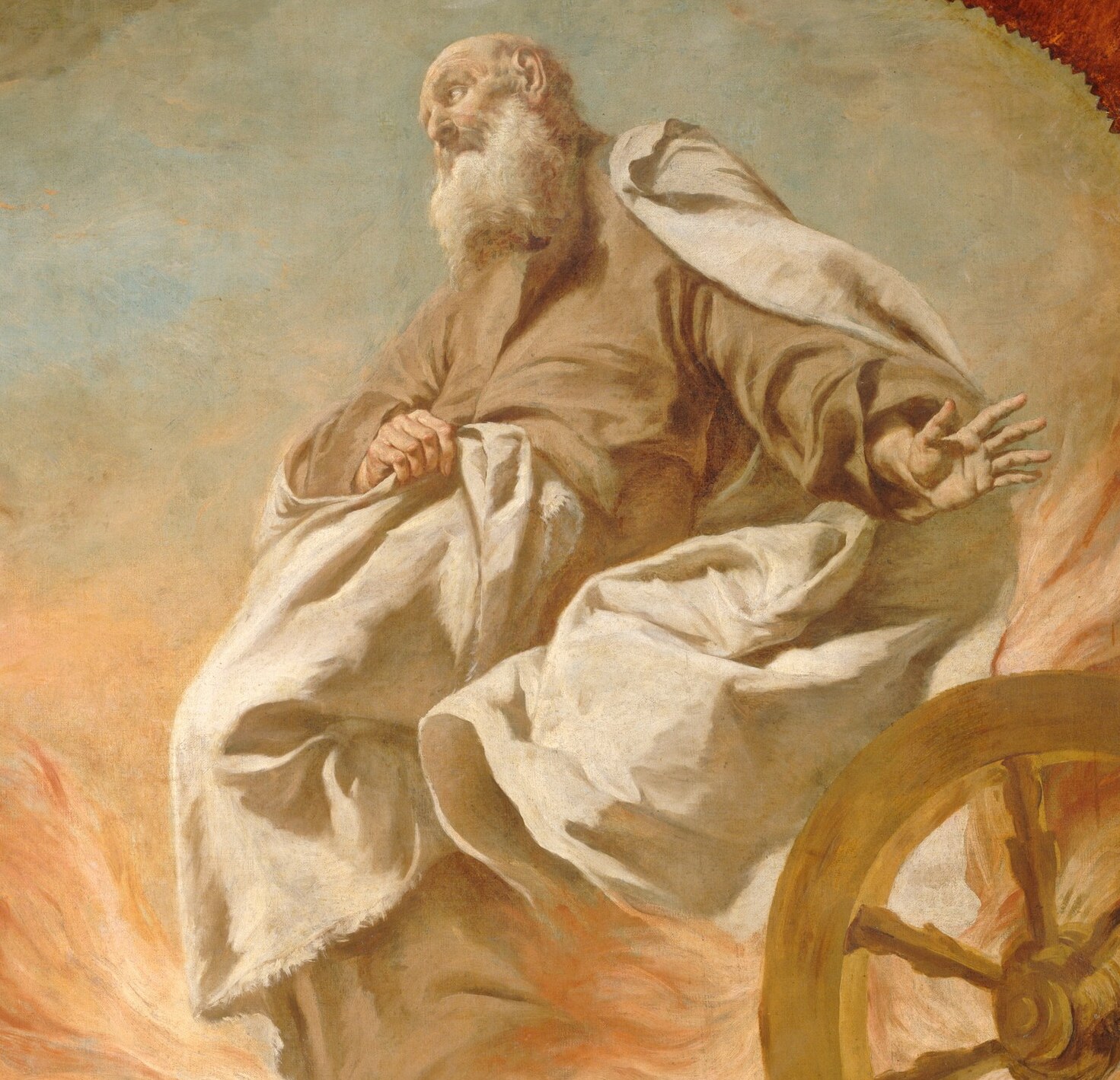
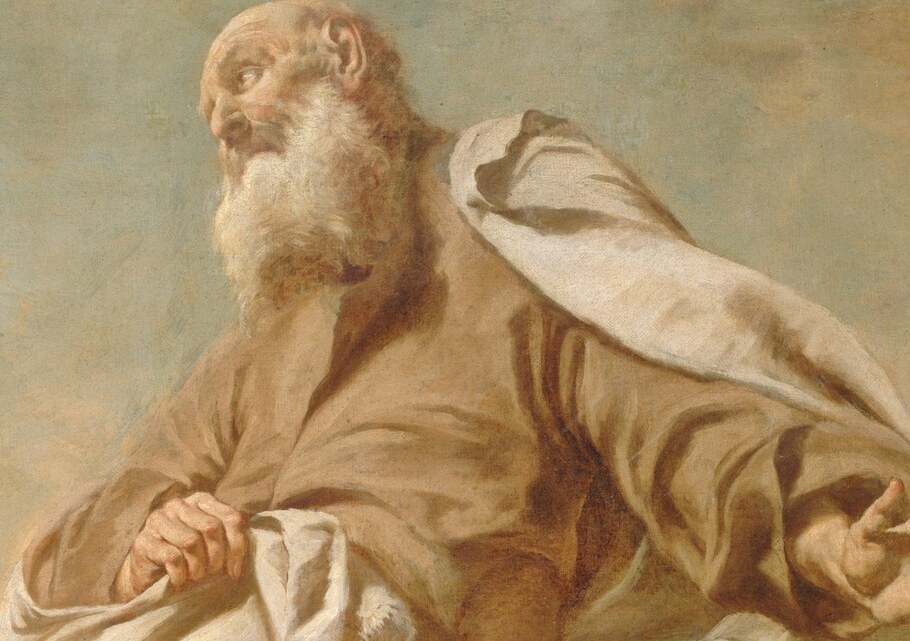
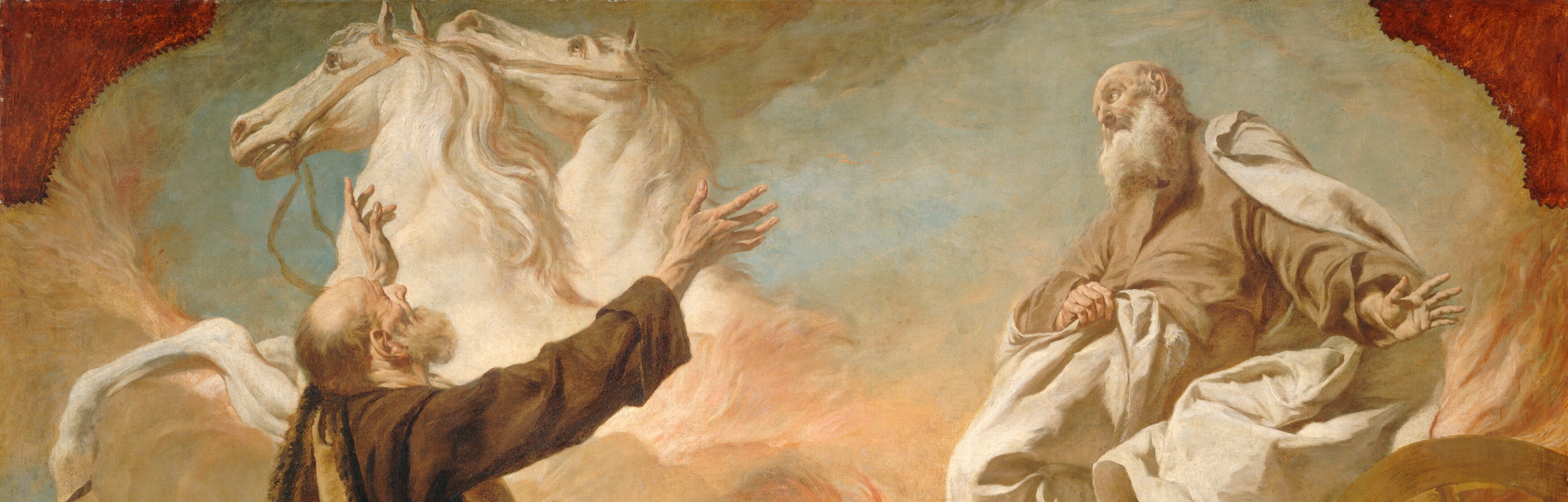
This is Giuseppe Angeli's *Elijah Taken Up in a Chariot of Fire*, painted around 1740 in Venice. The subject is a rare one in the Old Testament, the prophet Elijah ascends to heaven without dying, carried by a chariot and horses made of fire. But the painting contains a quieter, more personal tribute embedded in the drama.
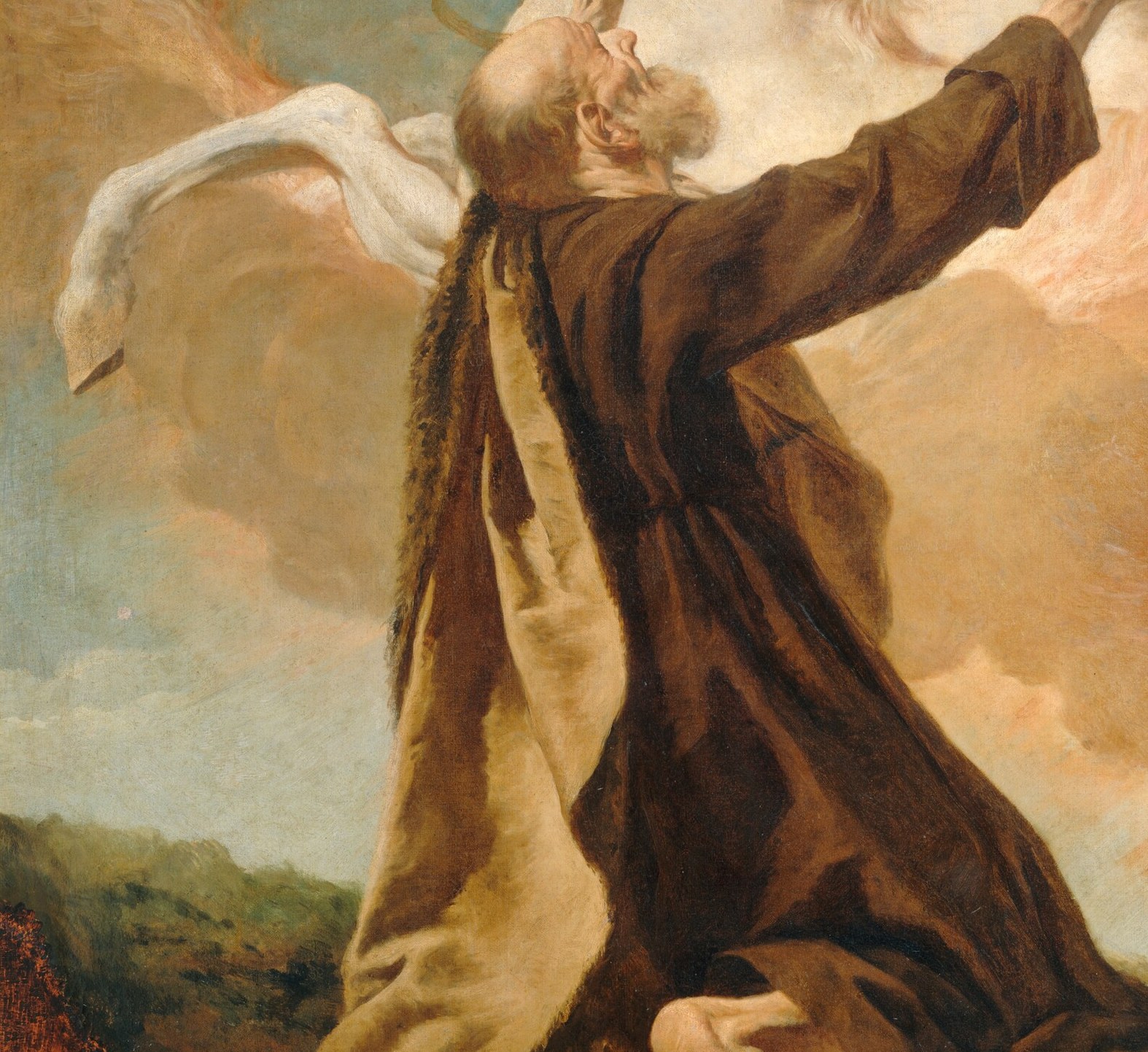
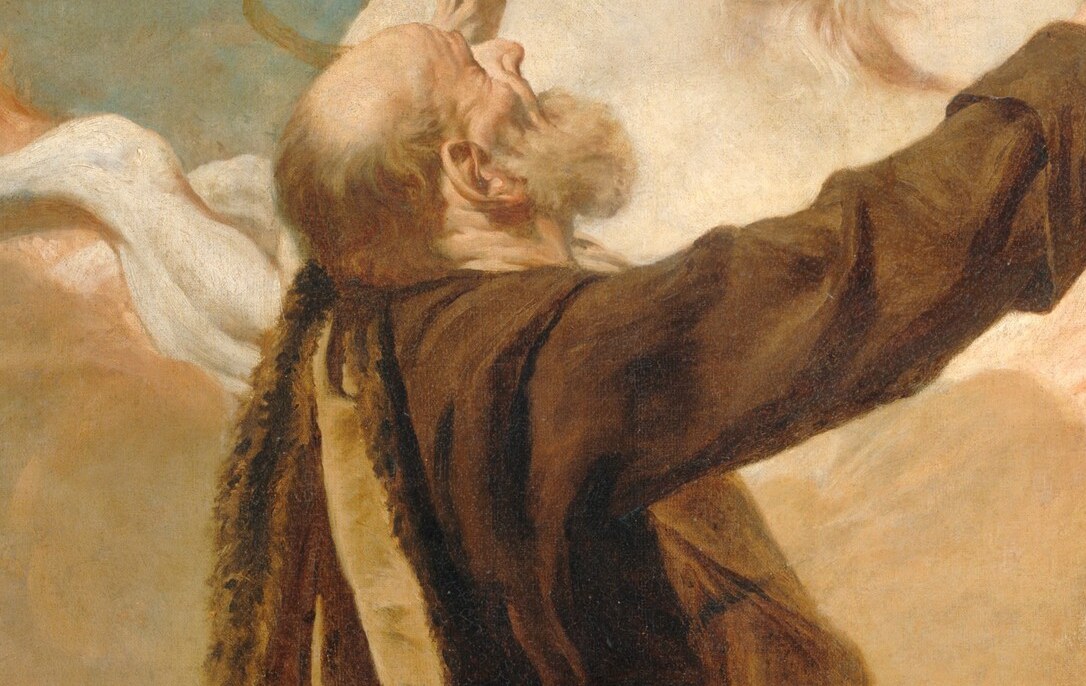
Find the kneeling figure in the lower half of the canvas, that is Elisha, the successor, reaching up toward the departing prophet. Angeli painted Elisha's anguished, upturned face using the features of his own revered teacher, Giambattista Piazzetta, the leading Venetian painter of the generation before him. So this isn't just a biblical miracle, it's also a student's portrait of artistic succession and gratitude.
Giuseppe Angeli studied under Piazzetta and absorbed his master's dramatic use of light and shadow, visible here in the stark contrast between the golden incandescent sky and the near-black earthly ground. The composition's central diagonal, Elijah's extended arm answering Elisha's raised hands, carries the entire narrative in a single visual line. Angeli was later appointed director of the Venetian Academy, and paintings like this show why: he could fuse theatrical Baroque spectacle with genuine human feeling.
Every teacher hopes a student will one day do something that shows they were truly seen. Angeli painted his teacher into a story about miracles.
Details
Transcript
Venice, around 1742. A painter gets an unusual commission. He chooses the moment the prophet Elijah leaves the earth alive. Elijah's face shows no fear, only calm authority. Look at the kneeling figure below. That is Elisha, his successor. For the face of Elisha, the painter used his own teacher's face. His teacher was Giambattista Piazzetta. This painting honored him.