View of Benjamin Reber's Farm by Hofmann, Charles C.
This is "View of Benjamin Reber's Farm" by Charles C. Hofmann, painted in 1872. It's now in the collection of the National Gallery of Art. But it was never meant for a museum wall. It was a receipt.
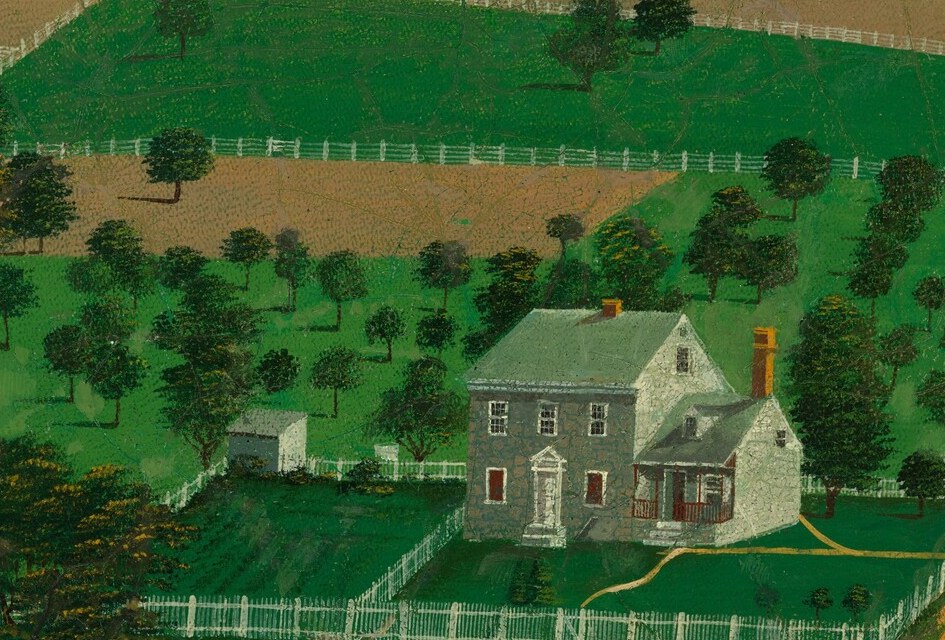
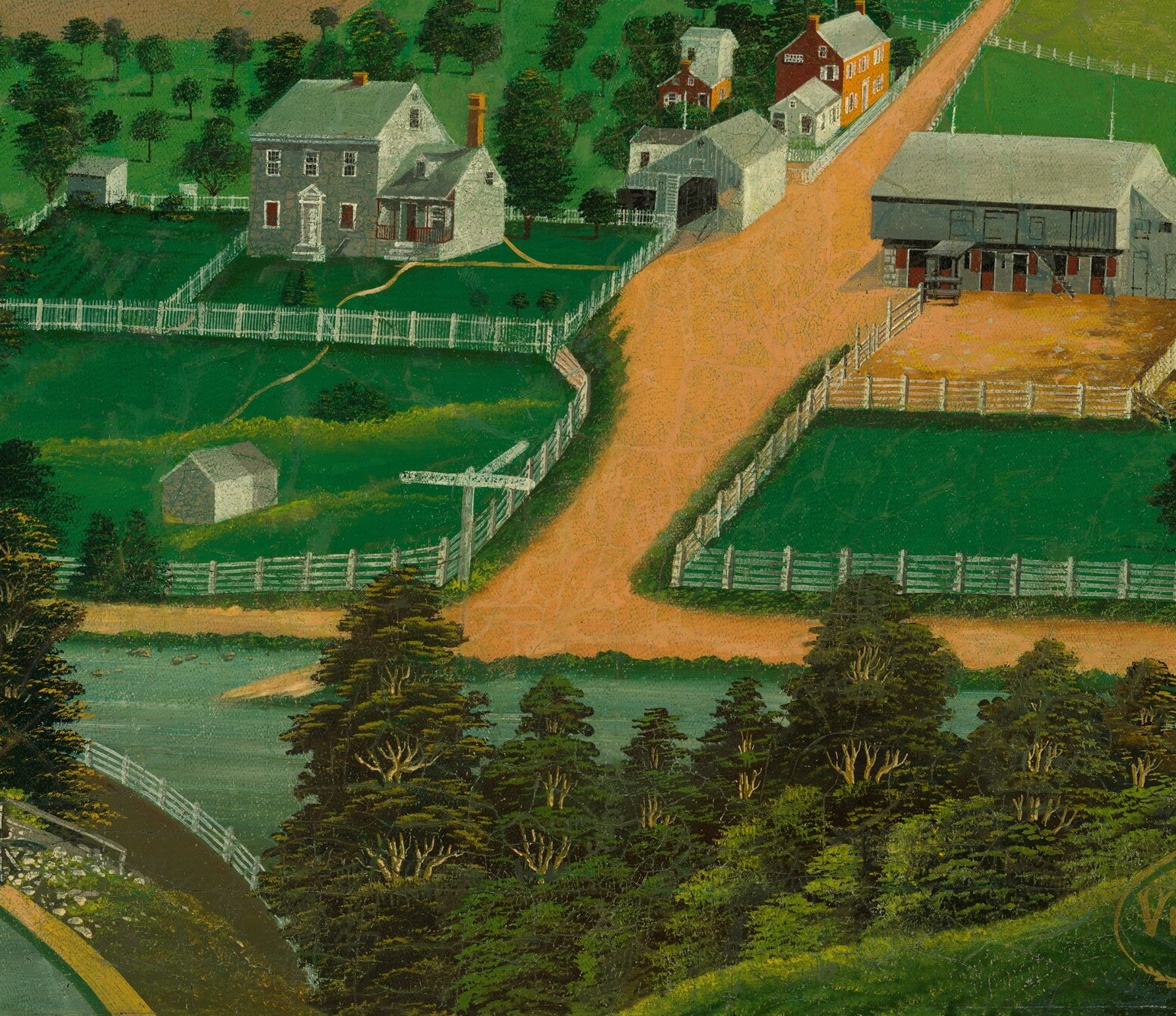
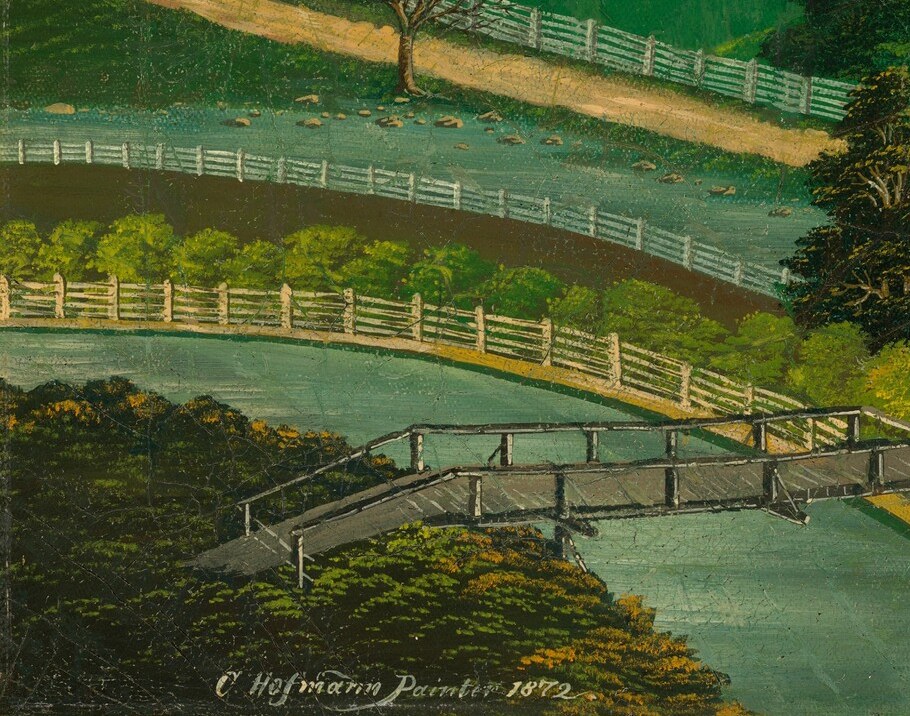
Look at the way the farm unfolds. The road doesn't recede into the distance like a conventional landscape. It loops and curves upward, so every approach to the property is visible at once. Hofmann was mapping, not painting atmosphere. Every outbuilding is accounted for. The stone bridge in the lower left is real infrastructure, not a picturesque addition. He painted what was legally and physically there.
Hofmann had a hard life. He was a German immigrant who spent years in a Pennsylvania almshouse, the 19th-century term for a public poorhouse. When he got out, he wandered Berks County. Farmers gave him a bed and a meal, and in return, he produced these astonishingly precise painted inventories of their land. They weren't art patrons. They wanted a record of what they had built.
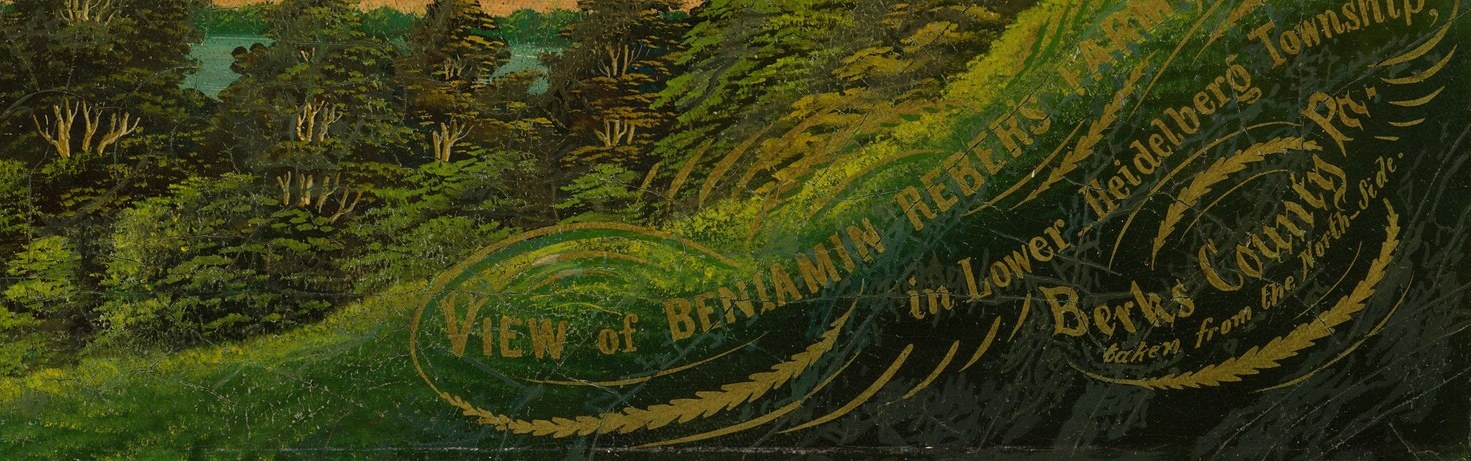
The small cartouche in the corner likely names the owner, the date, and the artist. That text turns the painting into a document. These works were filed in farmhouses, not galleries. And remarkably, they survived, because families held onto the proof of their place.
Details

Transcript
He wasn't just painting a pretty farm. Charles Hofmann was a debtor who wandered Pennsylvania. For room and board, he painted your property like a map. The driveway curves so you can trace your approach. That's a real stone bridge. No guesswork. And in the corner: the owner's name, in writing. A landscape that doubles as a deed.