Edward R. Bacon (1846–1915) by Anders Zorn (Swedish, 1860–1920)
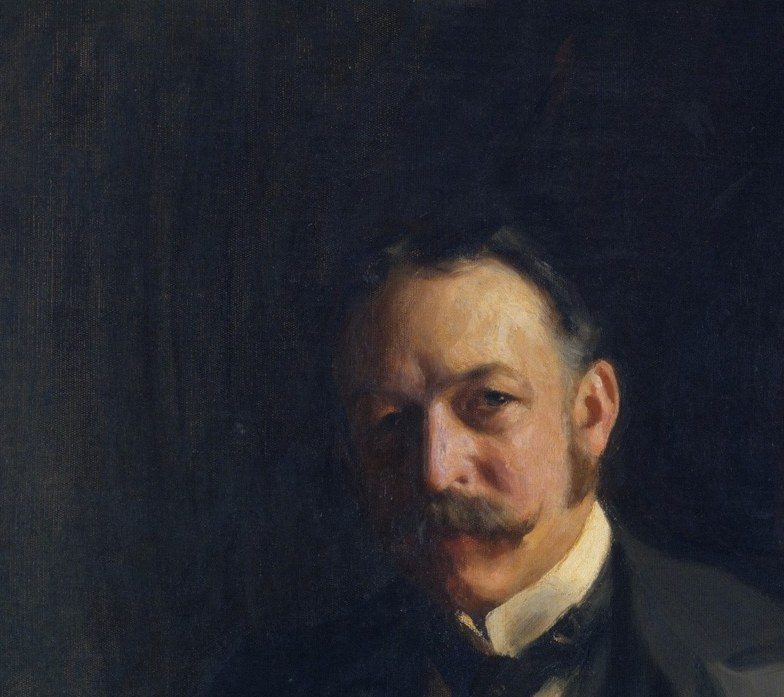
Anders Zorn's portrait of Edward R. Bacon captures the apex of the American Gilded Age in a single frame. Painted in 1899 and now at The Metropolitan Museum of Art, it shows a railroad executive at the height of his power, the year before the twentieth century arrived to change everything.
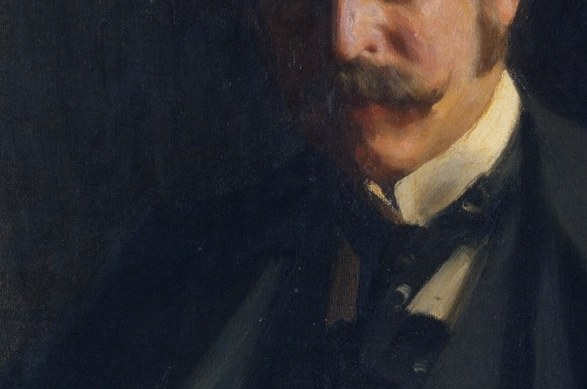
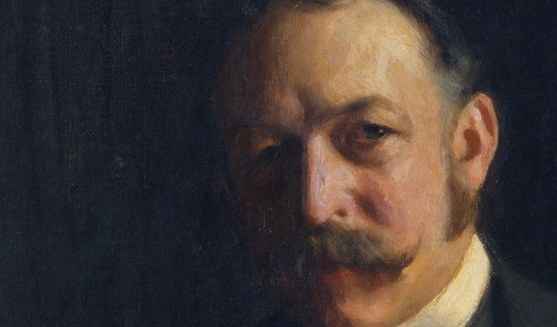
Look at the economy of the brushwork. Zorn builds Bacon's face from a few loose, almost impressionistic strokes on the cheek and brow. The white collar and cravat form the brightest passage in the painting, anchoring the composition and pulling your eye down from that direct, unblinking gaze. The dark frock coat nearly dissolves into the background, a floating-head effect Zorn favored for his society portraits.
Zorn was a Swedish painter who became the preferred portraitist of the international elite. His sitters included three U.S. presidents, Cleveland, Taft, and Theodore Roosevelt, and King Oscar II of Sweden. Bacon himself was a major figure in American rail, a man whose world was private cars, Newport summers, and unassailable confidence. The portrait is not a psychological deep-dive; it is a record of a social fact.
The painting holds you because the eyes hold you. Zorn puts a faint highlight in one eye and lets the other sit in shadow, making the stare feel alive and appraising. He shows you a man who was used to being looked at, and whose wealth made him sure he would be remembered.
Details

Transcript
1899. The Gilded Age is at its absolute peak. A single year before the century turns. His clothes are a uniform of power. The face is built from shockingly loose strokes. His eyes hold the room with a quiet, appraising authority. He was a railroad executive, a king of American capital. The painter was a Swede who painted three American presidents. This is what the top of the world looked like. Paused, for a moment, in oil.