The Picture from Thibet by Carlsen, Emil
Emil Carlsen's "The Picture from Thibet," painted around 1920 and housed in a private collection, appears at first glance to be a typical still life. Yet, a closer look reveals layers of cultural and spiritual influence, subtly woven into the composition.
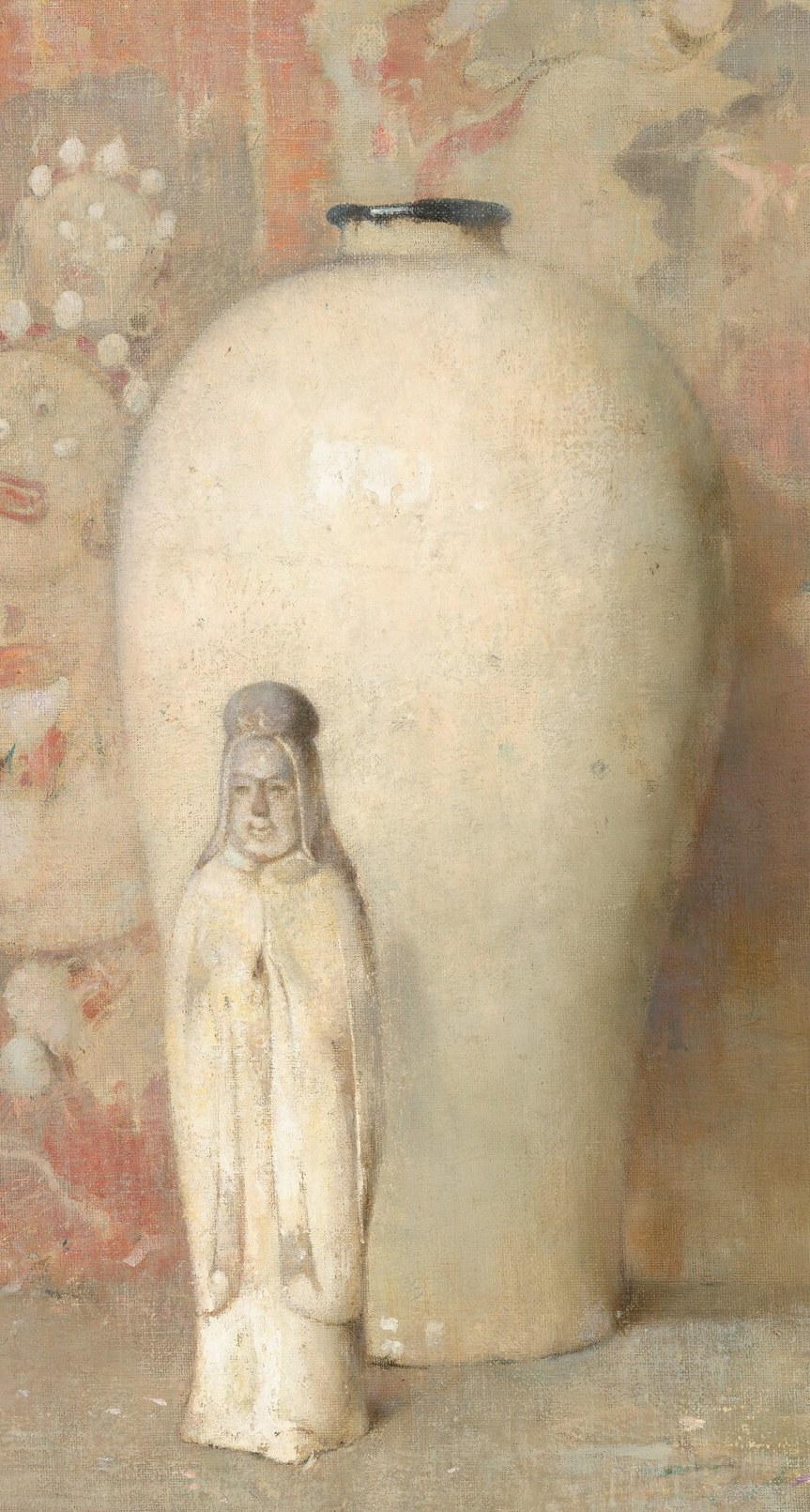
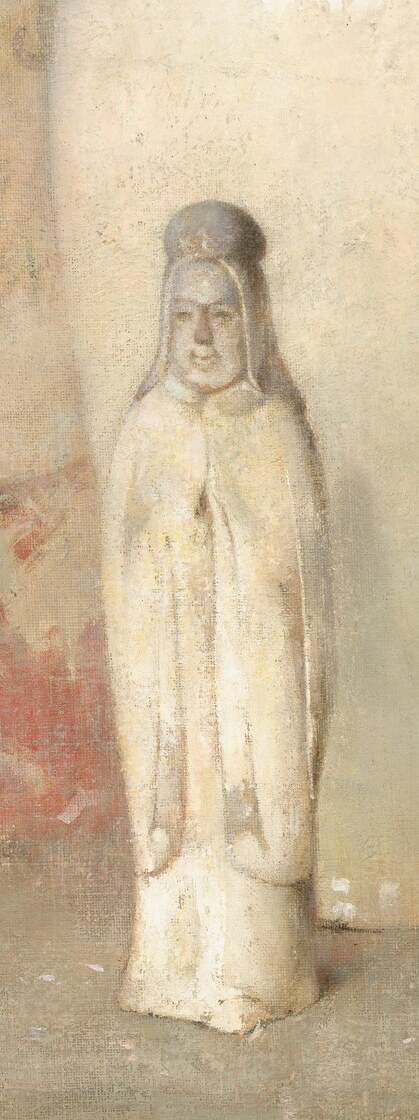
Notice the prominent white vase, but then let your eye explore the more intimate details: a small white figurine, a pale green bowl, and scattered beads. These objects, combined with the Tibetan-inspired mural in the background, invite contemplation beyond a simple arrangement.
Carlsen, an American Impressionist of Danish origin, was known for his still lifes, but this work shows his later exploration of diverse subjects and global motifs. The almost hidden artist's signature is a testament to his understated approach, inviting viewers to discover the painting's quiet depths.
What other small details might hold big stories in art?
Details
Transcript
This painter was famous for his still lifes. Here, a large vase dominates the foreground. But look closer at the small details. A tiny figurine, and beads near a pale green bowl. These elements hint at a spiritual journey. Even the artist's name is a subtle detail.