Three Walla Walla Indians by Catlin, George
George Catlin, a lawyer-turned-artist, dedicated his life to documenting Native American cultures. His painting, "Three Walla Walla Indians," created between 1855 and 1869, is a powerful example of this effort, now held at the National Gallery of Art in Washington, D.C.
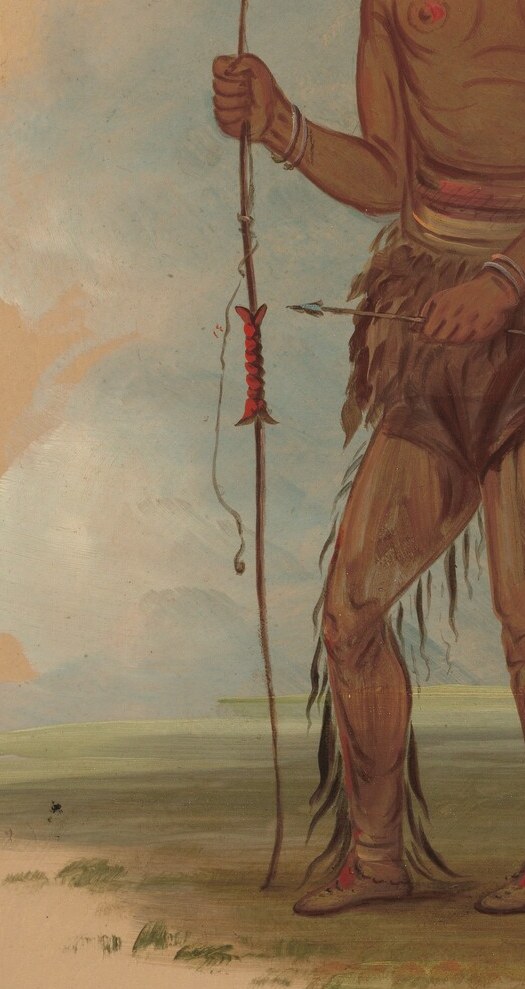
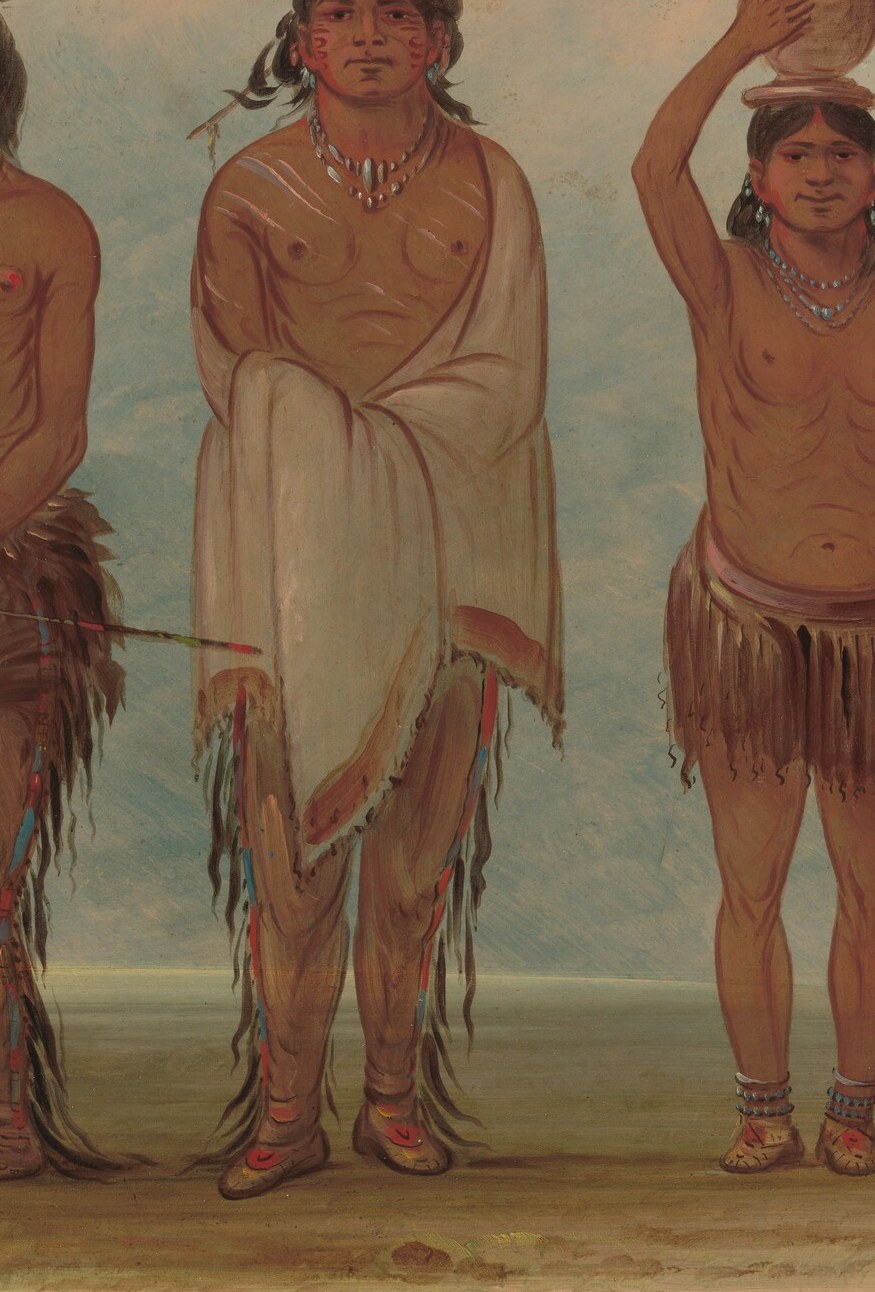
Notice the details: the leftmost figure's bow and feathered headdress, the central figure's white robe, and the woman balancing a pot on her head. These elements highlight aspects of their attire and daily activities, offering a glimpse into their material culture.
Catlin traveled to the American West five times in the 1830s, creating thousands of sketches and paintings. His work emerged from a broader project to record tribal cultures during a period of rapid displacement, aiming to preserve a visual record of their lives. He employed oil on card, a common choice for itinerant artists.
By portraying his subjects with dignity and individuality, Catlin's work provides invaluable historical and cultural testimony. What details surprise you most about this portrait?
Details
Transcript
This painter documented Native American life in the 1830s. He traveled west five times to paint portraits like this. This man wears a feathered headdress and holds a bow. His hide loincloth shows connection to the land. The woman carries a pot, showing everyday life. This work counters contemporary stereotypes with dignity.