Samson rending the lion by Maarten van Heemskerck
Four years in Italy changed everything for Maarten van Heemskerck. Back home in Haarlem around 1550, he painted Samson Rending the Lion, a body that owes more to Italian Mannerism than to any anatomy book. It hangs today in the Rijksmuseum in Amsterdam.
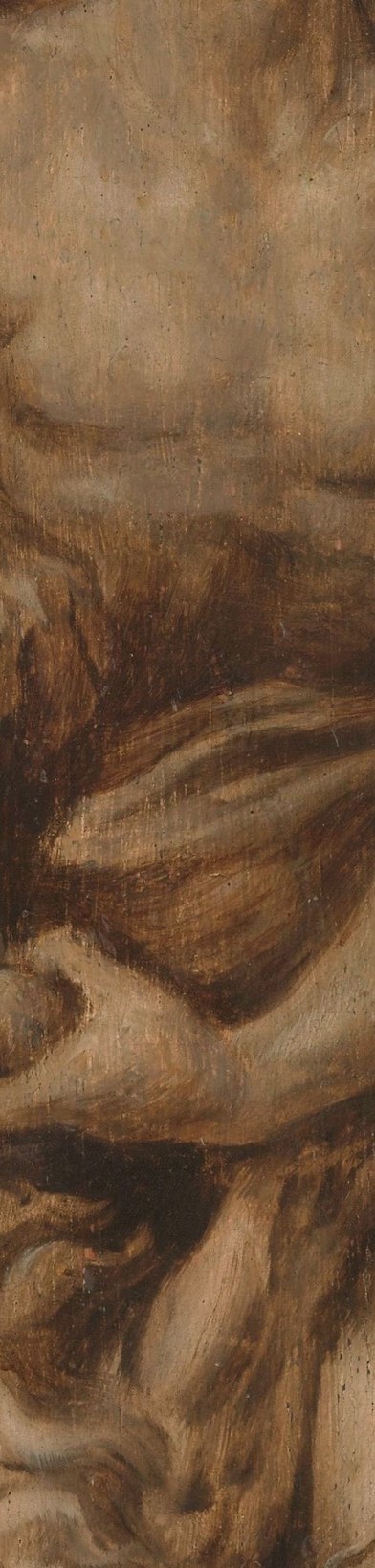
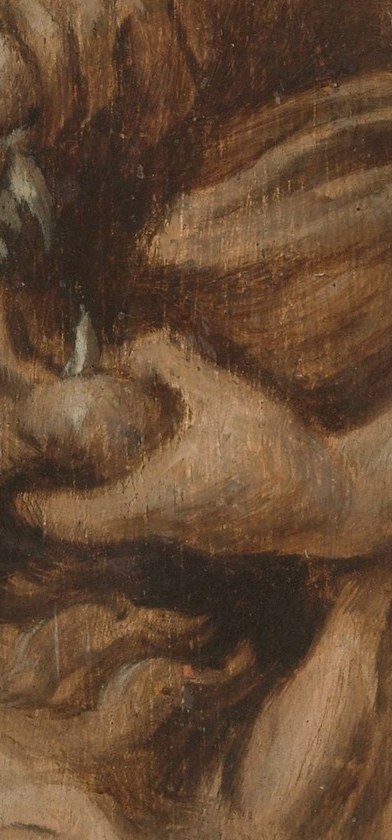
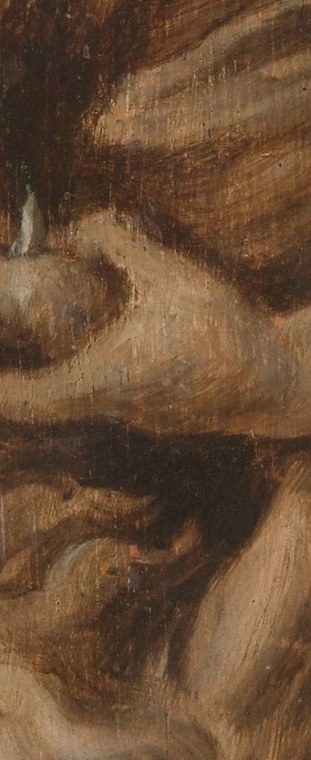
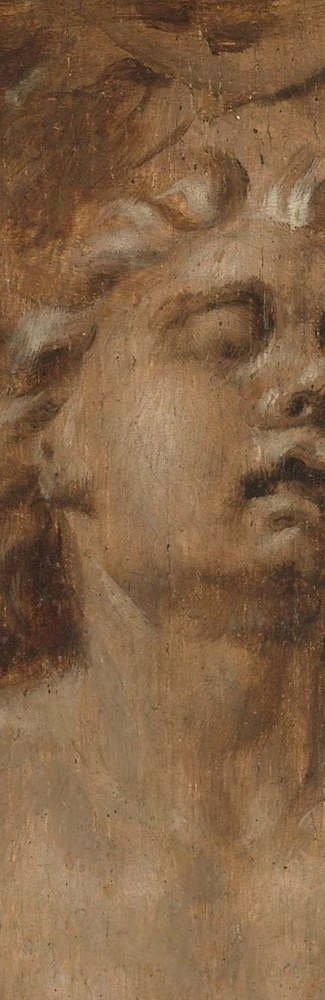
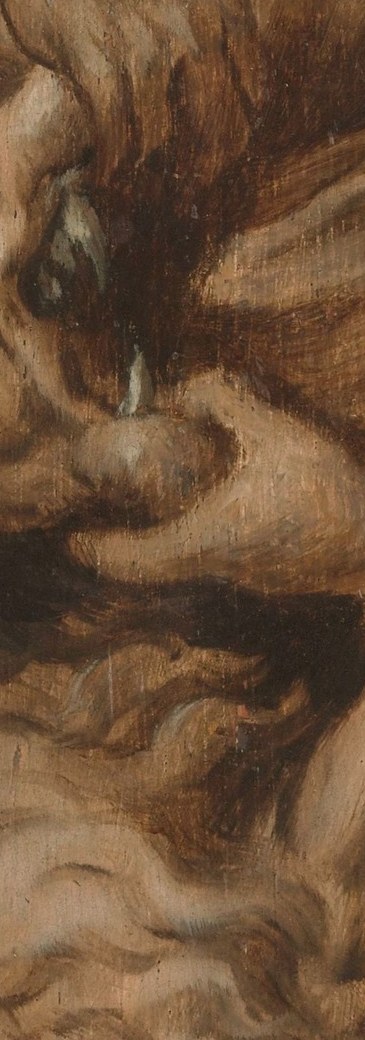
Look at Samson's torso. The muscles are impossibly exaggerated, the pose an unnatural twist. Then the face. Heemskerck laid the paint in thick ridges, a technique called impasto, so the light catches every furrow in relief. The paint is sculpture.
Heemskerck trained under Jan van Scorel, who first brought the Italian Renaissance to Dutch art. Then he spent 1532 to 1536 in Italy himself, absorbing elongated forms and dramatic poses. Back in Haarlem, he turned these lessons on the Book of Judges.
The result belongs to two worlds: a Dutch workshop and an Italian imagination. What does a northern painter gain from the south, and what gets left behind?
Details
Transcript
These muscles do not belong on a human body. Mannerism. The painter learned this style in Italy. His hands wrench the jaws apart. The distorted head. The blood. The brute force. The strain on his face. Ridges of thick paint. The face is sculptural.