The Cradle - Camille with the Artist's Son Jean by Monet, Claude
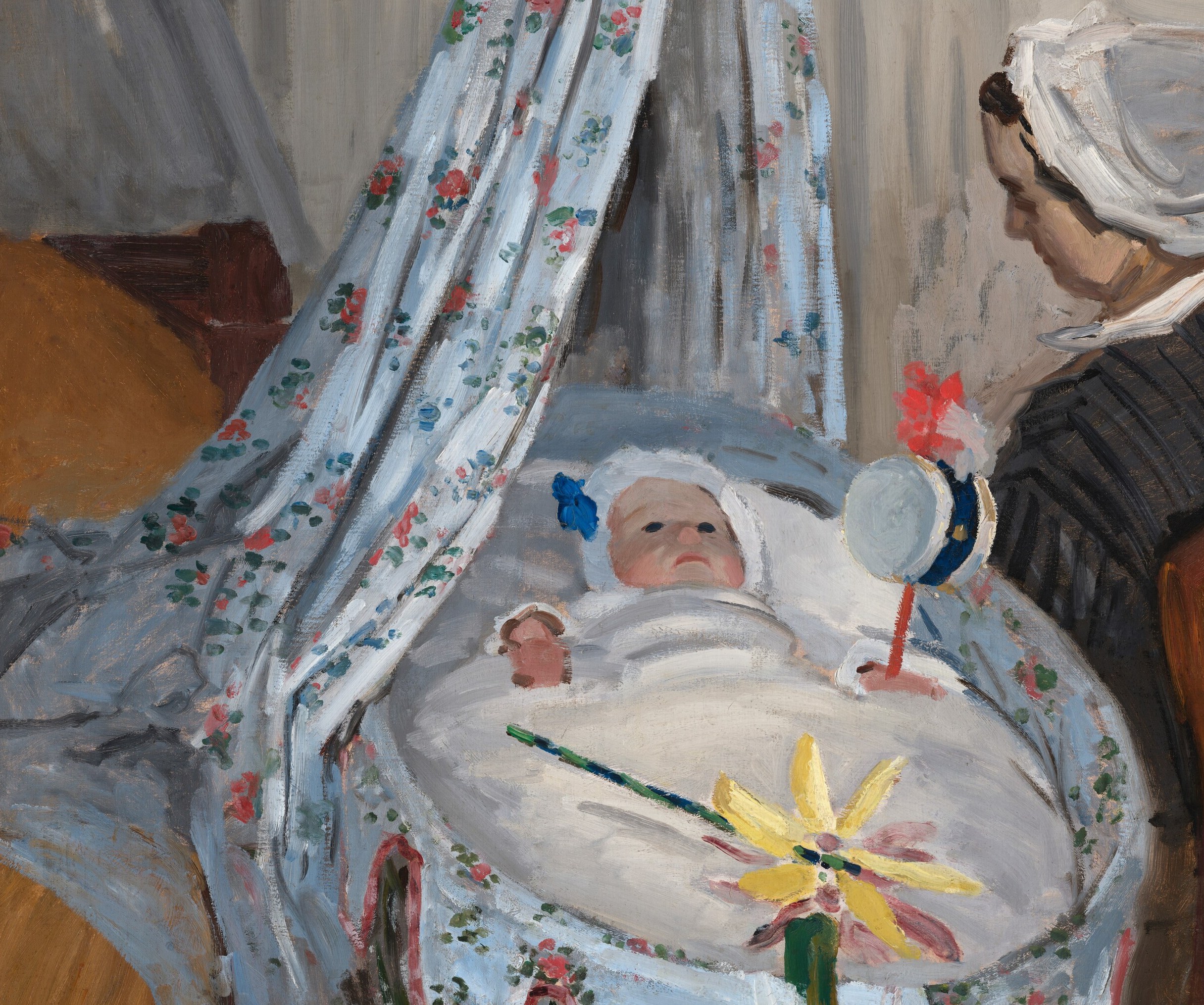
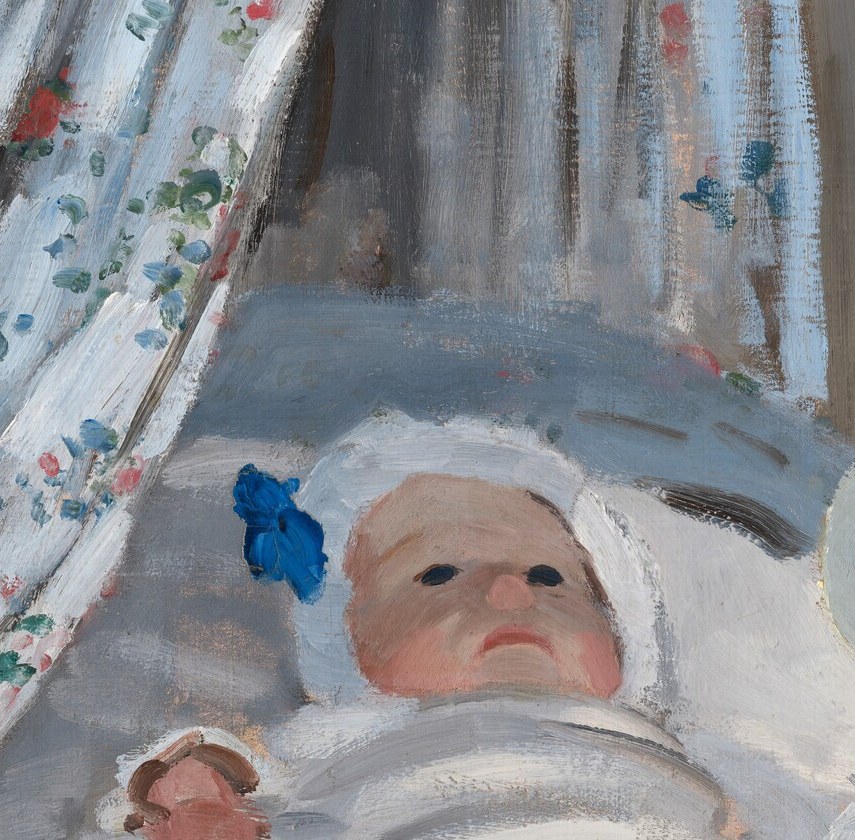
Claude Monet's 'The Cradle' (1867) hangs in the Musée d'Orsay, but its journey there involved forty years of secrecy. Painted when the artist was 26 years old and nearly destitute, the work shows his partner Camille Doncieux watching their newborn son Jean in a wicker crib. Monet never sold it, never exhibited it in his lifetime, and carried it with him through every move, including his exile in London during the Franco-Prussian War. It remained in his studio at Giverny until his death in 1926.
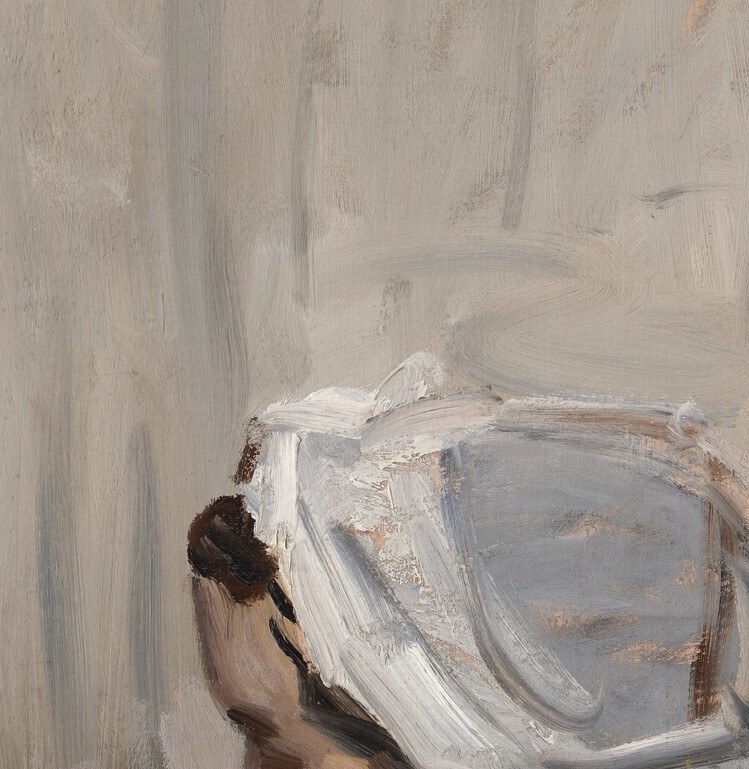
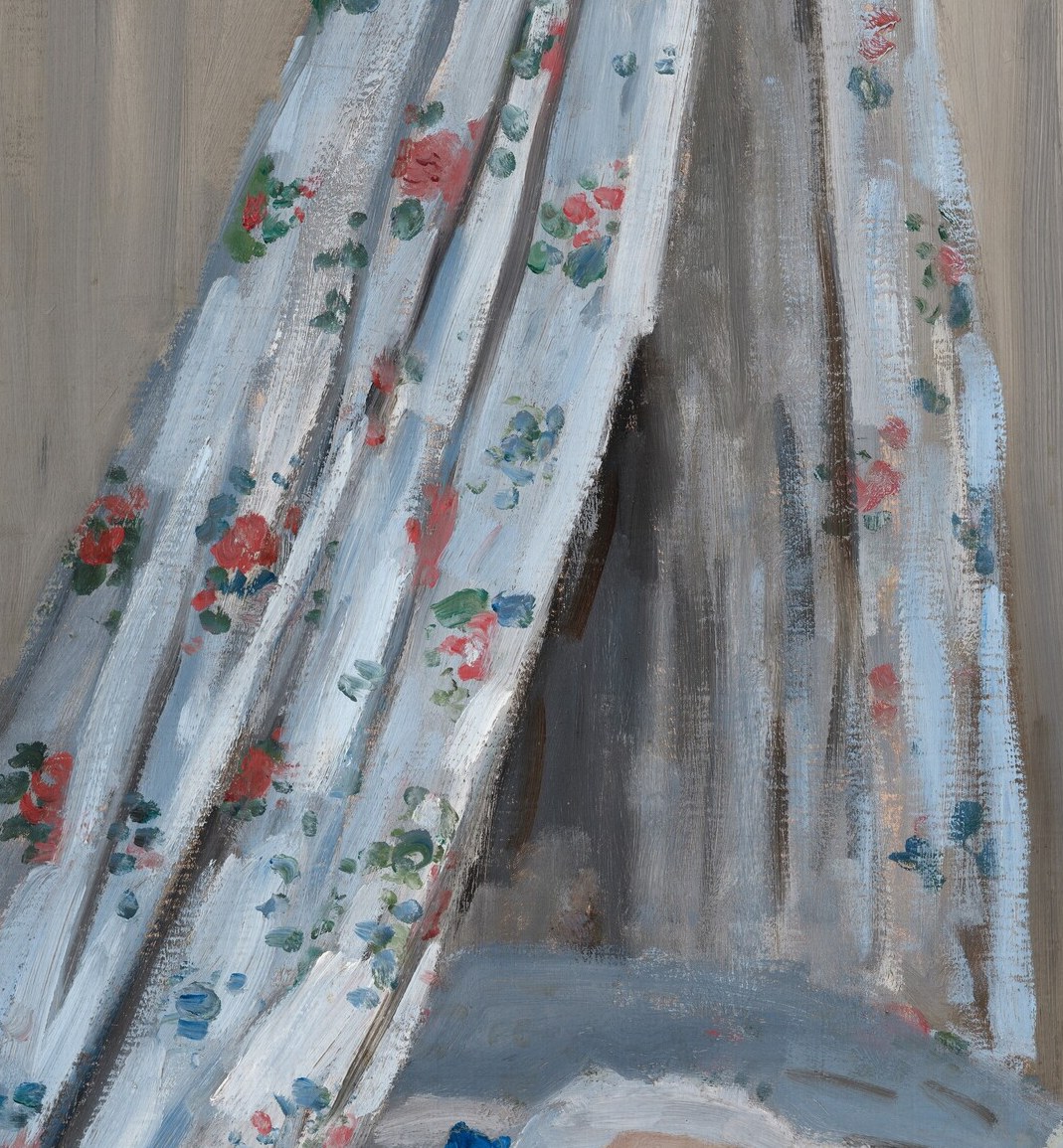
Look closely at the infant's tiny fist clutching a yellow rattle. That spot of warm color is the brightest accent in a painting built from cool greys, blues, and whites. Monet directs the light there deliberately, a technique borrowed from Dutch genre painting. The crisp wicker cradle and the focused details of Camille's bonnet and face sit against a barely finished background wall, a sign that this was a personal record, not a work for the Salon's jury.
The painting comes from a year of acute financial strain. Camille was Monet's model and companion, but his family had cut him off for the relationship, and she was pregnant with Jean. He was bouncing between Paris and his aunt's house in Sainte-Adresse, trying to borrow money for paint. X-rays of 'The Cradle' reveal another composition beneath the surface, evidence that Monet reused a canvas he could not afford to replace.
What began as a private image of his new family became one of the most reproduced images of 19th-century motherhood. Why do you think Monet held onto it, hidden from the public, for his entire career, was it too personal to sell, or the one record of a moment he could not part with?
Details
Transcript
She wears a proper day dress and a white indoor bonnet. This is Camille Doncieux, Monet's partner, painted in 1867. That year they were so poor Monet used the same canvas for multiple paintings. X-rays have found another composition laid underneath this very surface. But he never sold it, and never exhibited it. Monet kept this canvas with him in the studio until his death in 1926.