Harvest Moon by Inness, George
George Inness’s 1891 painting Harvest Moon, housed in a public museum, captures a tranquil evening scene that emphasizes feeling over precise depiction. Inness, an American artist, believed art should cultivate the artist's spiritual nature, and his later works, like this one, reflect that philosophy.
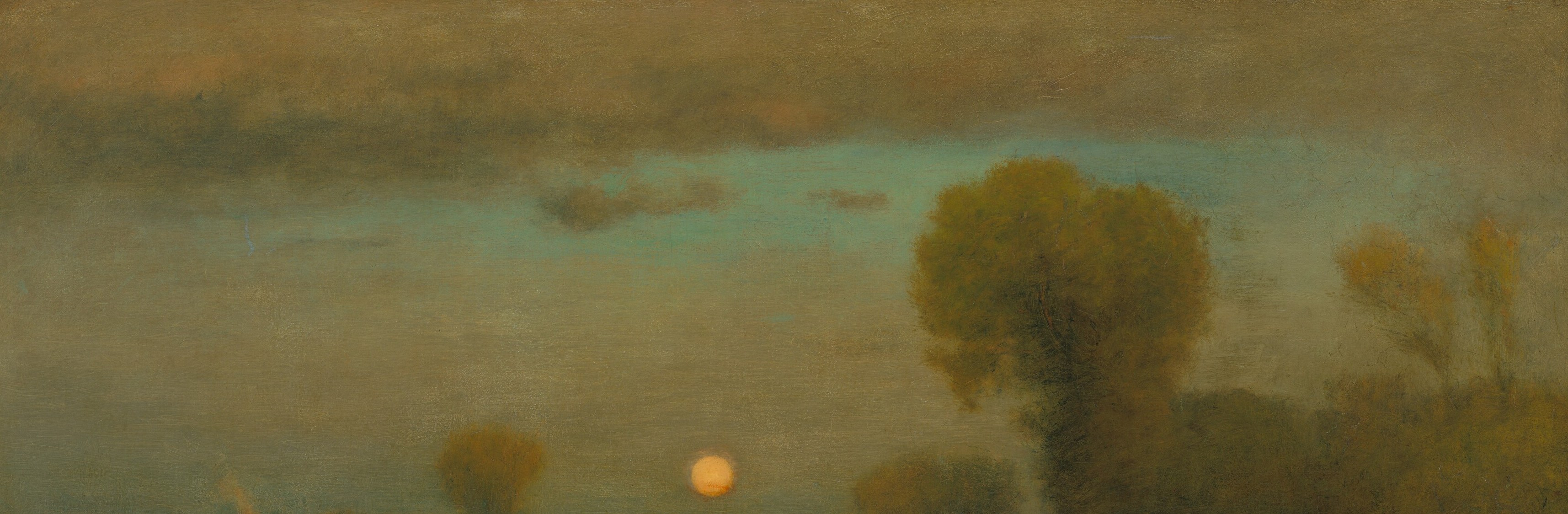
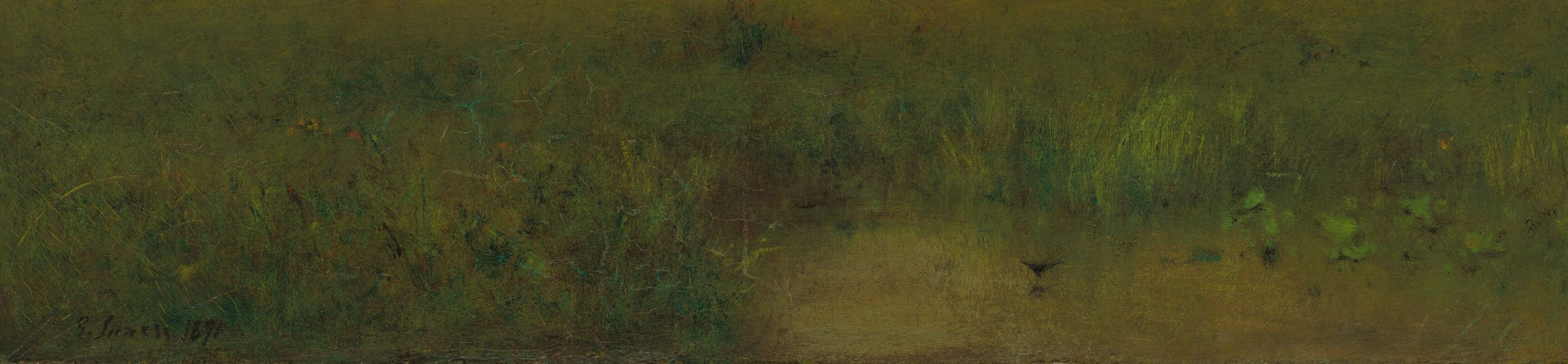
Observe the luminous moon and the subtle glow it casts across the field. Notice the distant farmhouse smoke and the solitary figure, small details that suggest a harmonious, quiet human presence within the vastness of nature. Inness often blurred edges and blended colors to create a hazy, dreamlike atmosphere, a technique he called “the lost chord in art.”
Painted late in his career, *Harvest Moon* shows Inness embracing Impressionist influences. He moved away from sharp details to create a soft, immediate effect, capturing the fleeting quality of light at dusk. This painting invites quiet contemplation, reflecting a sense of peace and connection to the natural world.
What feeling does this moonlit landscape evoke for you?
Details
Transcript
This painter wanted to show how nature feels, not just how it looks. He sought quiet moods, like the soft light of a harvest moon. Look at the smoke, hinting at a distant, quiet human life. And this solitary figure, almost blending into the field. He said art should cultivate the artist's own spiritual nature. He called his blurring of edges “the lost chord in art.” It makes the landscape feel dreamy, like time itself has softened.