Panel with the god Zeus/Serapis/Ohrmazd and worshiper by http://www.wikidata.org/.well-known/genid/0356ab6cf29bb369af702693ddeb70ea
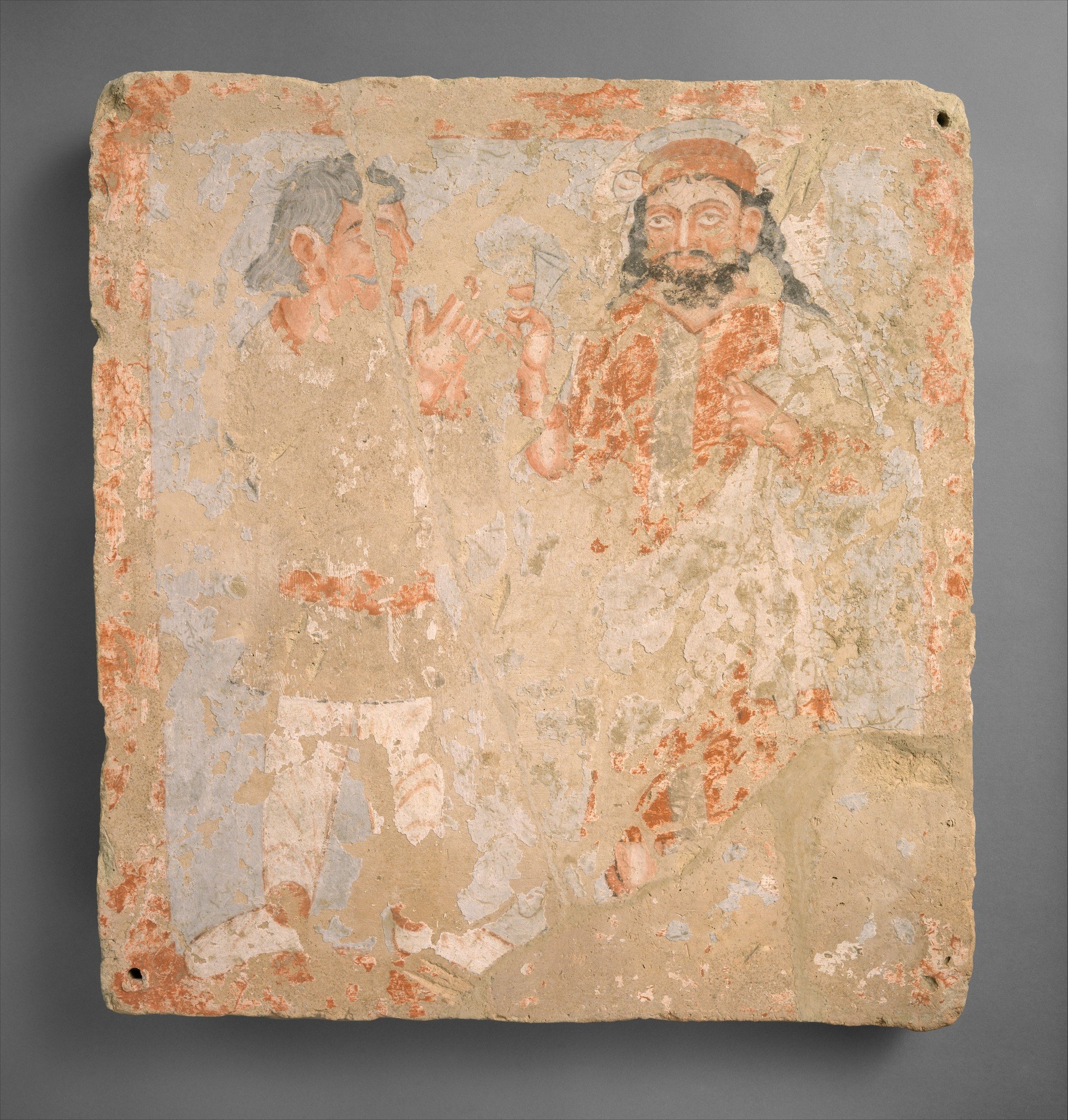
This ancient wall painting, titled "Panel with the god Zeus/Serapis/Ohrmazd and worshiper," is a remarkable example of cultural syncretism from around 250 CE by an unidentified artist. For centuries, its exact subject was a mystery, only recently confirmed by scholars.
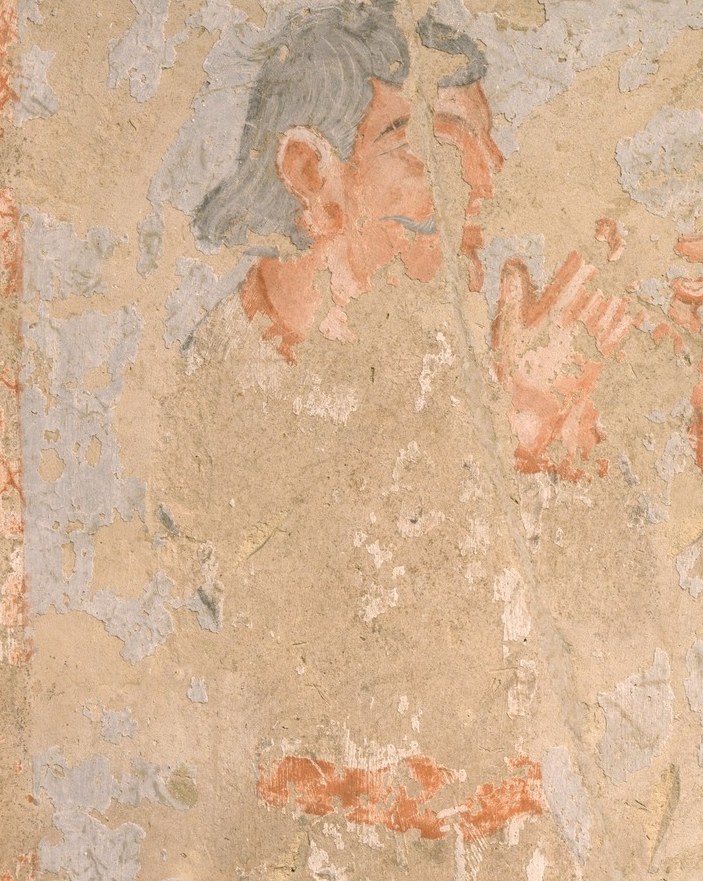
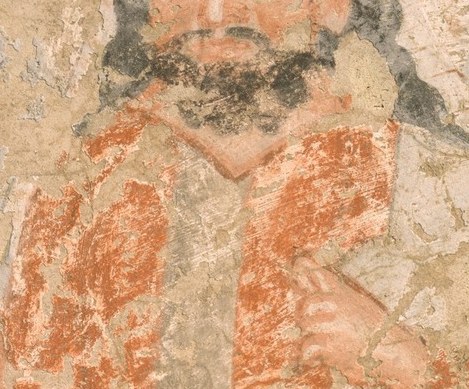
Look closely at the larger figure, adorned with a red crown and a long beard, holding a staff. This single deity combines aspects of three different gods: Zeus from Greek mythology, Serapis from Egyptian culture, and Ohrmazd (Ahura Mazda) from Zoroastrianism. The smaller figure reaches out in a gesture of worship, underscoring the reverence for this powerful, multi-faceted deity.
The artwork's surface shows significant wear and fading, a testament to its age and journey through time. Its simplified style, characterized by bold outlines and flat colors, still conveys a sense of divine authority and human devotion despite the deterioration.
This fragment offers a unique window into the religious and cultural exchanges of the ancient world. What stories do you imagine this painting could tell?
Details
Transcript
This ancient wall painting survived almost two millennia. Only recently did scholars confirm what it depicts. The larger figure is a god, with a distinctive crown. He is identified as Zeus, Serapis, and Ohrmazd, all fused. The worshiper reaches out in reverence. This complex identity reveals a fascinating cultural blend.