Tennessee by Alexander H. Wyant
Alexander H. Wyant painted "Tennessee" in 1866, just months after the Civil War ended. It hangs in the Metropolitan Museum of Art's American Wing. What looks like a quiet landscape is a post-war document: a country, and a painter, looking for peace in the ruins.
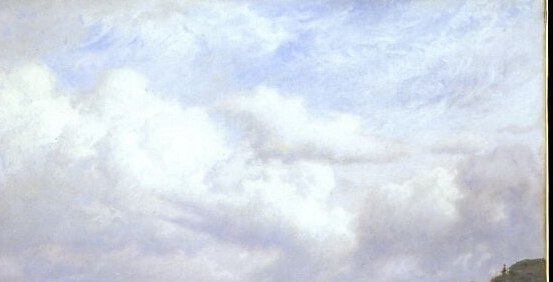
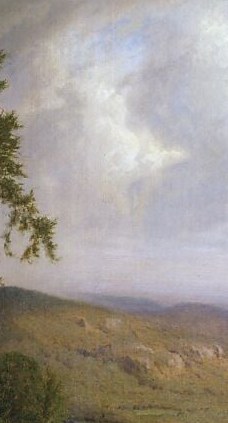
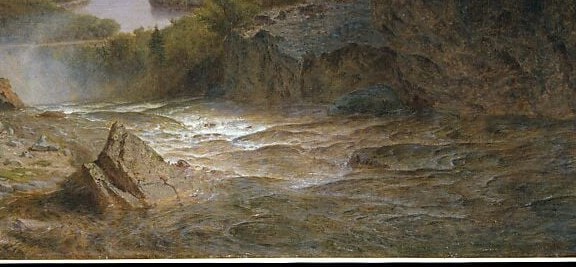
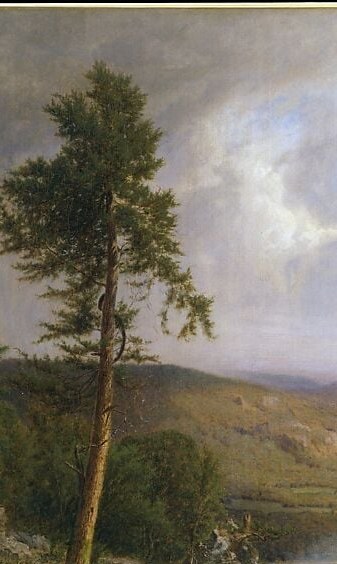
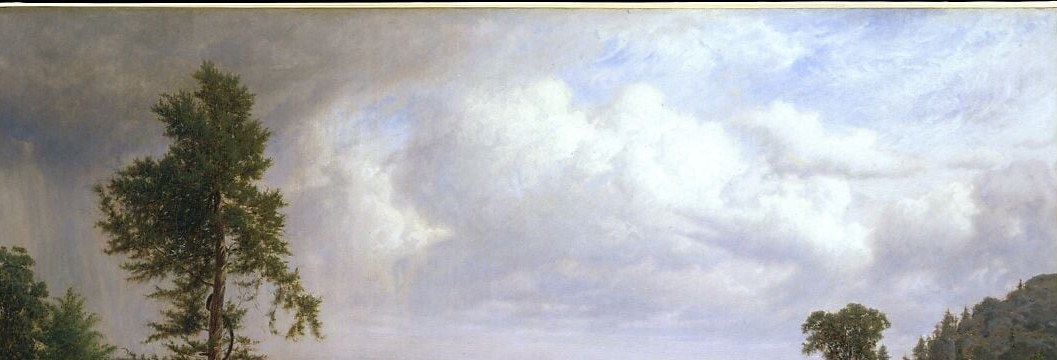
Look at the light breaking through the clouds on the right. It hits the distant hills and the valley floor, while the foreground rocks stay in shadow. Beside the tall living pine, a skeletal dead tree leans into the frame. Wyant put them side by side for a reason. Life and death, before and after, holding the same ground.
The artist was only thirty when he made this. He had grown up in Ohio and trained in the Hudson River School tradition, painting direct, luminous landscapes. Later in life, a stroke paralyzed his right arm. Wyant taught himself to paint left-handed and his style shifted into the darker, softer Tonalism he is now known for. This early work captures him before everything changed: a young man standing in a Tennessee valley, still believing a landscape could hold the weight of a nation's grief.
What do you see in the space between those two trees?
Details
Transcript
In 1866, a young painter set out for the hills of Tennessee. He was searching for something this valley still holds. The light breaking through the clouds says it. Hope after a storm. Right beside the living pine, a dead tree stands. A quiet reminder, painted just one year after the Civil War ended. Alexander Wyant would later suffer a stroke that paralyzed his right arm. He taught himself to paint with his left hand and started over. The country rebuilt. So did he.