John Randolph by Stuart, Gilbert
This is Gilbert Stuart's portrait of John Randolph, painted around 1804. It hangs now in the National Gallery of Art in Washington, D.C. Randolph was barely thirty-two years old when he sat for it, but he was already the single most feared orator in the Congress of the young United States, a man whose floor speeches could reduce seasoned politicians to fury or despair.
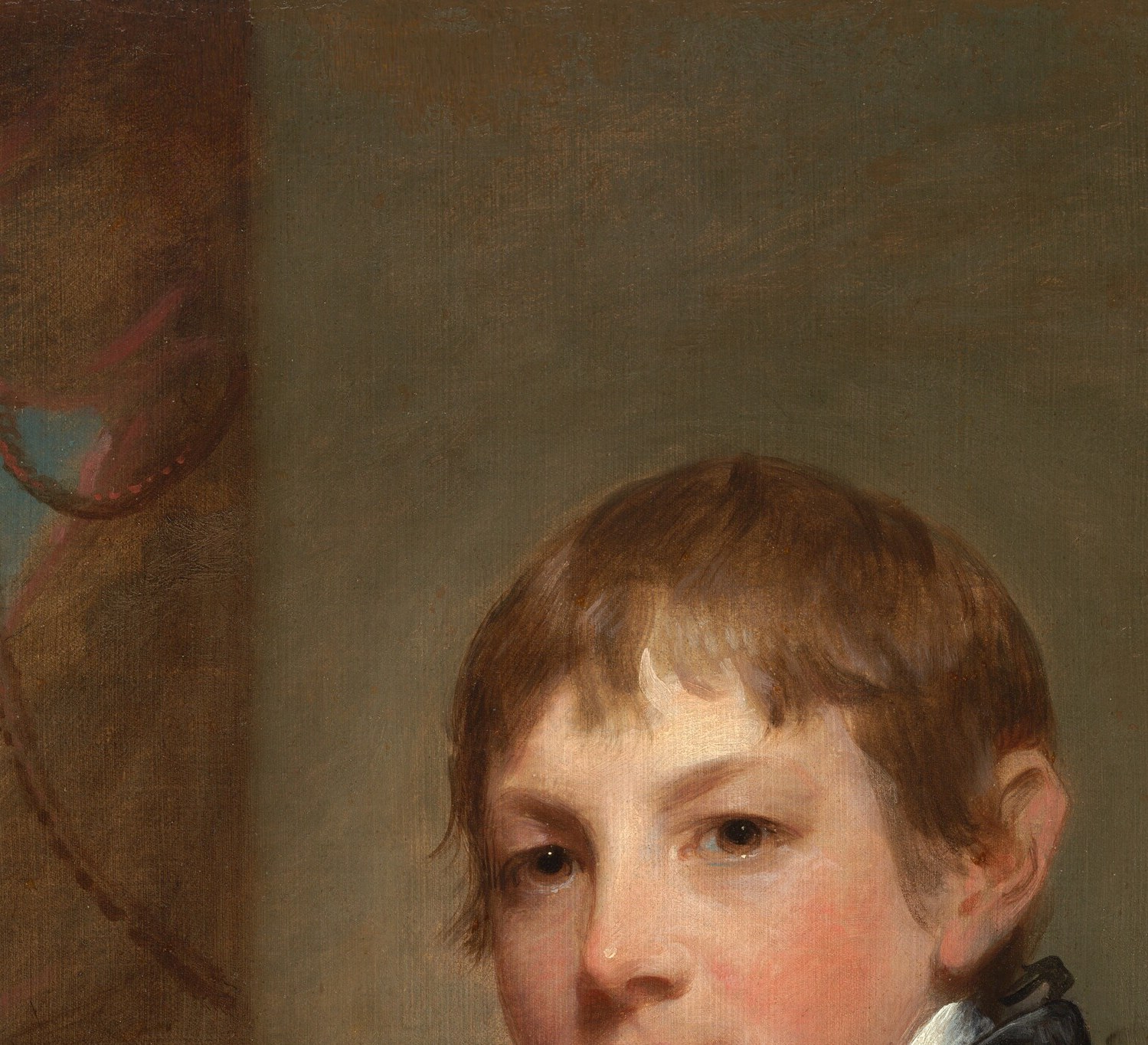
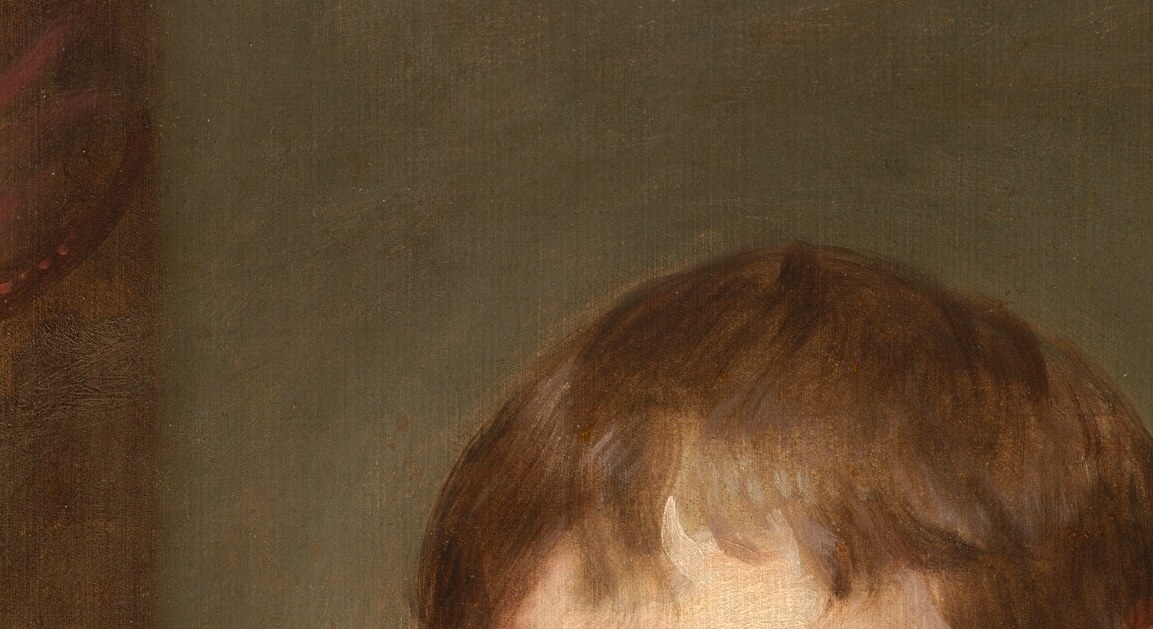
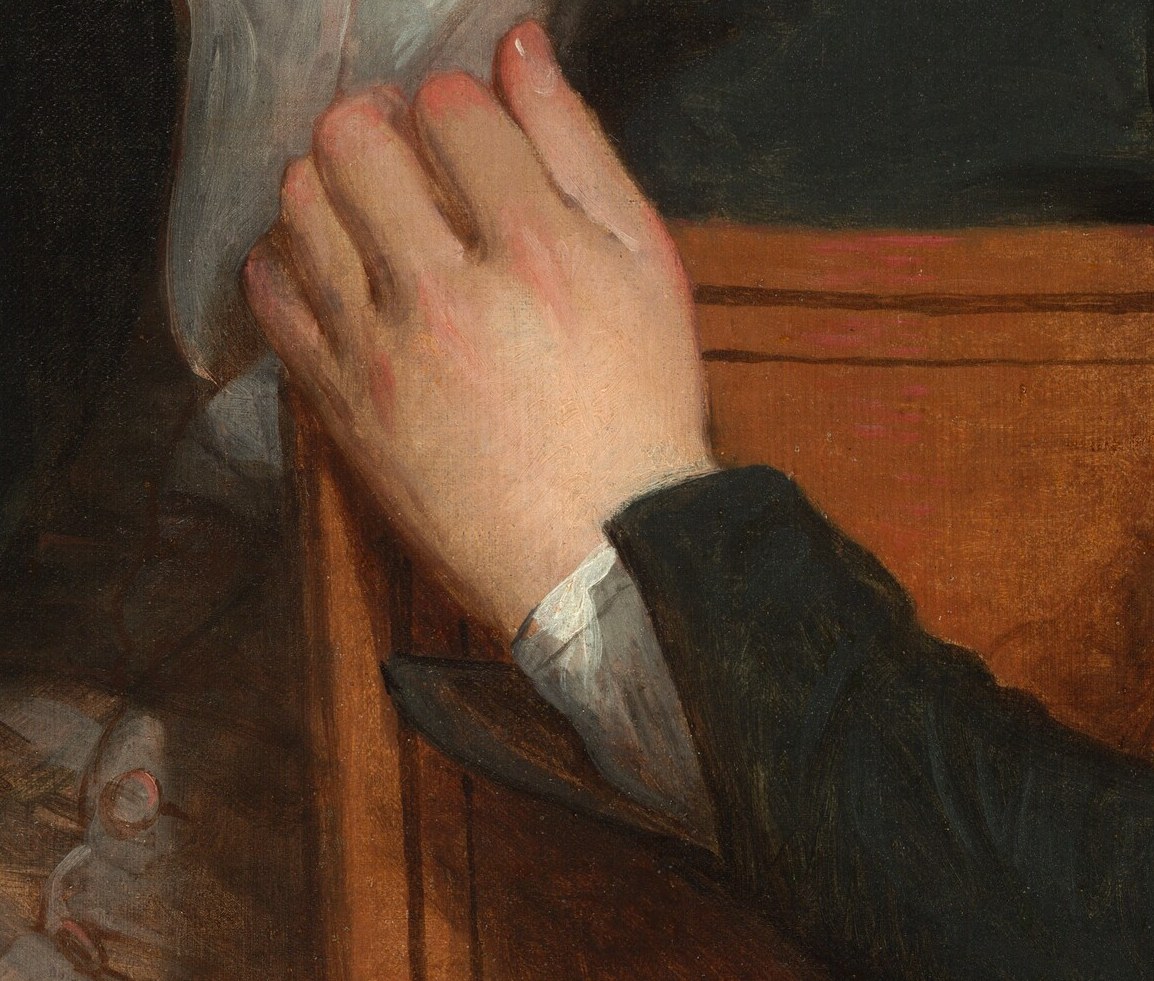
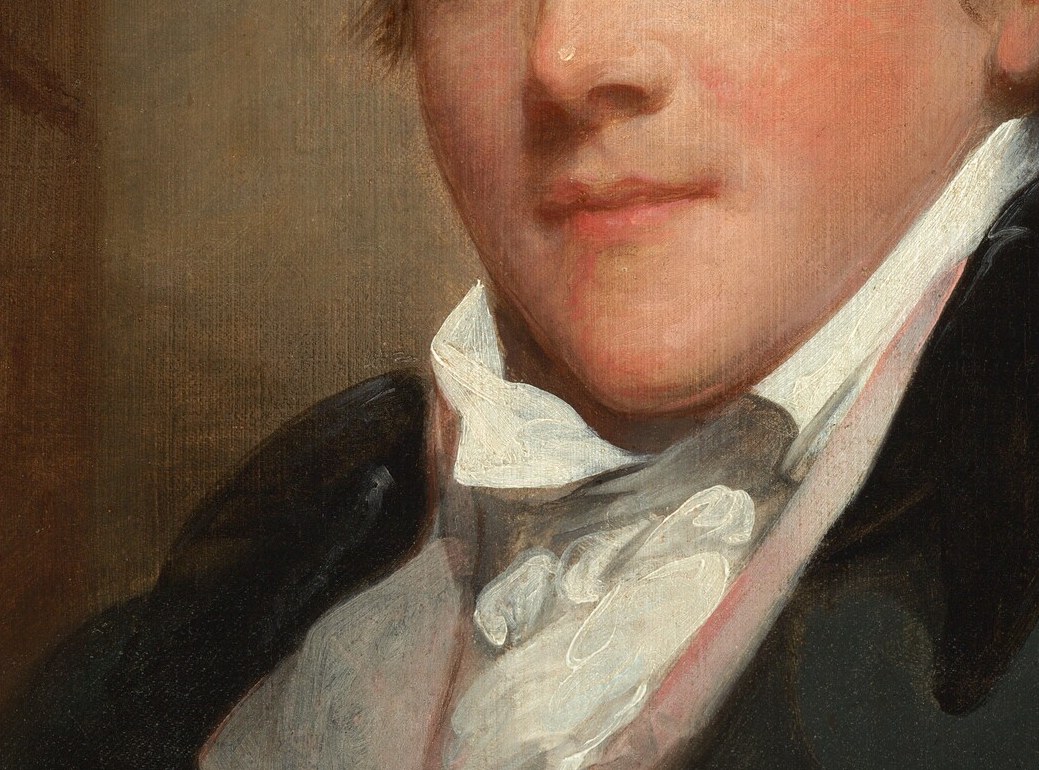
Stuart gives us that man without any of the props of power: no column, no velvet, no allegorical figure behind a desk. Instead Randolph sits in a plain dark coat, his reddish hair untidy. The cravat is high and white, the brightest value in the painting, and Stuart uses it to pull the eye straight up to the face. The papers in Randolph's hand are held loosely, as though he is about to deliver a speech from memory. It is a portrait of readiness, not reflection.
The real drama is in the eyes. Stuart was famous for the tiny highlight of lead white he placed on the lower rim of the iris, and here it creates the unnerving effect of a gaze that appears to track the viewer. Randolph suffered chronic ill health his whole life, and a childhood disease had left him beardless and with a strikingly high, boyish voice. The face Stuart paints is almost impossibly youthful, but the stare is cold and deliberate. The contradiction is the whole man.
He died in 1833, having broken with nearly every political ally he ever had, and he instructed his own enslaved people to be freed in his will. The portrait outlasted the feuds. What do you read in that steady look?
Details
Transcript
He was the most brutally effective speaker in the early Senate. His insults could start fistfights. His words could doom a bill. But Stuart paints him like this. The dark eyes follow you. The highlight is a single dab of lead white. Look at the papers in his hand. He holds them loosely. A man waiting to speak, not a man reading. John Randolph of Roanoke. He was 32 here, and already a legend.