Mt. Shenchang by Song Xu
This is Mt. Shenchang, painted in 1588 by the Ming-dynasty artist Song Xu. It now resides at the Metropolitan Museum of Art, but a century ago it was sitting in the private quarters of Pu Yi, the last emperor of China, inside the Forbidden City.
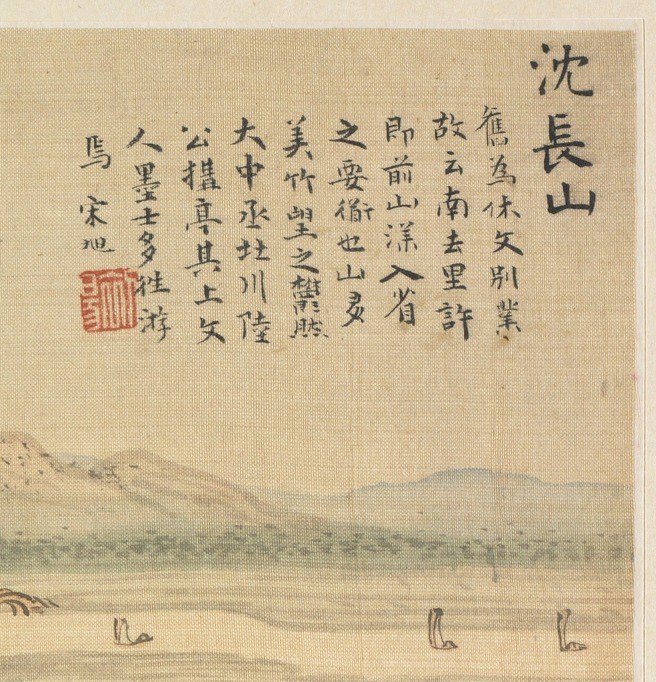
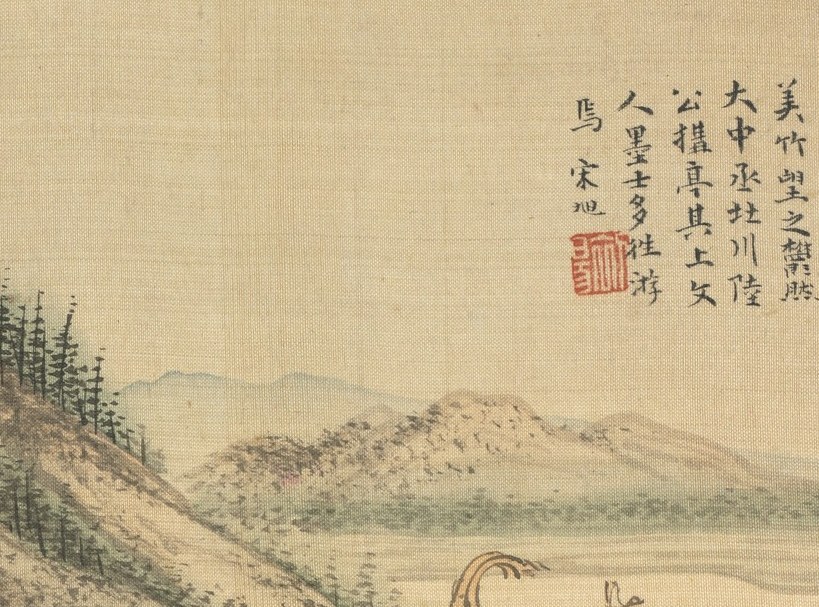
Look closely at the upper right. The vertical calligraphic inscription is the artist’s own hand, giving the title, the date, and a poetic colophon about the scenery. Just below it, the square vermilion seal is a palace inventory mark, physical proof that this quiet landscape was once imperial property.
Pu Yi was expelled from the Forbidden City in 1924. Court records show he had been systematically smuggling the imperial collection out for years, gifting or selling paintings to fund his life after the throne. This work, a serene image of a river valley meant for scholarly retreat, became part of that dispersal. It passed through private hands before eventually entering the Met’s collection in the 1970s.
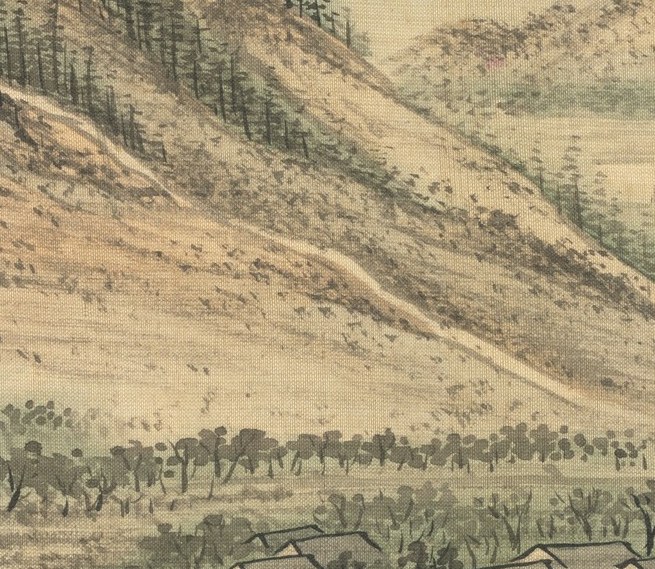
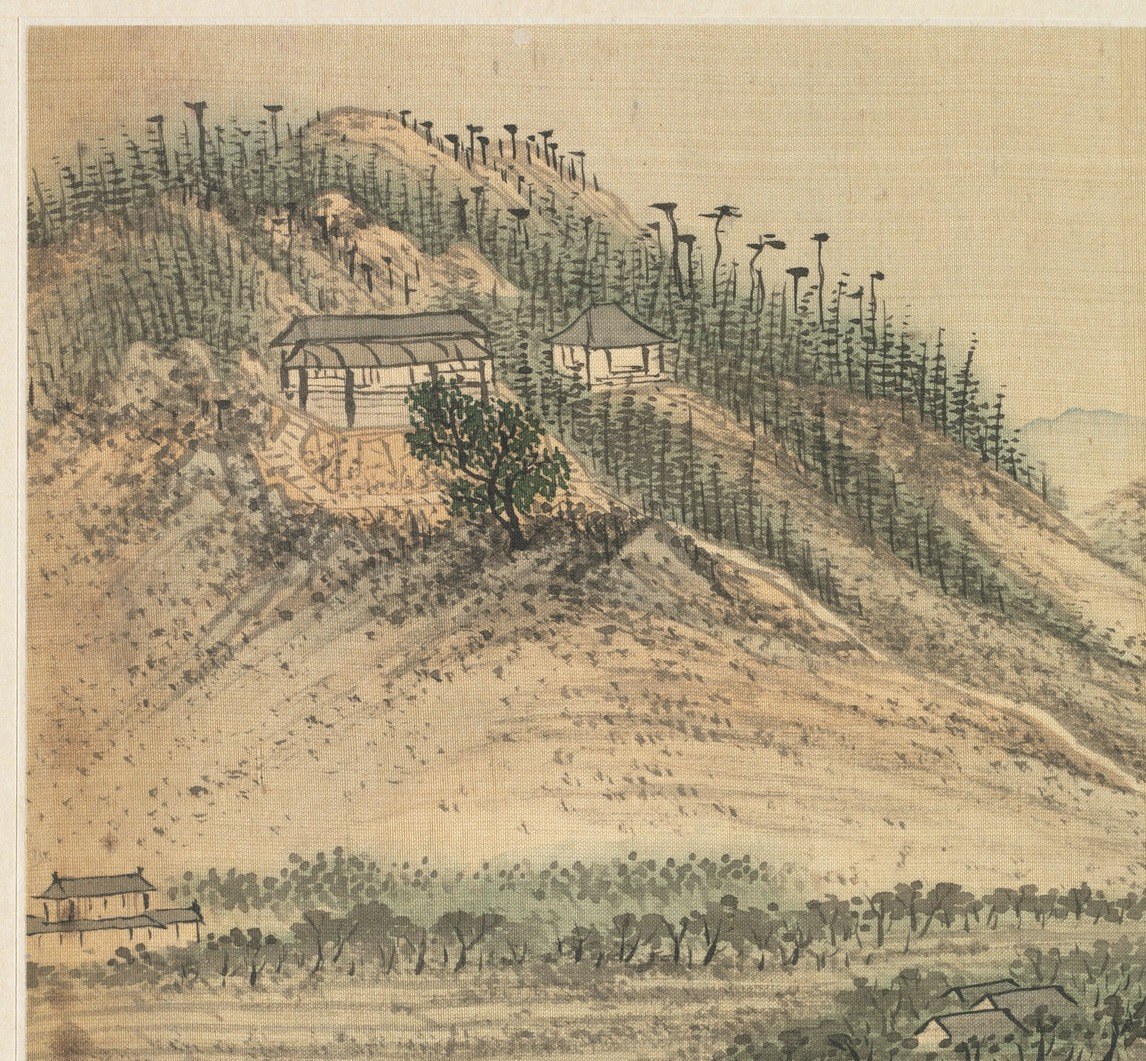
The painting itself is an essay in restraint. The artist left the silk unpainted to become the broad river, used soft gray washes for the distant mountains, and buried tiny human details, two boats, a wooden bridge, inside the vast natural world. The red seals, far from ruining the composition, are a visible record of survival.
Details
Transcript
This landscape once hung in the Forbidden City. It belonged to Pu Yi, China’s last emperor. When he was expelled in 1924, he tried to take it with him. This red seal was stamped when the palace once inventoried it. And the calligraphy? That’s the artist’s own hand, 1588. It names Mt. Shenchang, a real place of quiet retreat. The smear of red underneath was added by a later collector. It marks the painting’s slow journey from imperial loot to a Western museum.