Saint Thomas by Peter Paul Rubens
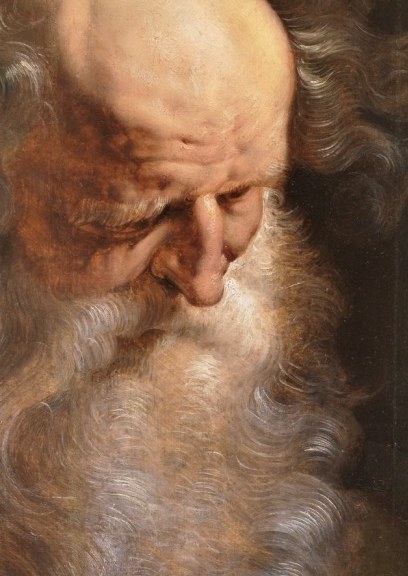
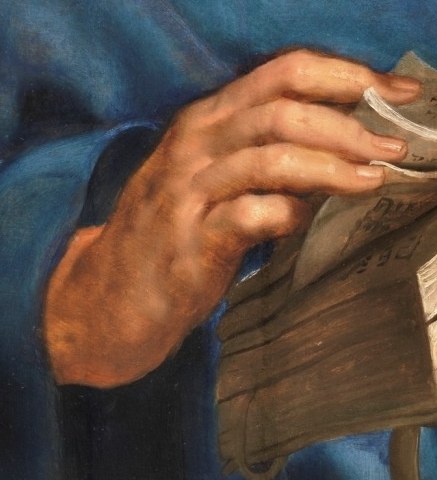
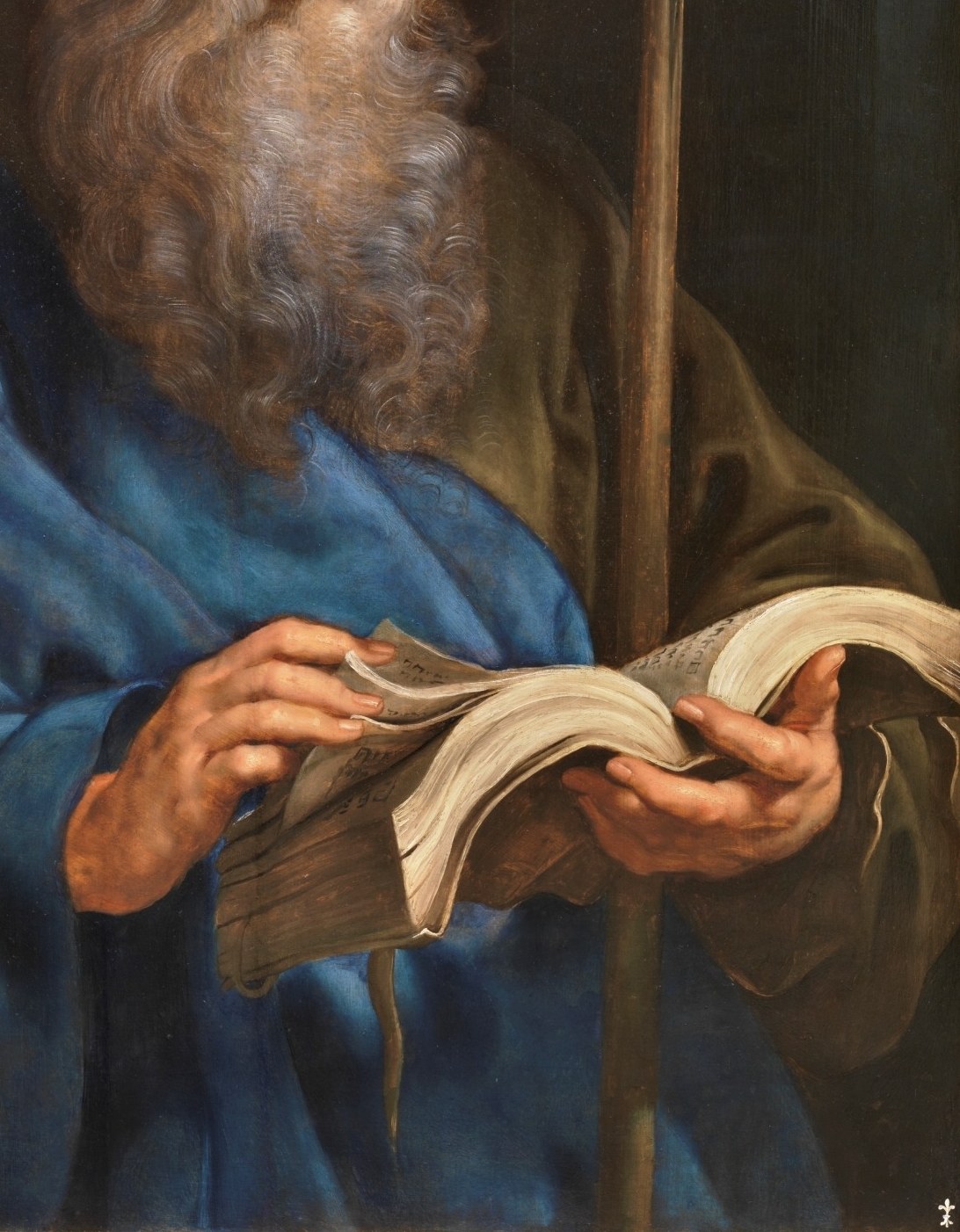
Peter Paul Rubens' *Saint Thomas*, painted in 1610, is a masterful example of Flemish Baroque art, currently housed in the Museo del Prado. This powerful depiction captures the apostle with a contemplative expression, his hand resting on an open book, symbolizing his role as a scholar and teacher.
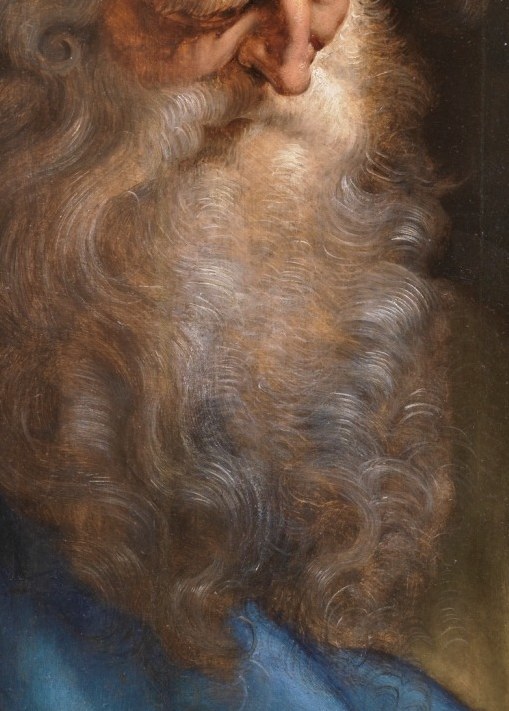
Rubens, known for his dynamic compositions and vibrant style, employs dramatic chiaroscuro to highlight the saint's features and the textures of his voluminous blue robe. The subtle light draws the eye to his weathered face and the illuminated pages of the book.
Take a moment to explore the lower left corner. Here, a faint numerical inscription offers a glimpse into the painting's journey through time, a small mark connecting us to its rich provenance. These hidden details often reveal fascinating chapters in a work's history, from private collections to royal hands.
What other small details in paintings have caught your eye?
Details
Transcript
This is Saint Thomas, painted by Rubens in 1610. Rubens was the most influential artist of the Flemish Baroque. He renders the saint's face with deep contemplation. And a powerful hand grips this open book. But look closely in the lower left corner. A small, faded inscription hints at its long history.