Merry Company on a Terrace by Jan Steen
View the artwork: Merry Company on a Terrace →
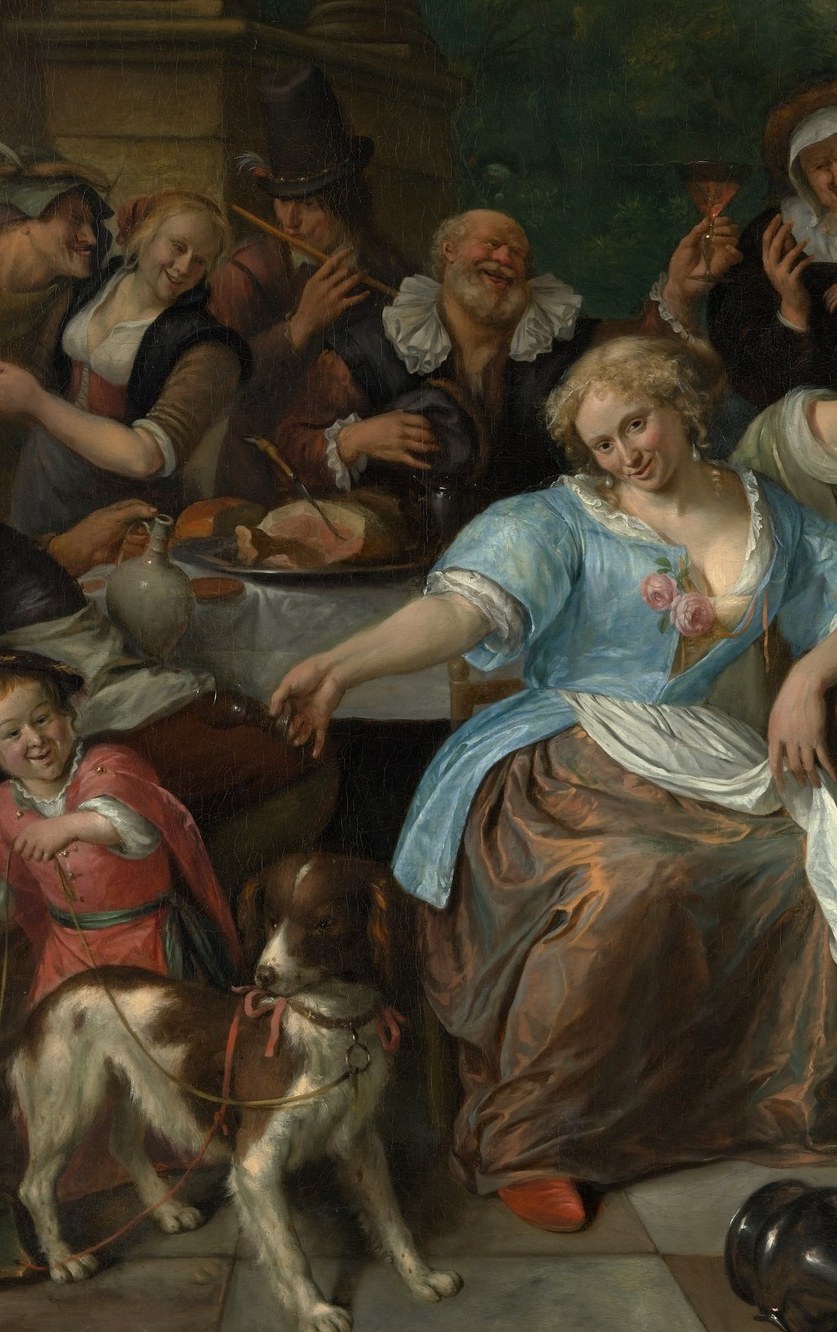
In Jan Steen's "Merry Company on a Terrace" (1670), a woman in blue looks directly out at you and smiles. That is the whole painting. It is also, quietly, one of the most generous things a 17th-century Dutch painter could give you.
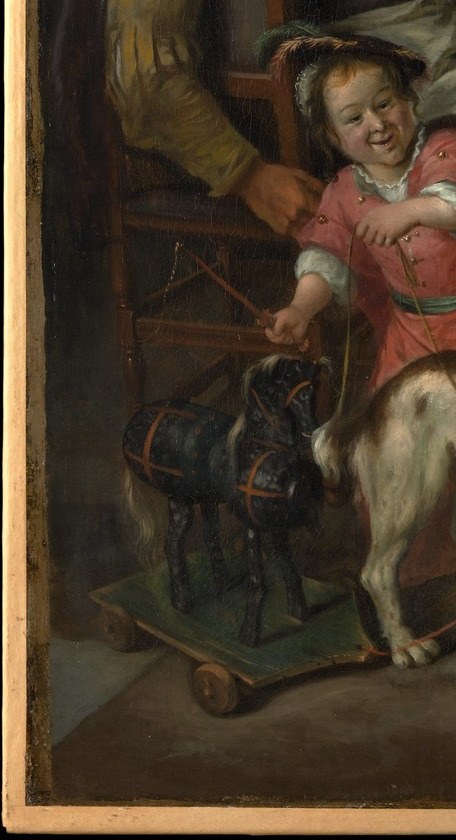
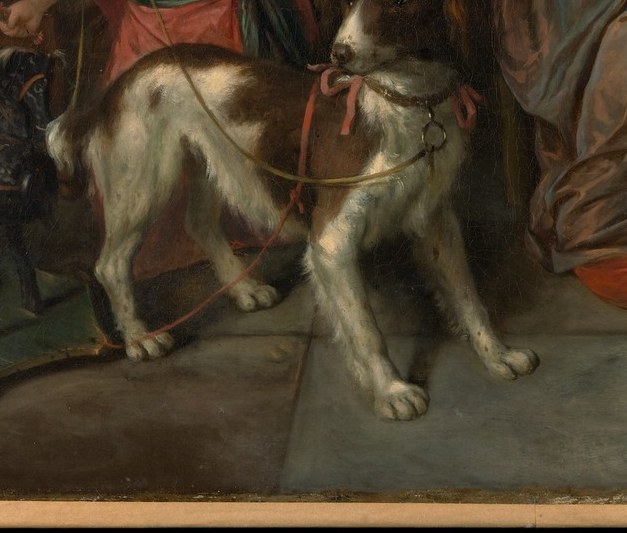
The direct gaze and unguarded grin are unusually vivid for the period. Genre scenes typically kept their figures absorbed in their own worlds, drinking, flirting, making music. But Steen painted his own life into his work. The woman is almost certainly his wife, Margriet, and the eight children they raised flicker through the crowd in various guises. The boy at the dog. The faces in the background. The chaos is domestic.
Steen ran a tavern in Leiden when painting alone could not support his family. He knew revelry up close, the noise, the mess, the human warmth beneath it. That is why his moralizing never feels cruel. He loved the people he painted.
What do you read in her expression? Warmth, or something more complicated?
#arthistory #dutchgoldenage #jansteen
Details
Transcript
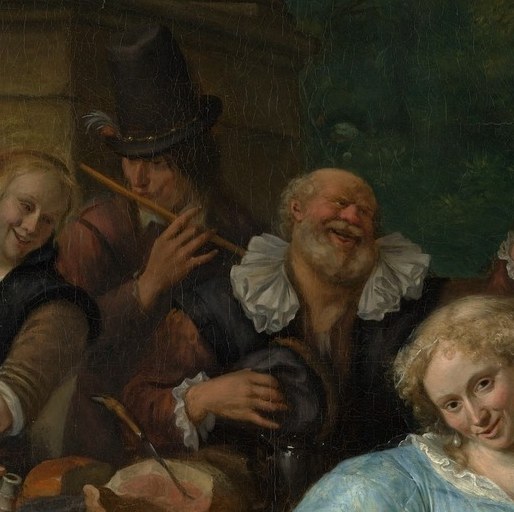
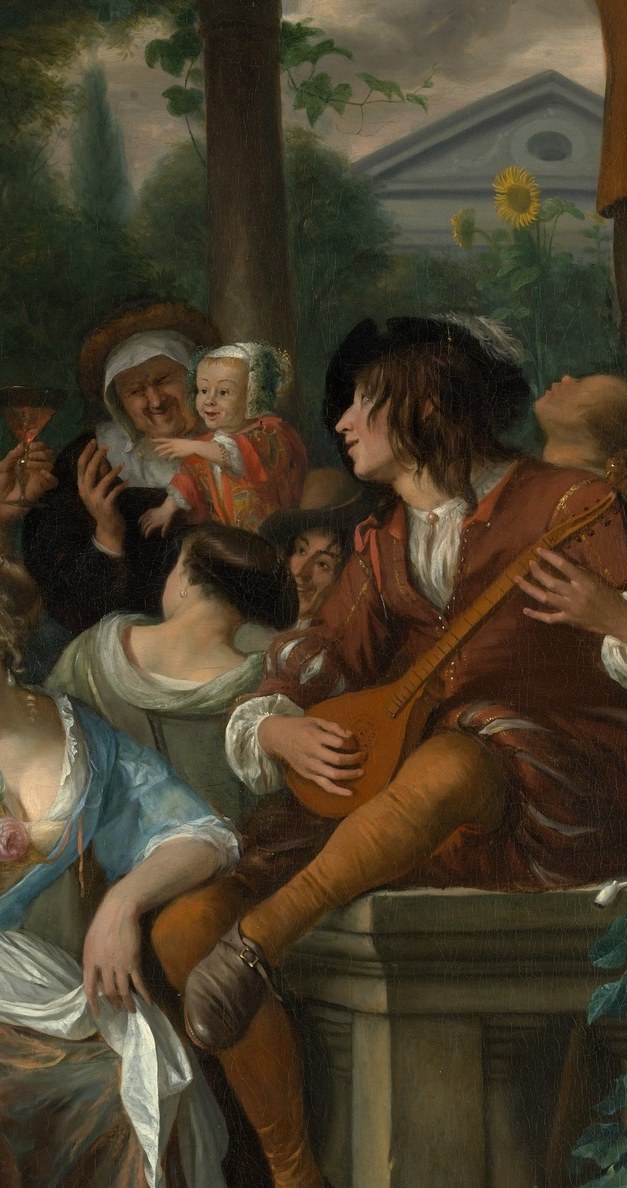
She sees you before you see anything else. A smile this open was rare in 1670. A woman looking straight at you, rarer still. Jan Steen painted his own life into his scenes. His wife, his children, his friends. She is likely his wife, Margriet. This is their world. Around her, music and wine. Steen knew both well, he ran a tavern to survive. The little boy with the dog. Steen and Margriet had eight children. But look at her smile once more. It is not performance. It is welcome.