Artwork
Merry Company on a Terrace
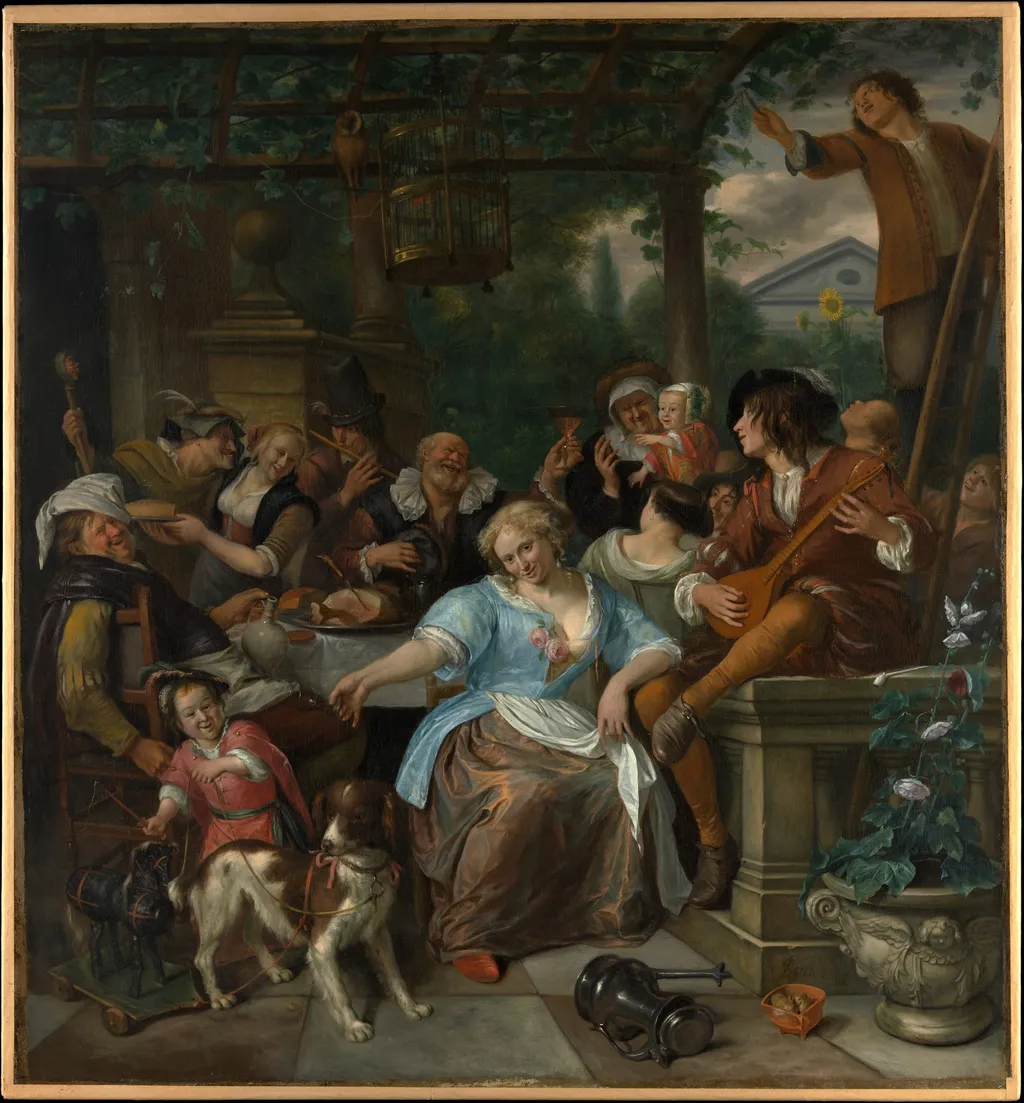
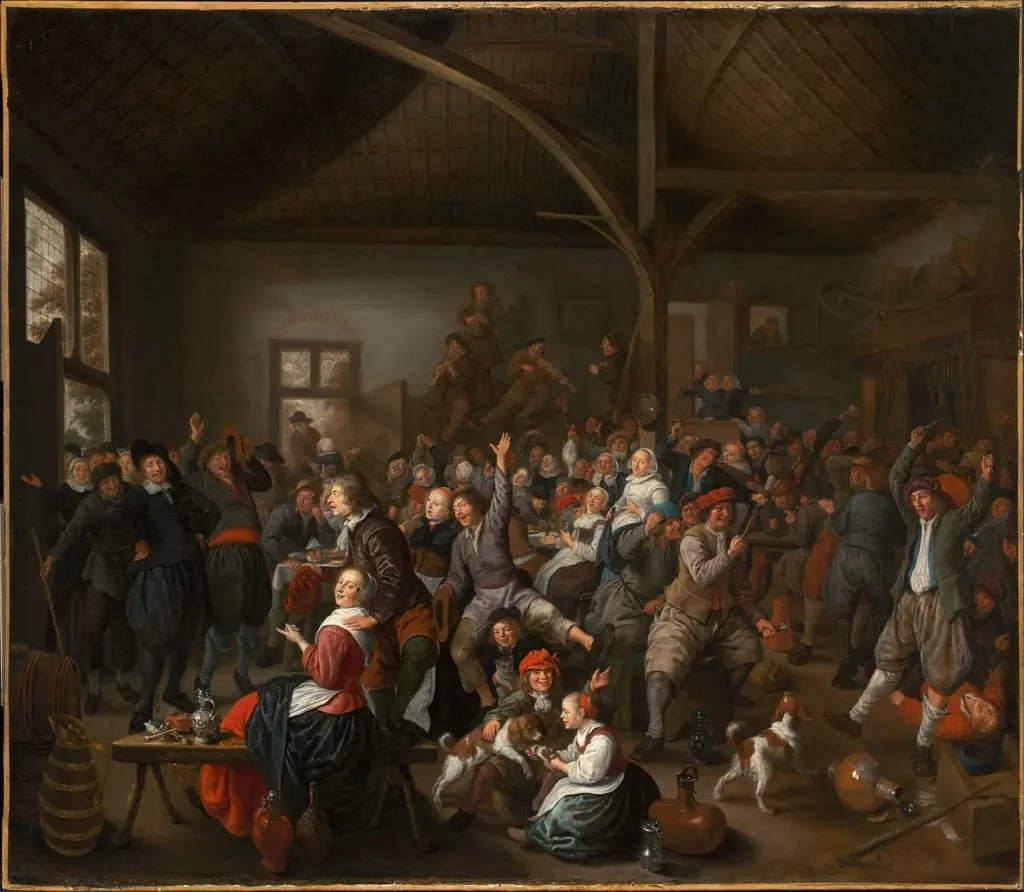
Merry Company on a Terrace is an oil painting by the Dutch Golden Age artist Jan Steen. It dates from 1670 and is held in the collection of the Metropolitan Museum of Art.
About this work
Subject & Meaning
A child playing with a dog and a toy parodies contemporary children's portraits, where such animals typically symbolized good upbringing.
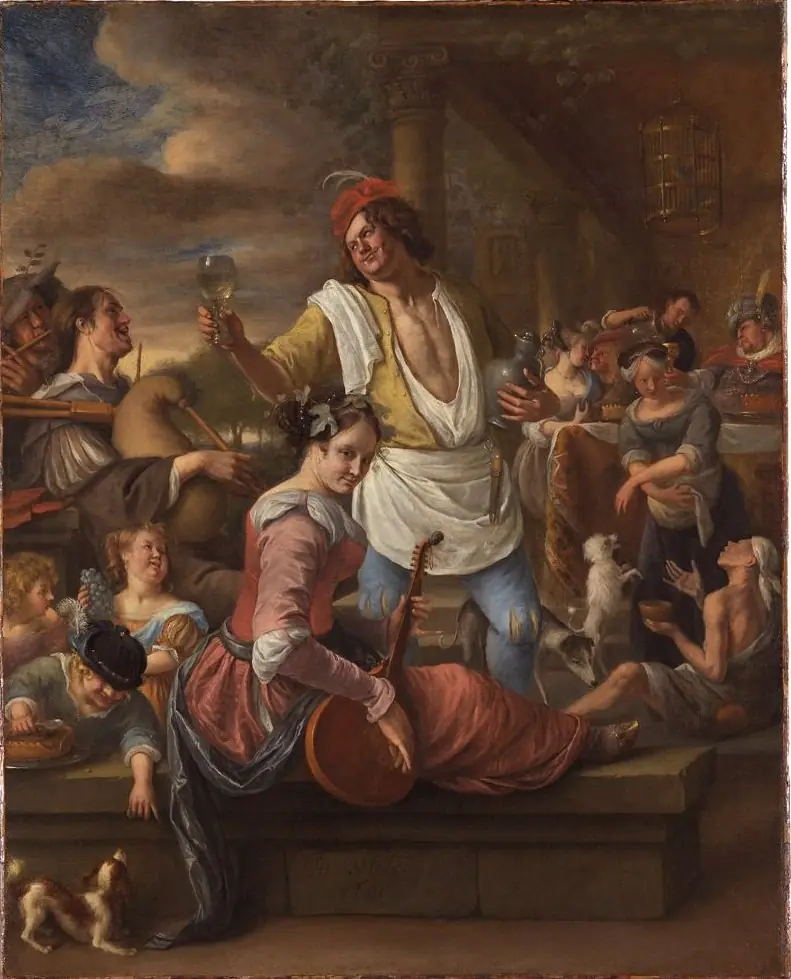
Jan Steen's painting depicts a multi-generational group drinking wine at a table on a terrace. The composition includes a self-portrait of the artist wearing a cap on the far left, and possibly portrays his wife, Margareta van Goyen, as the central blonde woman facing the viewer. In the background, a man attempts to kiss a servant; this figure is Hans Wurst, a traditional character from German improvisational comedy and the Dutch chambers of rhetoric.
The work carries a humorous, ironic meaning through its symbolic elements. A child playing with a dog and a toy parodies contemporary children's portraits, where such animals typically symbolized good upbringing. The innkeeper's pitcher and the young woman's glass serve as sexual allusions, reinforced by a sunflower on the right symbolizing lust. An owl perched near a cage represents stupidity and drunkenness.
Technique & Style
Executed around 1670, this genre scene is an oil painting on canvas measuring 141 by 131.4 centimeters. Jan Steen employs a characteristic palette dominated by varied brown tones, punctuated by salmon-pink or coral accents, notably visible on the foreground woman's shoe. The artist demonstrates a delicate handling of diverse textures throughout the composition.
Stylistically, the work emphasizes specific hand gestures to define character actions, such as a servant lifting a platter or an elder clutching a fur cap. The painting integrates symbolic elements typical of Steen's ironic approach, including a sunflower representing lust and an owl signifying foolishness and intoxication. The composition features a multi-generational group on a terrace, using traditional comedic figures and parodying contemporary child portraiture through the inclusion of a pet dog and toy.
History & Provenance
The painting Merry Company on a Terrace was created by Jan Steen around 1670; no documentary evidence of a specific commission has been found. Among its earliest recorded owners was the Dutch statesman Gerrit Schimmelpenninck, who possessed it before 1819. It later passed through several collections, including those of David P. Sellar and the American collector Peter Arrell Brown Widener, before entering the Metropolitan Museum of Art, which acquired it in 1958.
The work is held by the Met under accession number 58.63 and is displayed among its Dutch Golden Age paintings.
Context
Jan Steen's Merry Company on a Terrace (c. 1670, oil on canvas) belongs to the Dutch Golden Age genre of everyday scenes and is housed in the Metropolitan Museum of Art, having passed through several private collections before its acquisition. The painting portrays a convivial, multi-generational group on a terrace, with symbolic objects, among them a dog, a sunflower, and an owl, used by Steen to encode moral commentary on excess and domestic life. Its lively handling of color and texture reflects Steen's broader output of animated, morally ambiguous domestic scenes, situating the work within the trajectory of Dutch genre painting that blends humor with didactic intent.
Overview
Merry Company on a Terrace, painted by Jan Steen in 1670, is a quintessential example of Dutch Golden Age genre painting. The work depicts a boisterous gathering on an outdoor stone terrace, populated by figures engaged in eating, drinking, and making music. Central to the composition is a woman in a blue dress, seated and smiling, while a young boy interacts with a small dog nearby.
Surrounding them, various individuals hold musical instruments or gesture animatedly, creating a dynamic sense of movement and social interaction. Steen employs his characteristic loose brushwork and rich palette to capture the textures of clothing and the play of light on the terrace. The dark, rustic background contrasts with the illuminated foreground, focusing attention on the lively human drama.
This piece reflects Steen's recurring interest in scenes of revelry and moral ambiguity, often serving as a subtle commentary on the consequences of excess. Created during the final decade of his life, the painting demonstrates his mature style, where narrative complexity and psychological observation are seamlessly integrated into a vibrant, everyday setting. It stands as a significant work within his oeuvre, illustrating his mastery in portraying the complexities of 17th-century Dutch social life.
Own this work as a print
Artist & collection
Artist
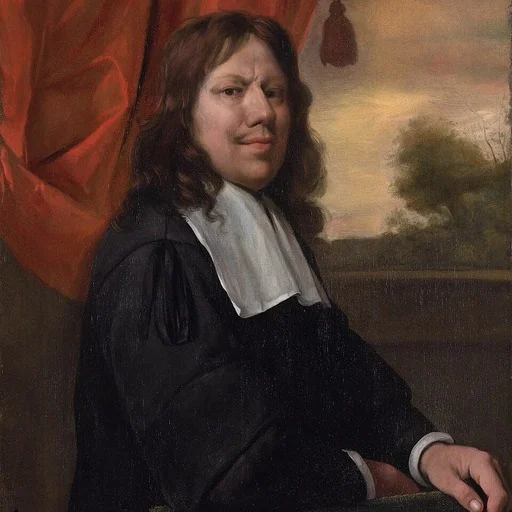
Jan Havickszoon Steen was a Dutch Golden Age painter, one of the leading genre painters of the 17th century.