Werl Triptych by Robert Campin
The Werl Triptych, by Robert Campin (circa 1438), housed in the Prado Museum, is a masterpiece of Early Netherlandish painting. Although its central panel is lost, the surviving wings reveal a fascinating glimpse into 15th-century Cologne.
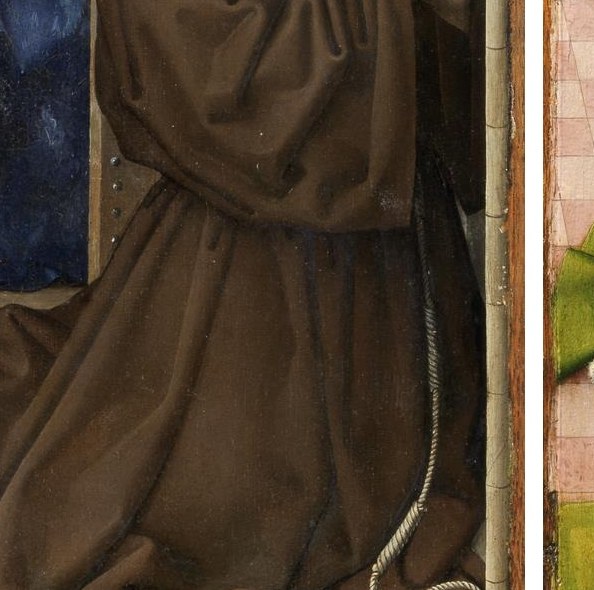
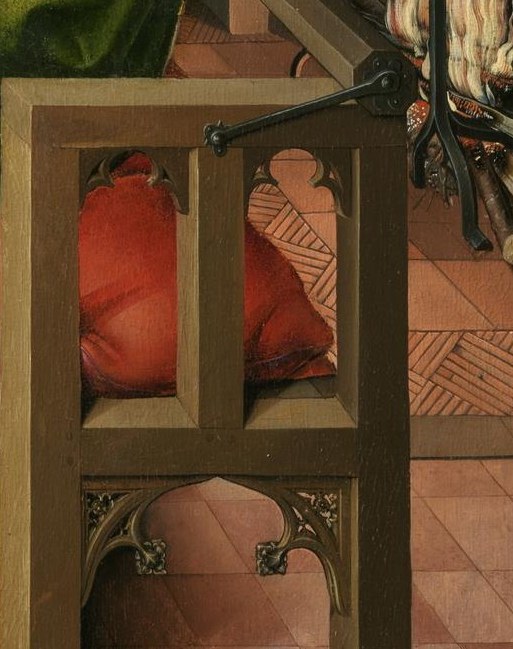
Observe Heinrich von Werl, the commissioner, in prayer on the left wing, alongside Saint John the Baptist. His serene expression and clasped hands convey deep piety. The right wing features Saint Barbara, engrossed in reading a richly decorated holy book, beside a hearth that bathes the scene in a warm, golden light.
Commissioned in 1438, this triptych demonstrated Robert Campin's innovative handling of light and form, influencing subsequent artists. The detailed rendering of textures, the convex mirror reflecting the room, and the inscription confirming the donor all speak to the era's artistic and devotional practices.
This work reminds us that even lost parts of an altarpiece can tell a rich historical story.
Details
Transcript
This is Heinrich von Werl, the commissioner. He commissioned this altarpiece in Cologne in 1438. His hands pray to the lost central panel. Look at Saint Barbara, absorbed in her book. The firescreen casts a warm, golden glow. The brass ewer shows Campin's skill with light. A convex mirror reflects the entire room. The inscription names Heinrich von Werl as donor.