Landscape with a Stone Bridge by Rembrandt van Rijn
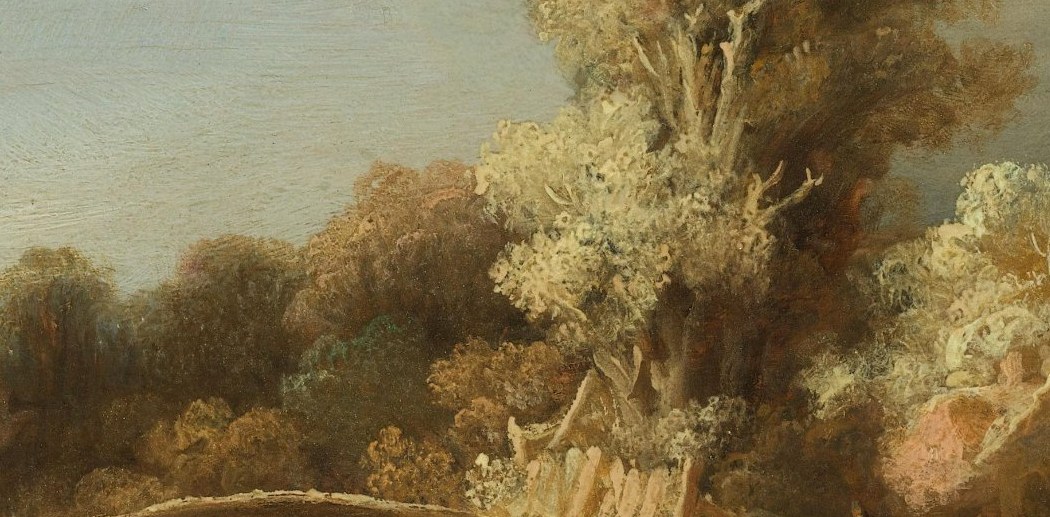
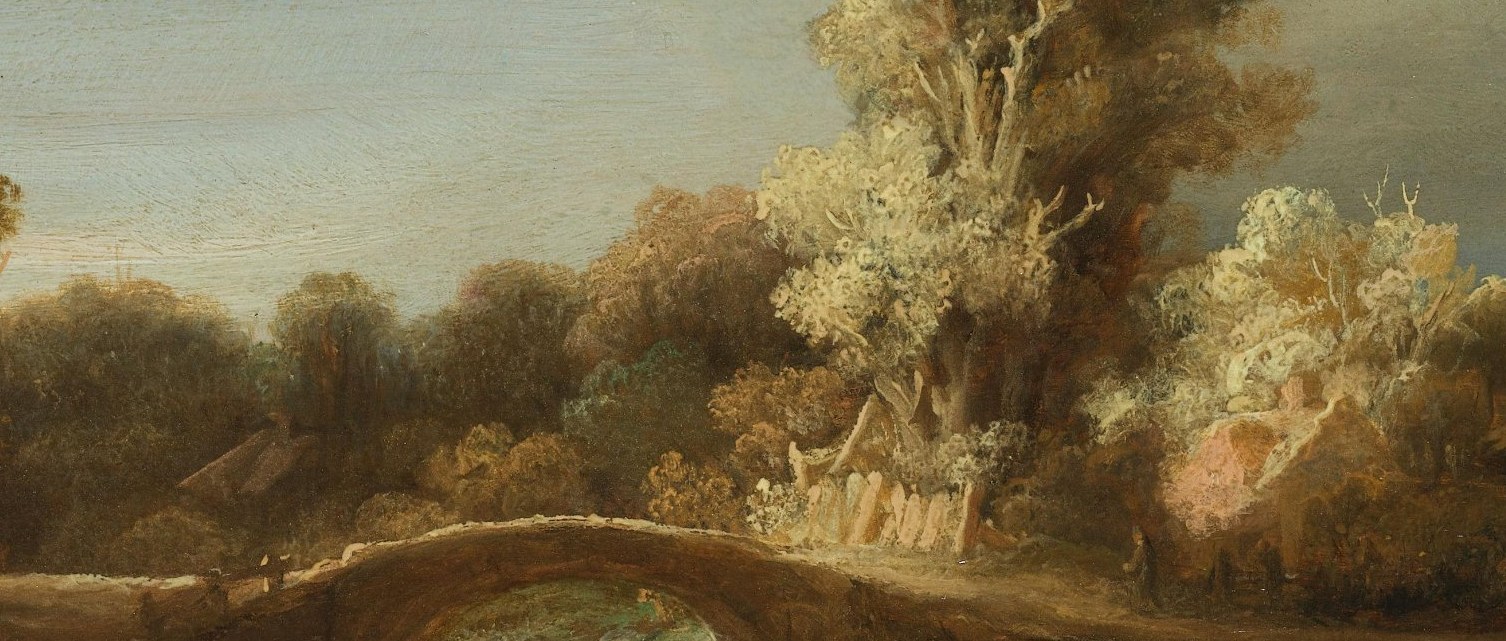
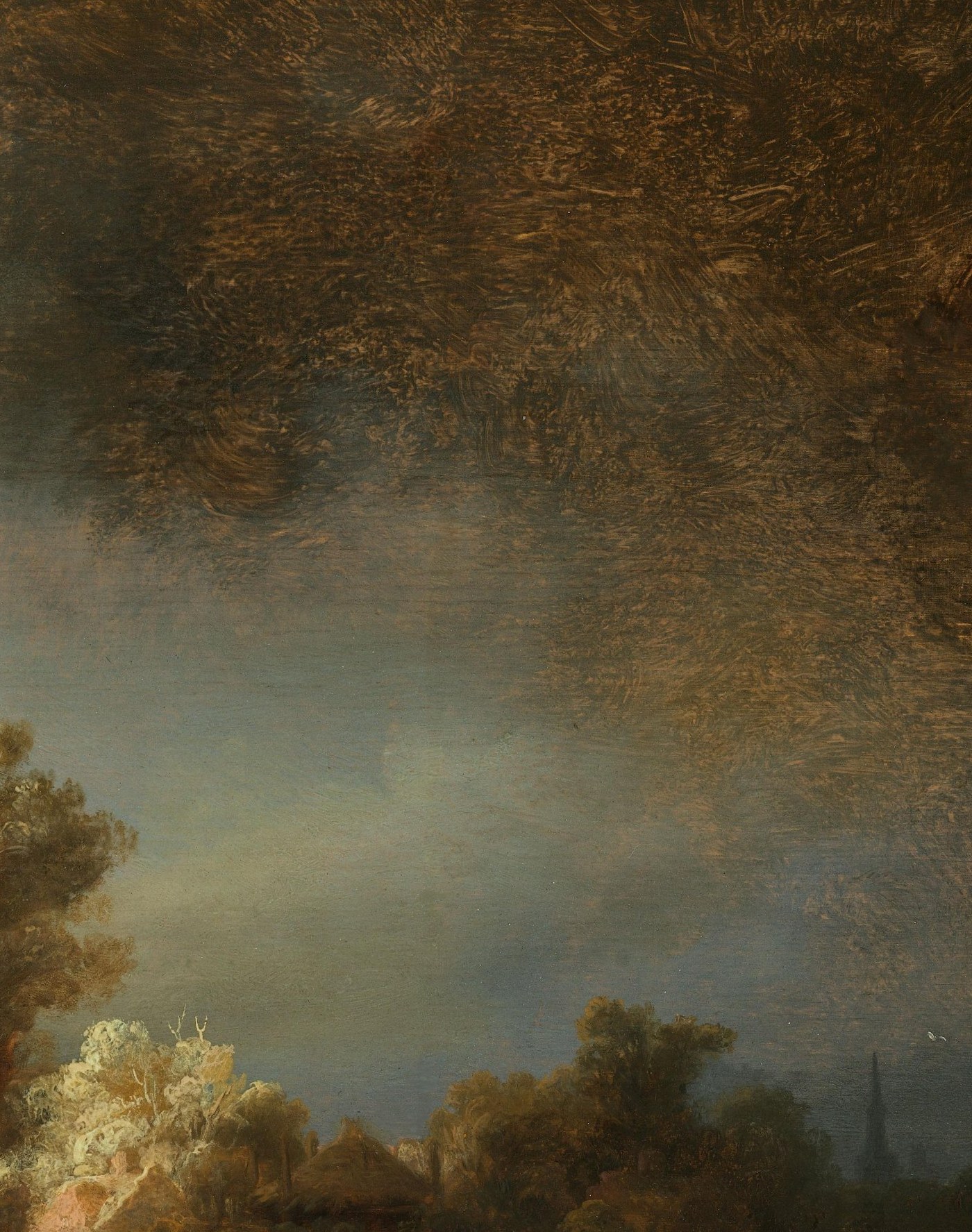
This is Rembrandt's "Landscape with a Stone Bridge," painted around 1638 and now in the Rijksmuseum, Amsterdam. It is one of only a handful of pure landscapes the artist ever made, and unlike his Dutch peers, Rembrandt rarely painted a specific place. He built this valley from memory and imagination, borrowing the arched bridge and dark foreground foliage from Italianate landscape traditions he knew through prints, then flooding the whole thing with his own weather.
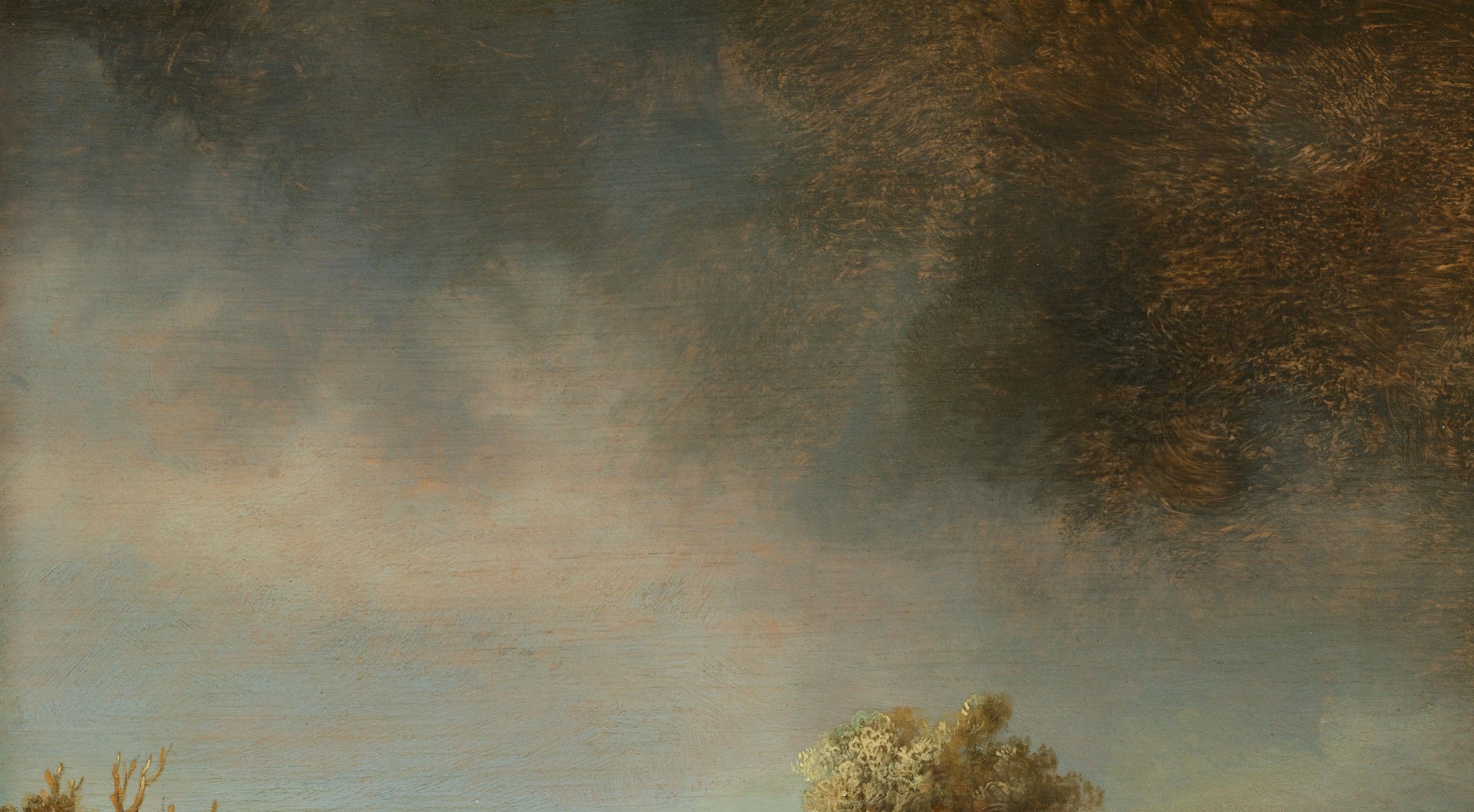
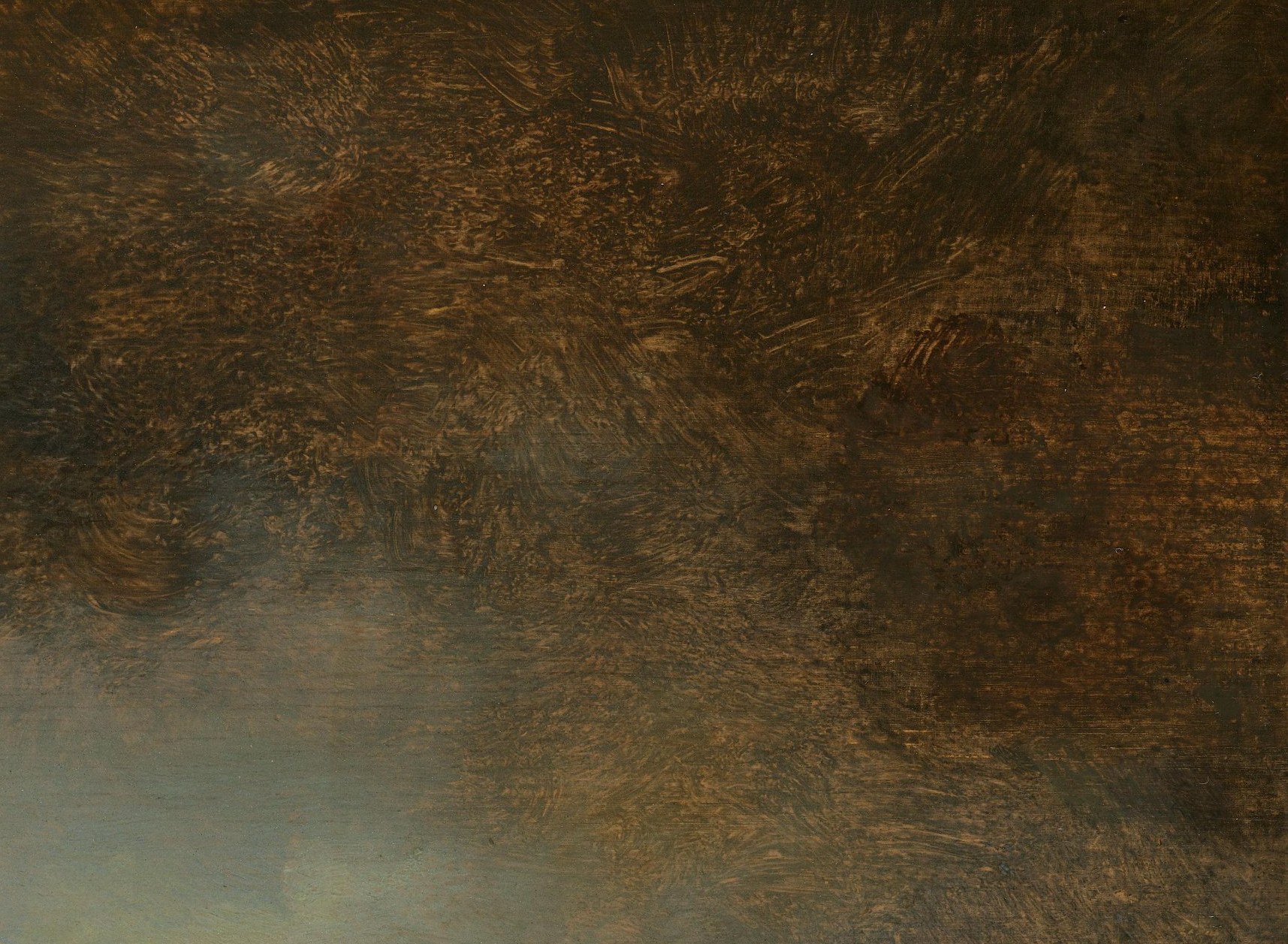
Look first at the beam of sunlight breaking through the storm clouds. That shaft hits the right bank and the upper canopy of the large central tree, creating a near-theatrical spotlight. Then find the minute figures crossing the bridge: they are the painting's only human presence, deliberately dwarfed by the mass of cloud and water. The storm advances from the left, and the tension of the whole composition comes from the race between that dark cloud bank and the remaining patch of open sky.
The painting's ownership history reads like a thriller. By 1760 it was in the collection of Catherine the Great, Empress of Russia, who hung it in the Hermitage. It remained there for over a century and a half, surviving the Russian Revolution and two world wars, before eventually leaving the Soviet Union and entering the Rijksmuseum collection. Only a handful of Rembrandt landscapes exist in the world, and this one spent most of its life hidden from the public inside a Winter Palace.
A painting that began as pure imagination became an imperial trophy and then a contested national treasure. Next time you see a Rembrandt landscape, you are looking at one of the rarest things in his entire body of work.
Details
Transcript
A landscape Rembrandt painted from his imagination, around 1638. A storm rolls in from the left, dark and fast. A single beam of sun hits the far bank like a searchlight. The figures on the bridge are the only sign of human life. By 1760, it belonged to the most powerful woman in Russia: Catherine the Great. She kept it in the Hermitage, where it stayed through revolution and war.