Pastoral Landscape by Durand, Asher Brown
View the artwork: Pastoral Landscape →
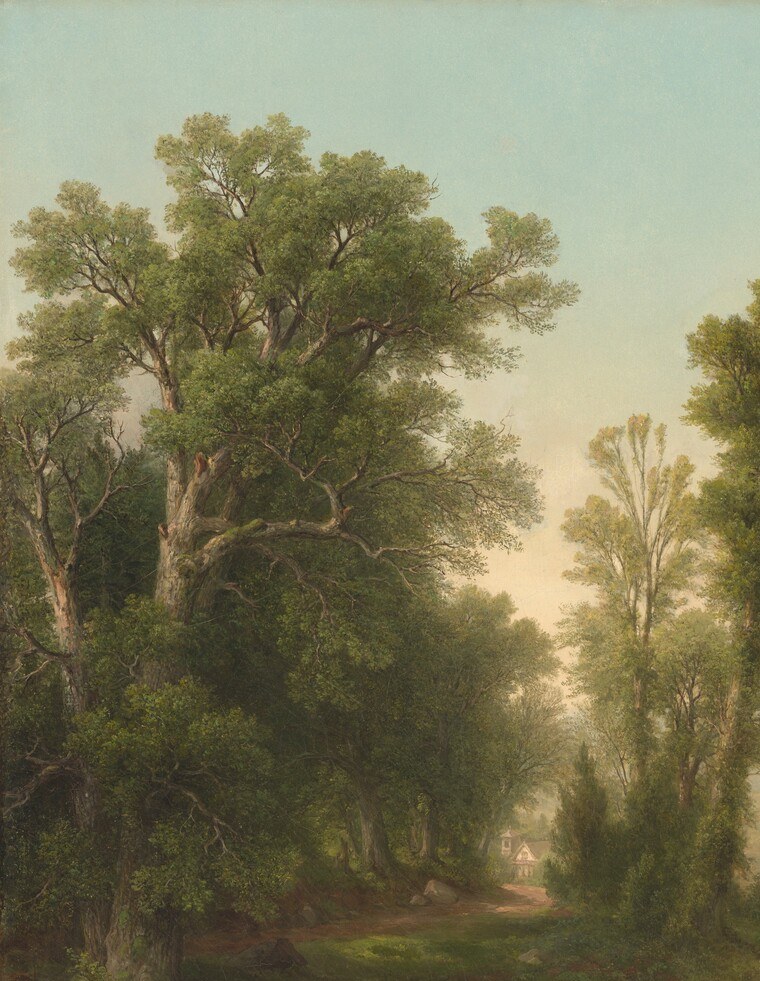
Asher Brown Durand painted this scene in 1861, the same year the American Civil War shattered the nation's understanding of itself. At nearly a meter wide, it was his largest and most ambitious canvas that year.
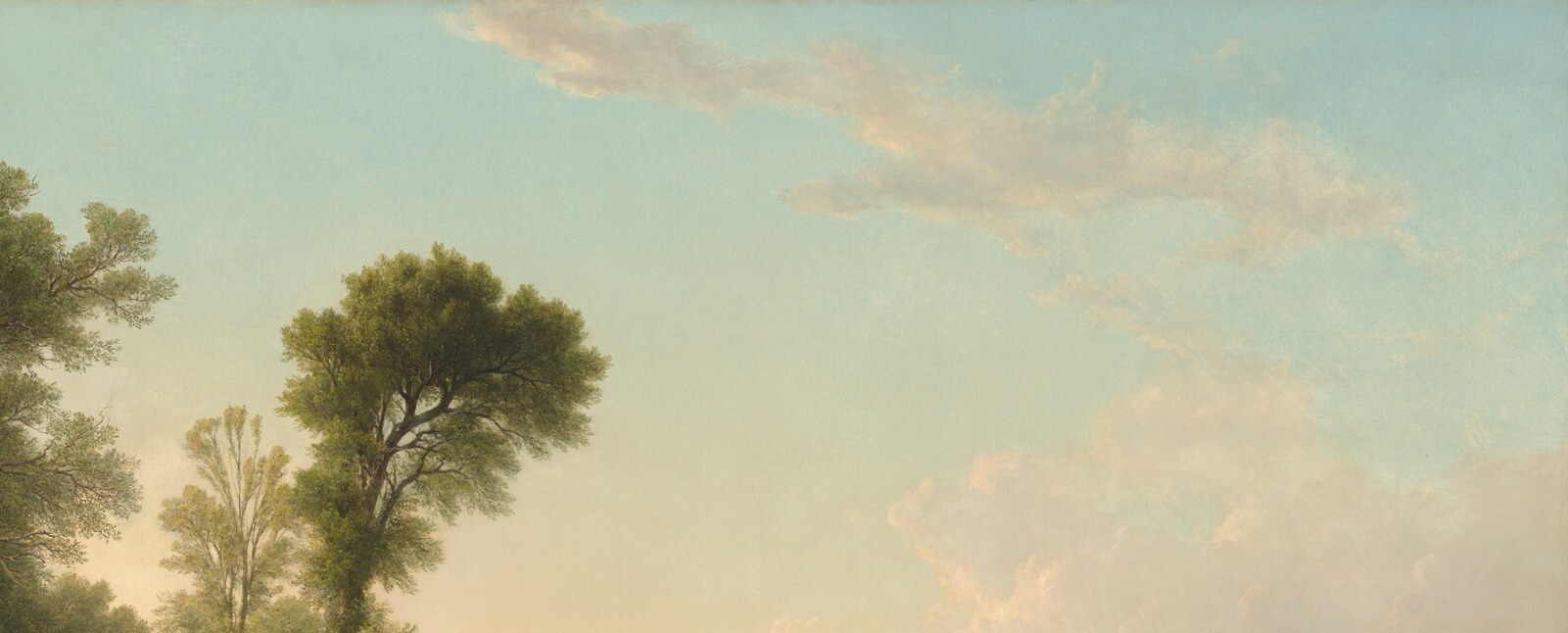
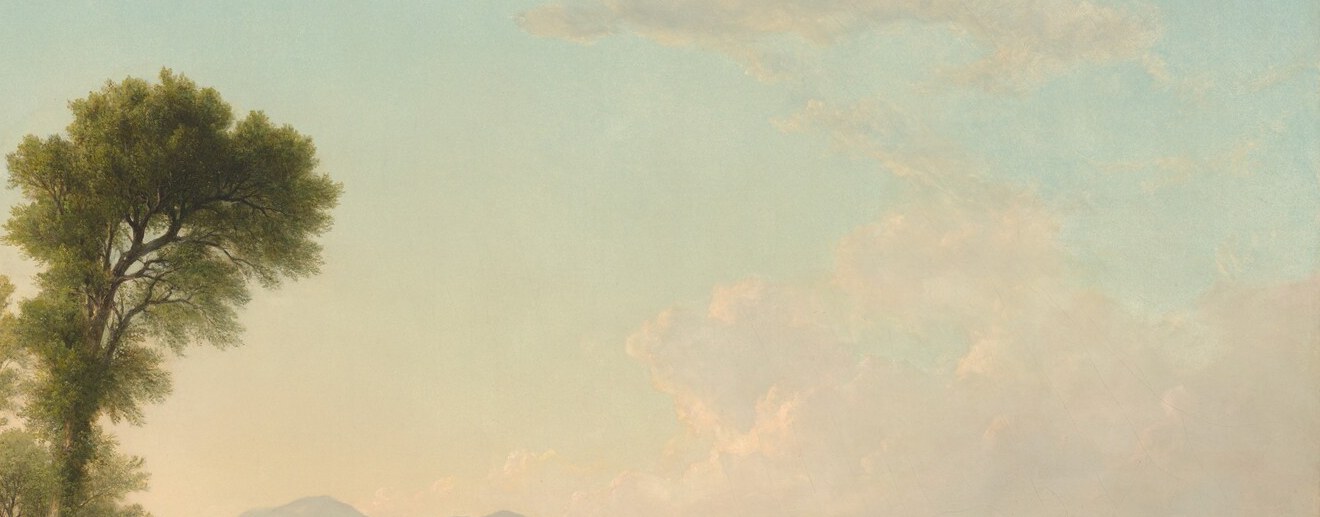
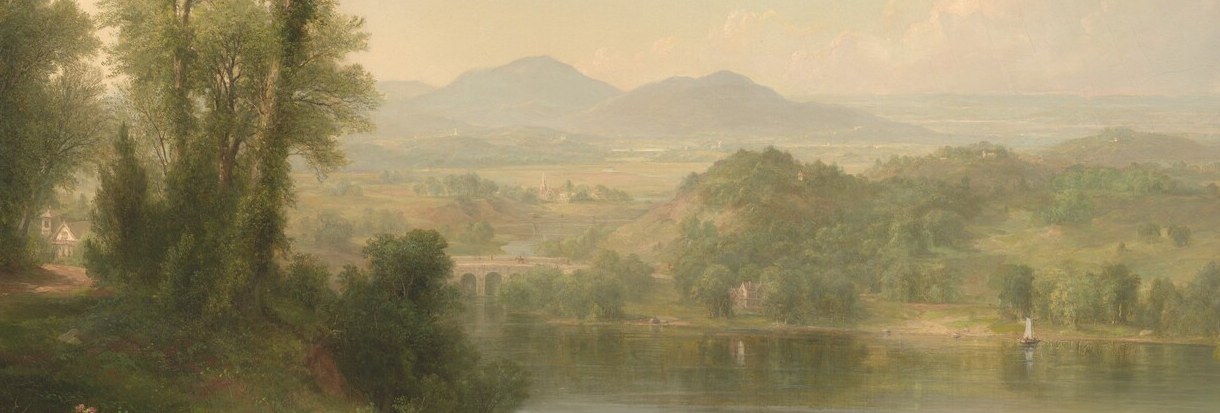
The painting is not simply a landscape. It is a coded manifesto. Look past the radiant meadow and the glowing trees: an Italianate villa, an arched stone bridge, a gabled farmhouse, and a Gothic church spire are embedded throughout the scene. Each is a quiet argument that civilization can settle wilderness without destroying it.
Durand was a leader of the Hudson River School, a group of painters who believed American nature revealed divine truth. By 1861 he had perfected the plein-air method taught in his influential 'Letters on Landscape Painting': studying rocks, trees, and light outdoors, then composing idealized visions in the studio. This canvas likely draws on sketches made in the Hudson Valley.
Given to the National Gallery of Art by the Manoogian Foundation in 1991, it remains a powerful record of what America wanted to believe about itself right as that belief collapsed. What do you notice first: the wild trees to the left or the church in the distance?
#arthistory #hudsonriverschool #americanart
Details
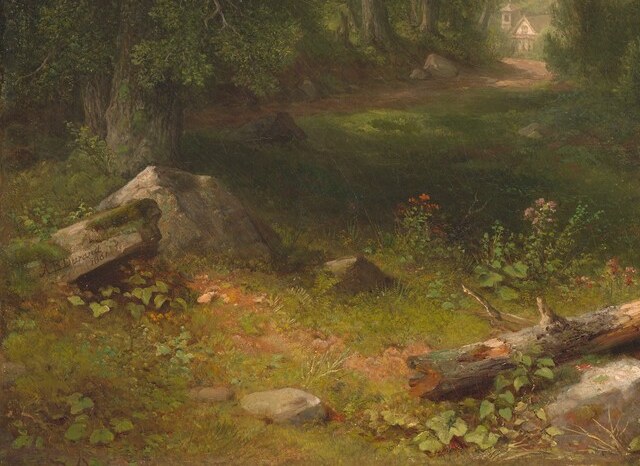
Transcript
At first glance, a perfect American wilderness. But civilization is already here, hiding in plain sight. An Italian villa for a prosperous new American landowner. A stone bridge stitches the land together without disrupting it. Infrastructure built in harmony with nature: the American ideal. And in the far distance, a Gothic church spire. Faith transplanted from Europe, planted on American soil. Painted in 1861, the year the Civil War began, this is what America wanted to believe about itself.