Artwork
Pastoral Landscape
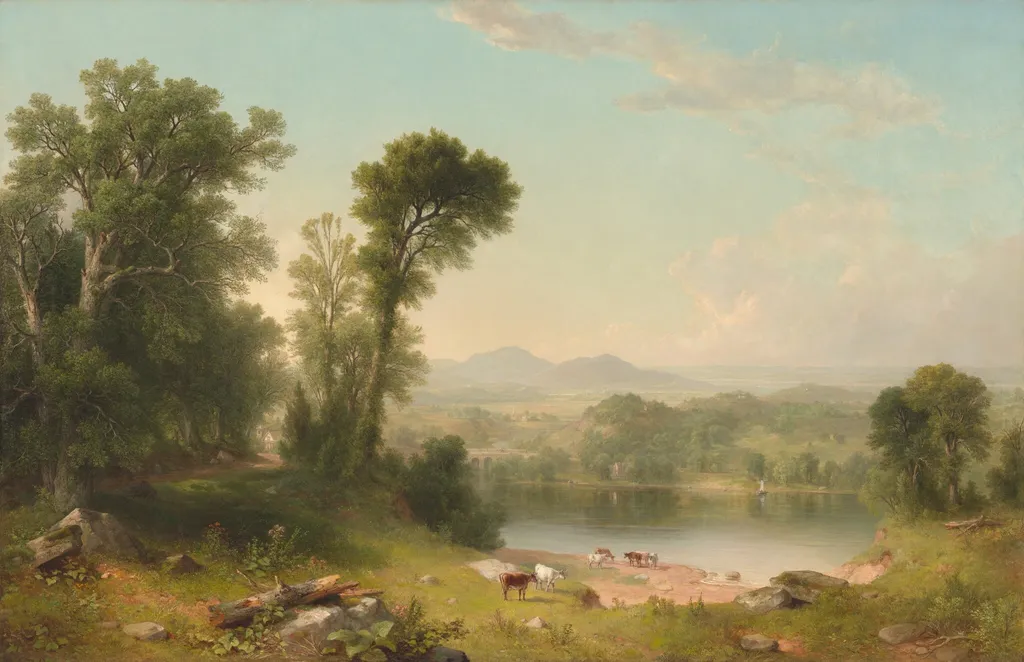
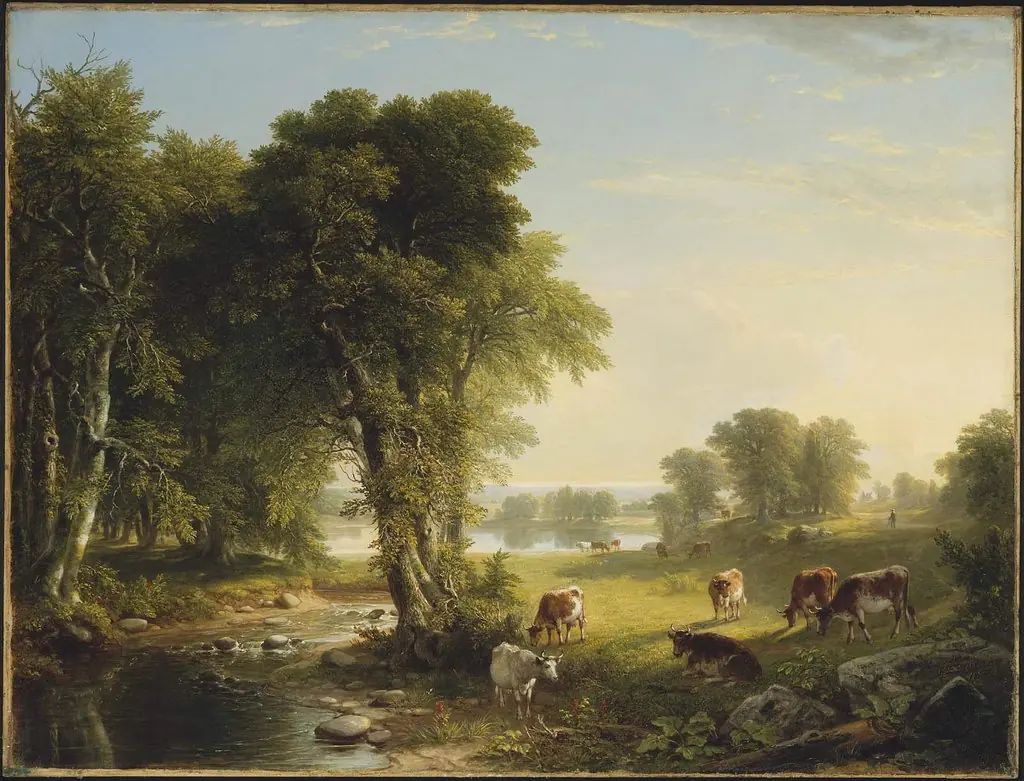
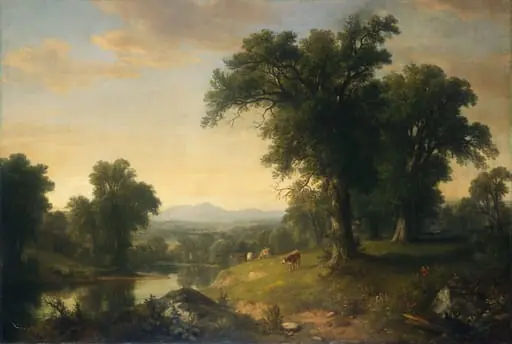
Pastoral Landscape is an oil painting by the Hudson River School artist Asher Brown Durand. It dates from 1861 and is held in the collection of the National Gallery of Art.
- Inscription
- Inscribed:lower left: ABDurand / 1861
About this work
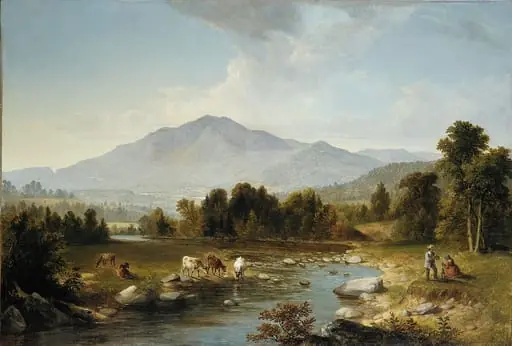
An Italianate villa peeks through the woods at left while an English Gothic revival church rises in the center distance of Asher Brown Durand's 1861 canvas. Painted the year the Civil War began, this panoramic Hudson River Valley scene is the largest and most ambitious of Durand's paintings from that year.
Subject & Meaning
Asher Brown Durand's composition aligns with the pastoral tradition, offering viewers a serene, balanced vision of the natural world.
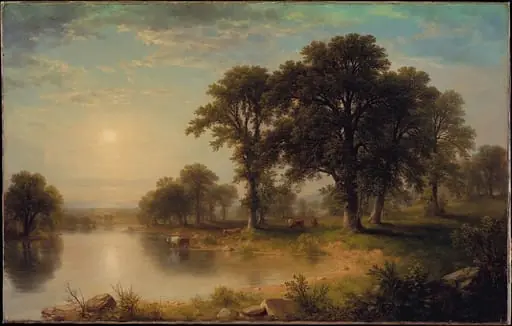
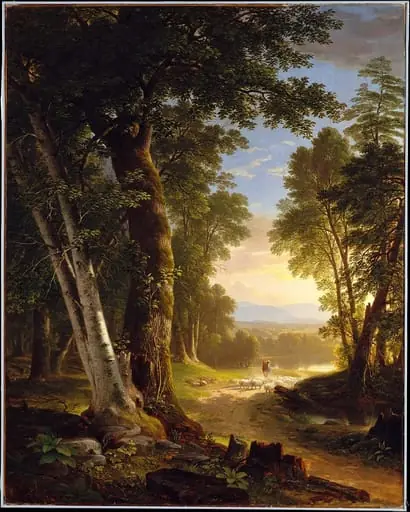
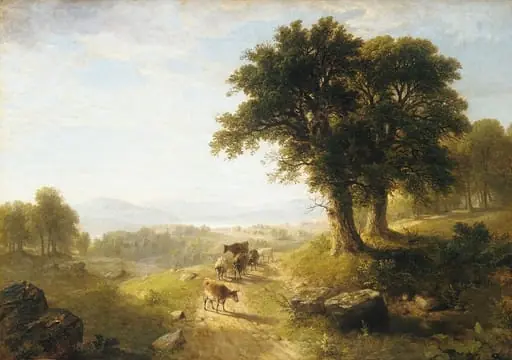
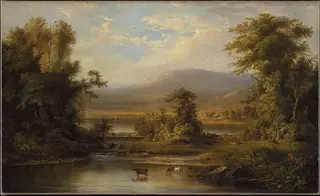
The painting's subject is a pastoral landscape, an idealized rural scene typical of the Hudson River School. It depicts a river winding through a tranquil vista with a lake, hills, and distant mountains under a cloudy sky. Cattle graze near the water, and a bridge crosses the river, while trees dot the foreground and background.
These elements, cattle, bridge, water, and mountains, conventionally symbolize harmony between human activity and untamed nature, evoking a sense of peace and the bounty of the American countryside. Asher Brown Durand's composition aligns with the pastoral tradition, offering viewers a serene, balanced vision of the natural world.
History & Provenance
Asher Brown Durand painted Pastoral Landscape in 1861. The painting may have belonged to B. F. Gardner of Baltimore by 1862, and it later entered a private collection in Switzerland, where it remained until 1980. That year it was sold at Sotheby's, New York (lot 17) to the Alexander Gallery, which sold it to Richard Manoogian of Grosse Pointe, Michigan.
Manoogian made a partial and promised gift of the work to the National Gallery of Art in 1991, and the gift was completed in 2001.
Overview
Asher Brown Durand's "Pastoral Landscape," an oil on canvas from 1861, represents a significant example of his mature work within the Hudson River School tradition. This large-scale painting, measuring nearly a meter by over 1.5 meters, stands as the most ambitious creation by the artist in that particular year. It showcases his refined ability to render expansive, idealized American scenery.
Technique & Style
By 1861, Durand had perfected his method of depicting landscapes, combining meticulous observation of nature with an idealized compositional approach. This synthesis is a hallmark of the Hudson River School, aiming to convey both the realism and the expressive beauty of the American wilderness. The artist's characteristic signature, "ABDurand / 1861," is visible in the lower left corner.
Context
Created in the year the American Civil War began, this tranquil scene offers a vision of harmony. The composition bears a notable resemblance to Durand's earlier work, "Sunday Morning," painted in 1860, suggesting a continuity in his exploration of serene American vistas. Although its original title is unknown, the painting was once exhibited under the designation "View of Kingston, New York."
Own this work as a print
Artist & collection
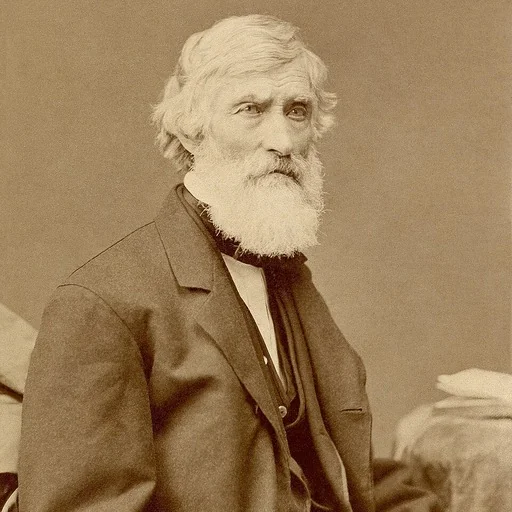
Artist
Asher Brown Durand spent his life in the rolling hills of New Jersey, where the forests and farmland shaped his quiet, deliberate way of seeing.