Allegory of Sight and Smell by Jan Brueghel, the elder
Jan Brueghel the Elder's "Allegory of Sight and Smell" (1620) is more than just a beautiful painting, it's a survivor. This Flemish Baroque masterpiece, currently at the Museo del Prado in Madrid, holds a secret history of evasion and protection.
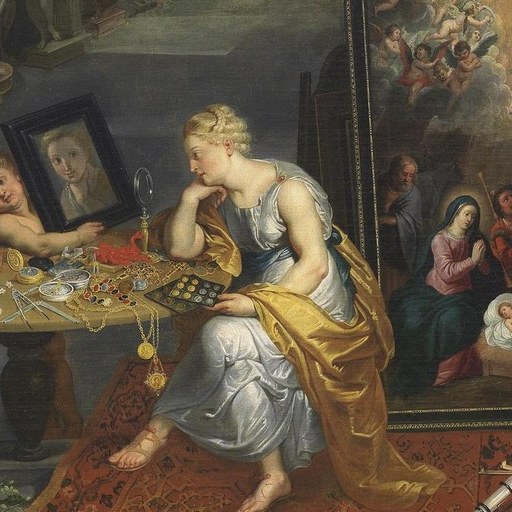
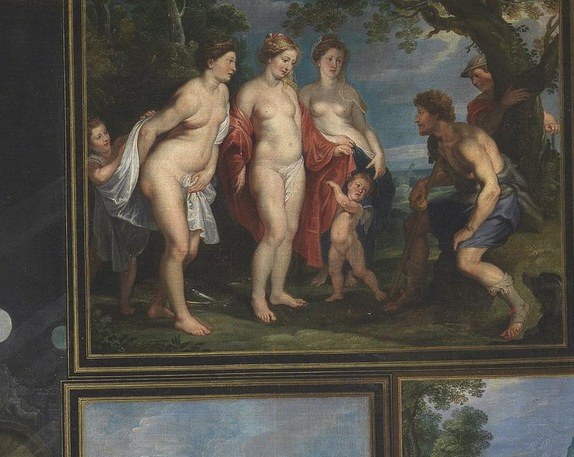
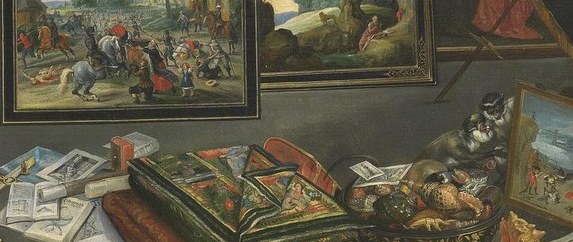
The painting depicts two allegorical figures: Sight, a woman on the left absorbed in a mirror, and Smell, a woman on the right with a blossom to her nose. The entire composition is a rich tapestry of objects, from exquisite flowers in a vase to scientific instruments and miniature paintings, all inviting close examination.
This work was originally part of a series of five allegorical paintings. During Napoleon's invasion of Spain in 1808, the Spanish royal family, fearing the paintings would be stolen, famously hid them away. This act of defiance successfully protected the entire series, ensuring their survival.
Today, all five paintings remain together in the Prado, a testament to their enduring appeal and the determination to preserve art through turbulent times. What details do you find most captivating in this work?
Details
Transcript
This painting dates to 1620, the Flemish Baroque. It shows two allegories: Sight (left) and Smell (right). Look at the woman on the left, embodying Sight. She gazes into a mirror, reflecting on what she sees. This work was part of a five-painting series. In 1808, Spanish royals hid them from Napoleon's looters. They saved the works, still together at the Prado today.