The Houses of Parliament (Effect of Fog) by Claude Monet
Claude Monet finished The Houses of Parliament (Effect of Fog) in 1903, but he was no longer in London. He worked on this series, 19 views of the same stretch of the Thames, from a room in the Savoy Hotel and later from St Thomas’s Hospital across the river. Once back in his Giverny studio in France, he reworked many of the canvases from memory, chasing an atmosphere that had already passed. The painting is now at The Metropolitan Museum of Art.
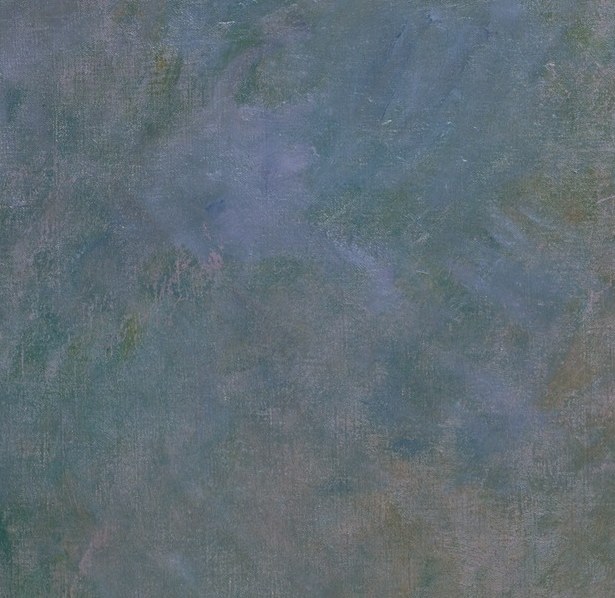
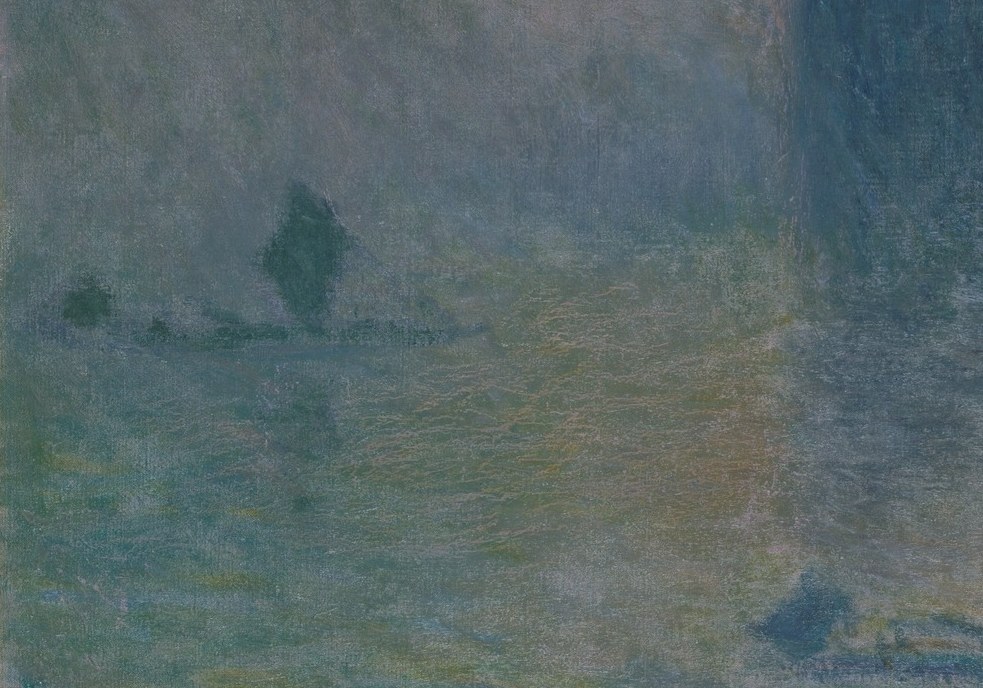
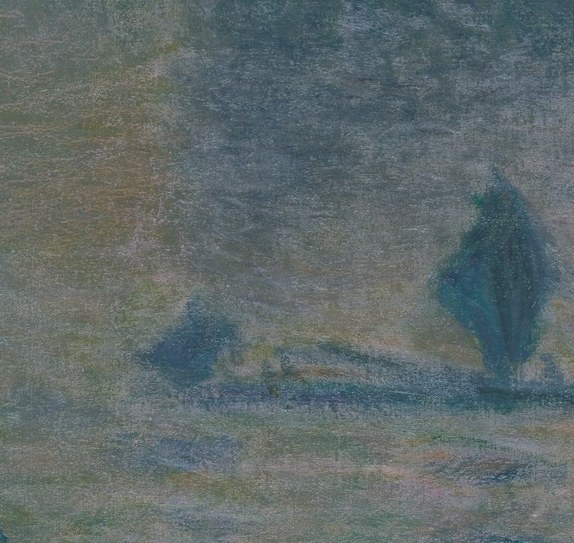
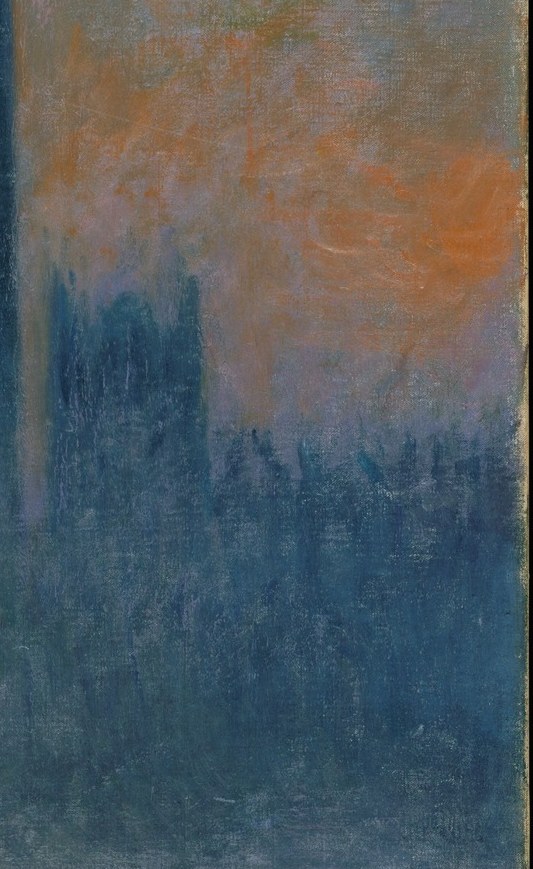
Look at how the Victoria Tower barely solidifies before dissolving back into haze. The only warm note in the entire cold palette is the diffuse orange sun, hanging in the upper left. Its reflection on the water is not a mirror image, Monet painted it as broken horizontal strokes, pure sensation on a dark river. In the foreground, a single small boat is reduced to a silhouetted smudge, giving the industrial fog an inhabited scale without letting a human story compete with the weather.
Monet first visited London in 1870 to escape the Franco-Prussian War and became fascinated by the fog. He returned for extended stays in 1899, 1900, and 1901, setting up at the Savoy with a view of Waterloo Bridge and later at St Thomas’s with this view of Parliament. He worked on multiple canvases simultaneously, swapping them as the light changed, and wrote to his wife that the fog was what gave London its “marvelous breadth.” He brought the unfinished series home and labored over it in the studio until 1904, when 37 Thames paintings went on show in Paris.
An artist finishing a painting of a place he is no longer in, from a memory of light that no longer exists, is exactly the kind of contradiction that makes Monet’s serial work feel so urgent. What do you trust more to capture a place, the eye on the day, or the memory afterward?
Details
Transcript
1903. Parliament dissolves into the London fog. The same view, painted 19 times. He watched each morning from a hospital window across the river. A warm sun fights through a cold, violet haze. The river shimmers, broken strokes of orange on dark water. A single boat, almost lost, shows you the scale of the fog. He finished the series in his Giverny studio, relying on memory. The fog he remembered was more real to him than the building.