Sparrow Hall by Winslow Homer (American, 1836–1910)
Winslow Homer's 1881 oil painting, *Sparrow Hall*, housed at the National Gallery of Art, marks a pivotal moment in the artist's career, showcasing his transition from commercial illustration to fine art.
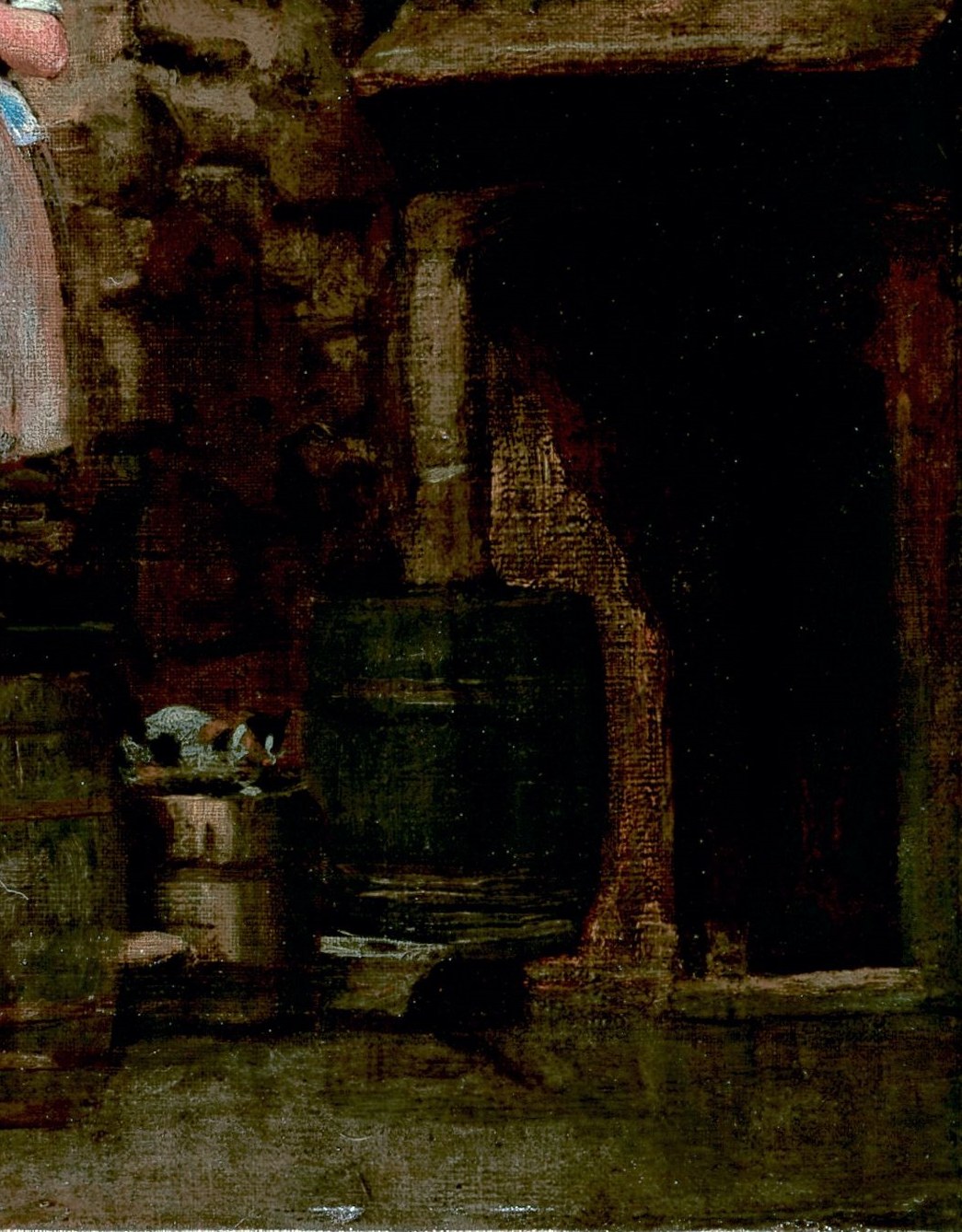
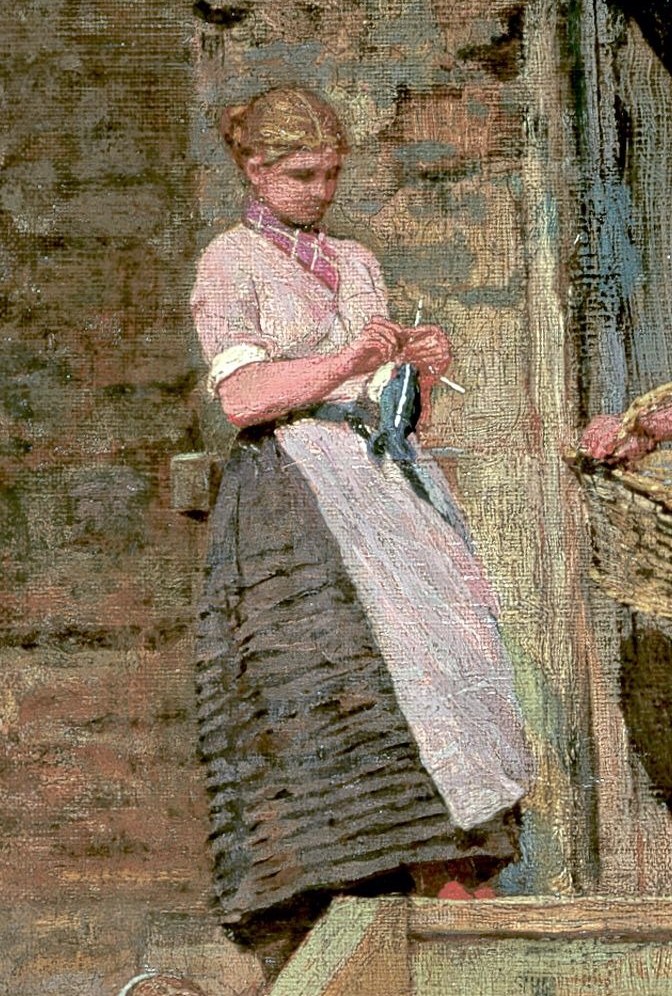
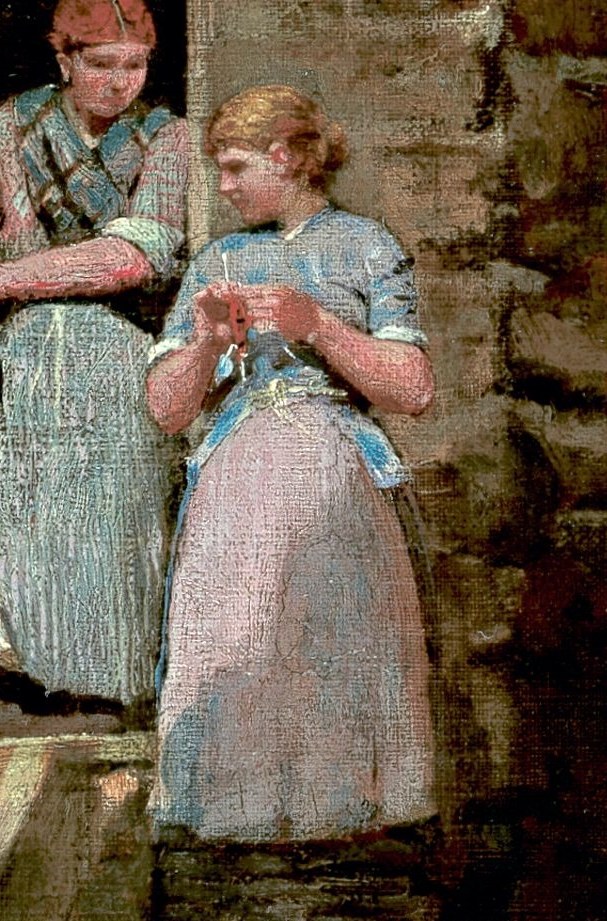
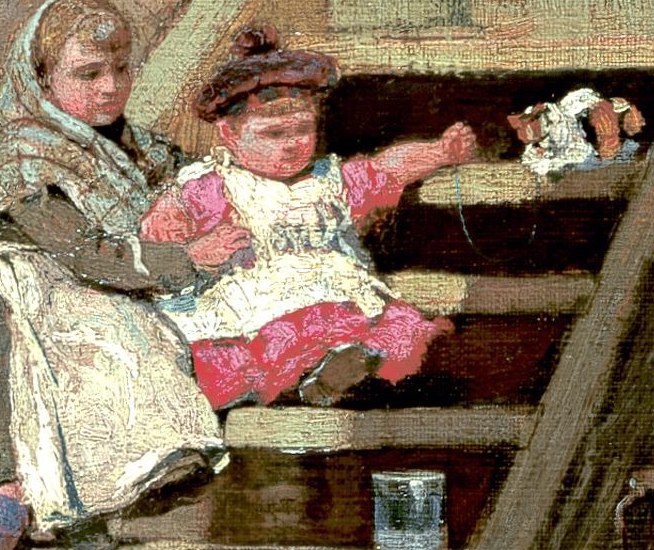
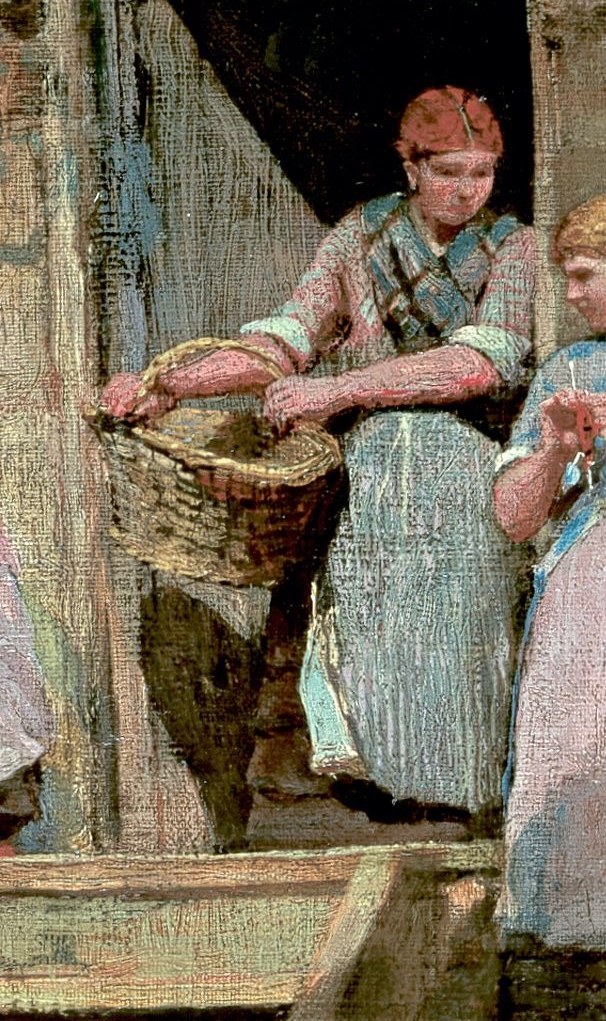
The painting depicts four women engaged in domestic activities within a rustic, stone-walled room. Notice the rough stone walls and the fabric of their simple attire. Homer employed thick brushstrokes, known as impasto, to create a palpable texture, giving the scene a tangible, lived-in feel.
This work emerged after Homer's formative period in Cullercoats, England, where he focused on the lives of fishing communities. It was here that he honed his oil painting technique, moving beyond the illustrative style of his earlier career to become one of the preeminent figures in 19th-century American art.
*Sparrow Hall* is a testament to Homer's artistic evolution and his ability to capture the quiet dignity of everyday life. What details in the painting speak to you most about this domestic scene?
Details
Transcript
This quiet domestic scene, full of light, seems simple. Winslow Homer painted it after a period of self-reflection in England. It shows women in a fishing village, performing everyday tasks. Look closely at the texture of the stone and fabric. Homer used thick brushstrokes, called impasto, to build texture. This technique marked his shift from illustrator to fine artist.