Santa Sofia by John Singer Sargent
John Singer Sargent's Santa Sofia (1896) at The Metropolitan Museum of Art is the great society portraitist's private study of light. He built his fortune on commissioned likenesses of Gilded Age aristocrats, but this painting of Hagia Sophia's interior was done for no client and no fee.
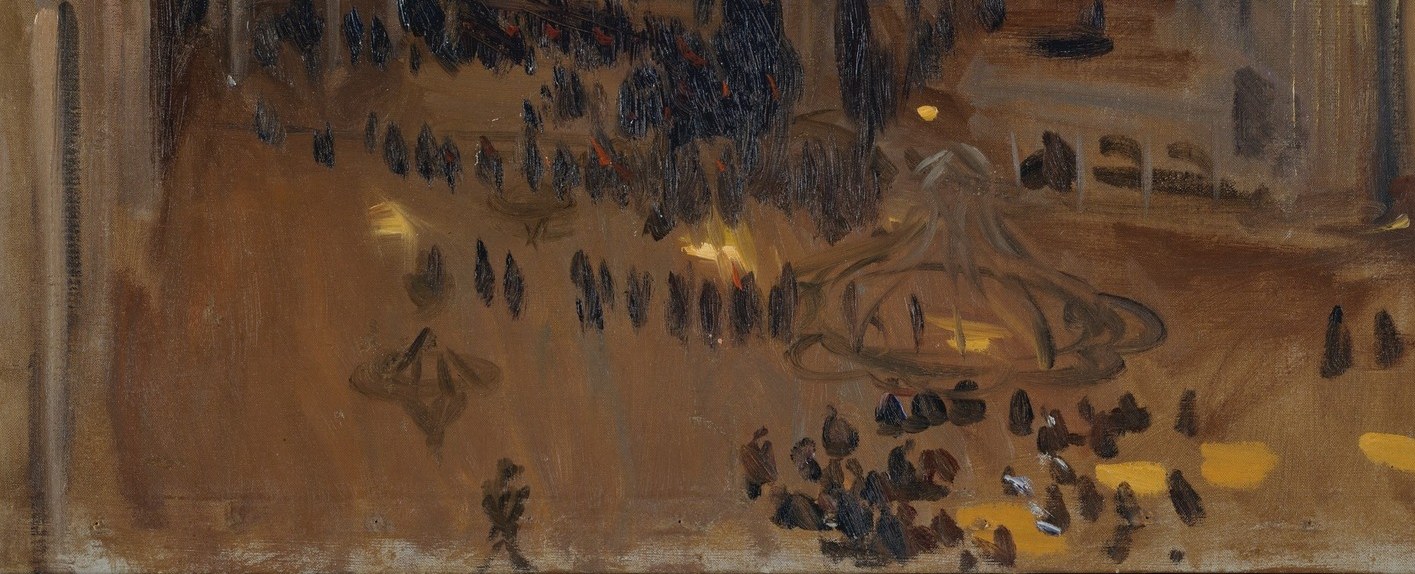
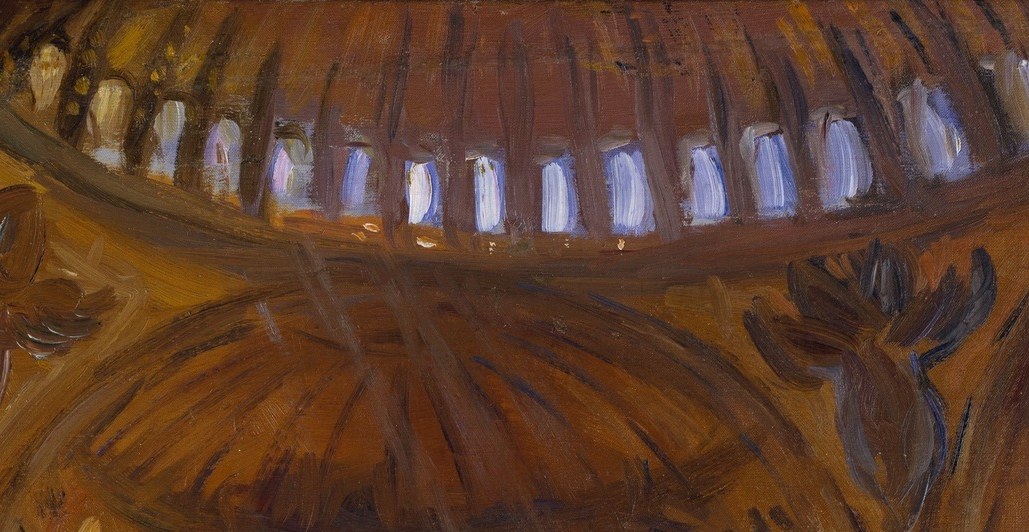
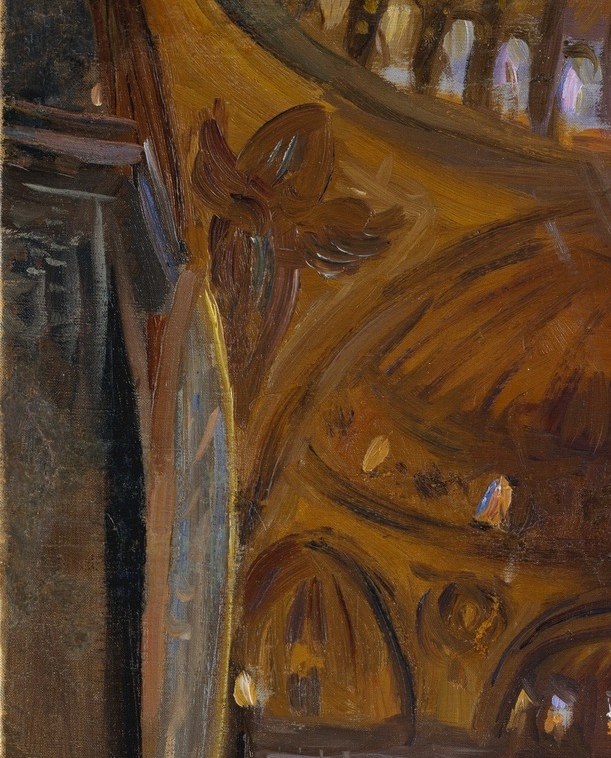
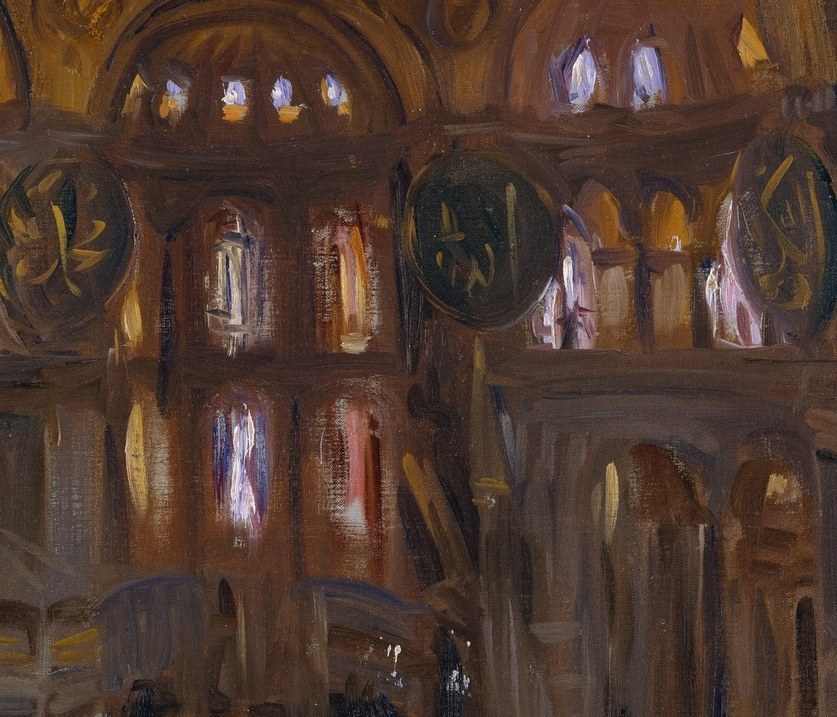
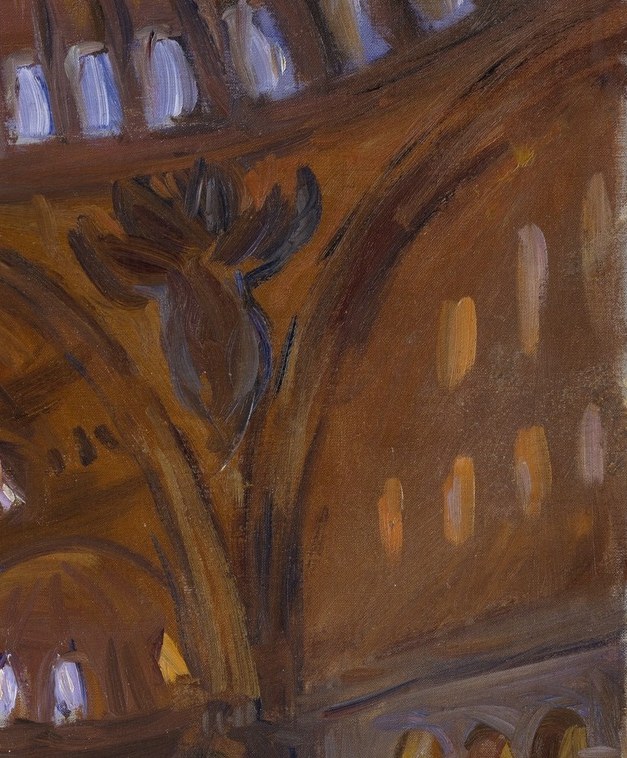
Watch where the dome dissolves. Sargent does not paint the famous Byzantine mosaics in sharp detail. He turns the entire upper reaches of the building into a golden atmospheric haze, an Impressionist move that makes the light itself the subject. The vast chandelier ring divides the space, the tiny brushstrokes of worshippers on the floor read as scale against the piers, and the Ottoman calligraphic medallions hang against the Christian architecture without comment. He is watching, not editorializing.
This was a building already twelve centuries old when Sargent walked in. Justinian's architects completed Hagia Sophia in 537 AD. It had been a cathedral for nearly a thousand years, a mosque for over four hundred, and by 1896 its layered identity was physically legible in a single glance. Sargent captures exactly that collision: Byzantine gold, Islamic calligraphy, Christian liturgy, Muslim worship, all suspended in the same amber air.
The painting was never a sensation. It hangs quietly uptown, part of Sargent's enormous travel output, far from the Madame X scandal that sent him fleeing Paris for London a decade earlier. But it may be the most honest record we have of what he actually loved: not the faces of the rich, but the way light behaves inside a very old room.
Details
Transcript
John Singer Sargent built his career on society portraits. He charged the modern equivalent of six figures per canvas. But he painted this one for himself. Look at the light he came here to study. He dissolves a Byzantine dome into golden vapor. The medallions name Allah and the early caliphs. A painting Sargent never needed to sell now hangs in the Met.